
Lessons in bringing the military under civilian control


Play
Poland's transition from rule-by-uniform to a thriving democracy offers pointers for Thailand
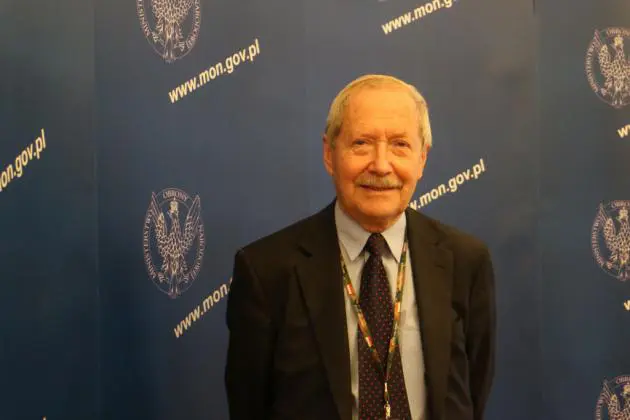
Janusz Onyszkiewicz, Poland’s first civilian defence minister, likens the country’s military to a black box full of secrets and obscure operations.
Yet no matter how complex, the armed forces were successfully brought under civilian control in the 1990s, thanks mainly to extreme economic conditions that forced the generals to embrace democratic rule and limit their political involvement.
“The whole process took five years. It could have been faster, but there were some in political circles who wanted military power back,” Onyszkiewicz said in an interview with Thai media. “It’s a basic national tradition and value that the army knows better how to serve the country and people.”
Onyszkiewicz served as defence minister from 1992 to 2000. At 77, he remains a key military adviser to the government. He recalls clearly the complicated changes that began in 1989, when communist rule collapsed after 45 years, bringing down with it the army’s paramount power. Under communism, all military officers were members of the ruling Party and enjoyed the privileges that membership offered. The centralised political and economic system eventually brought the country to economic ruin, out of which emerged the Solidarity Movement that eventually freed the country from communism in 1990.
In March 1990, inflation peaked at 1,200 per cent before easing later in the year to an annual average of 787 per cent. A booming black market spawned by shortages in consumer goods was the main cause.
Onyszkiewicz said the generals had been happy to relinquish power to a civilian government to free themselves from the tangle of economic problems. But he admitted that weaning the country off the privileges of centralised economic planning had been harder than introducing changes to the centralised political system.
“It was convenient for the generals to give up power, as they could then ask about pensions without causing unrest,” he said. “It was lucky we were in such desperate economic straits. Dramatic conditions require dramatic solutions.”
The military’s role in politics diminished further as Soviet troops began to withdraw and the civilian administration had to secure Poland’s status and borders as the Iron Curtain collapsed. That required the support of neighbouring powers, including its former “boss” the Soviet Union. But it also drove Poland to start the process in February 1991 of seeking membership of the North Atlantic Treaty Organisation (Nato), to “let the cat know that we’re not a mouse”. Membership was granted in 1999 after much debate within the organisation, as some members feared that Poland would be a liability rather than an asset. A shared 60-kilometre-long border with unified Germany swung the deal, which required that Poland fell in to line with procedures, systems and standards set by Nato.
As the country’s first civilian defence minister, Onyszkiewicz took on the task of transforming the army into an instrument of government policy. The military also had to be rendered politically neutral. The civilian government was now in charge of setting the goals, and the army had to follow them. Onyszkiewicz said it took him some time to understand complicated world of the military. Inside the “black box” was a labyrinth of rules and traditions, and civilian ministers needed to know how to ask questions to understand it.
“Civilian politicians have to respect the army. They should not think that they know better. Then there will be certain trust and confidence,” he said, adding that politicians needed to understand that political policies affect the military. Only then can they define how far political intervention in the military should go. “Certain procedures must be taken and reserve shown. Many details should be trusted to military competence. Democracy was not how to get power, but how to use it.”
Onyszkiewic emphasised the importance of having a civilian minister of defence. He said that military pensions, for example, were a political issue that should not be negotiated by those in uniform. “Soldiers should not be ministers – though retired generals are okay.”
In the 20 years of civilian control, Poland’s military has shrunk. As a buffer zone for the Soviet Union, Poland wielded an army of 400,000 men. That has now dwindled to some 100,000.
“We have decided to reduce our military strength,” said Onyszkiewic. “The force should be simply sufficient for combat situations, and improved by being well trained and fully equipped.
The emphasis on a leaner, meaner fighting machine has seen the military budget increase in recent years. By law, the budget is limited at 1.9 to 5 per cent of gross domestic product, but Onyszkiewicz admitted that actual spending is higher taking into account the purchase of fighter aircraft. “As long as the economy is still growing, there’s no problem.”
The size of the armed forces will not be reduced further, though. “Right now it’s barely enough to satisfy the requirements.”
One pressing threat to national security is Russia’s attempt to restore its imperial power, under its doctrine of protecting Russian-speaking people. Onyszkiewicz envisaged Russia’s aggression as an attempt to draw a new border linking Crimea to the southeast with gains in Europe.
“This gives us good reason to worry. [Russian President Vladimir] Putin knows what we will not do, but we don’t know what he will do.”
