
Nailing corruption
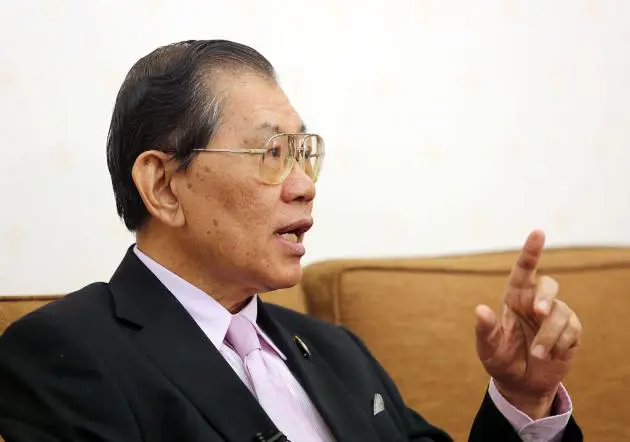


Graft buster Vicha Mahakhun explains how thorough research and investigation provided the National Anti-Corruption Commission with the evidence to impeach the former prime minister
Over the last couple of years, graft buster and National Anti-Corruption Commission (NACC) member Vicha Mahakhun has found himself between a rock and a hard place with his satisfaction at a job well done all too often countered by exasperation at a failure by other agencies to follow through on the evidence he has so painstakingly prepared.
Today, though, Vicha is more relaxed, describing himself as “relieved” now that his efforts have resulted in the National Legislative Assembly voting to impeach former premier Yingluck Shinawatra over her role in the rice-pledging scheme, and its decision to bring her in front of the criminal court for the same offence. The recent ruling marked the first ever successful impeachment case in Thai history.
“The case was so complex but now the pressure has eased and there is no longer anything bothering me,” he says.
The holder of a law degree from Chulalongkorn University, a master’s degree in political science from Thammasat, and various other accolades from international bodies, Vicha is certainly more than qualified to work on such cases. He notes, though, that graft cases are by their very nature difficult to process and says that what determines the success of any case is patience.
“It takes both time and a lot of patience to process a case. We have to be thorough in gathering information and rely on psychological skills in examining the witnesses,” Vicha explains.
As almost all the complaints brought to the NACC involve individuals in positions of high authority, witnesses are often too intimidated to provide the Commission with information.
“Sometimes they are in fear of their lives. We explain to them that they are essential assets to the case and will be honoured by the country for providing us with information. We also reassure them that the NACC keeps even the smallest detail private and that all documents and reports are kept in a very safe place.”
The strategy, he adds, usually works and in the end people do come forward and give the NACC useful information.
“That leads to successful resolution of the cases and I am extremely grateful to all witnesses,” he says, adding that the Commission never forces anyone to give evidence and respects the decisions of those who insist on only being quoted out of fear that their statements could endanger their loved ones.
Vicha was appointed to the NACC in October 6, 2006. His role in eradicating corrupt actions by politicians and high-rank officials has often placed him in a dangerous situation.
“I’ve been threatened many times and found myself in dangerous circumstances too. I believe that others in my position would step down because of this intimidation,” he says.
“But I have never thought about quitting my responsibilities to maintain justice even though I am sometimes concerned for the security of my family.”
The former judge and member of the drafting committee of the 1997 Constitution credits his vast experience for his mental stability.
“The NACC headquarters and my own house have been the target of bullets and grenades,” he says. “I have become used to changing cars, my work place and my residence.”
He also plays a vital role in guiding his fellow graft busters to stay strong and never give in to intimidation.
“As a leader I have to show strength in facing up to dangerous situations. I am honest with my subordinates and explain to them both when and where there is danger and how it can be avoided,” he says.
“Another technique is to take a non-aggressive stance towards the accused. He or she is not an enemy. We are there to investigate and find facts in the case.”
Vicha is grateful to the public for their support, saying that informing the people about the process of impeachment had been helpful in evaluating this case clearly. “The people are aware of who is the wrongdoer in this case and why impeachment was necessary.”
Despite have researched such weighty issues as child abuse and drug taking, Vicha says that when he is not wearing his graft-busting hat, he is just a “normal man”.
“In my personal life I am not a judge or a protector of justice. When I am not working I like to read books, listen to music, watch movies, write poems and paint.
“I sometimes think if I had not chosen to work in law, I could have been an artist,” he smiles.
Asked if any one event inspired him to become a top graft buster, Vicha says it is probably in his blood.
“I think it started when I was child and grew over time. As a young lad whenever I could sense my mother was going to hit me, I would ask her to reflect on why wanted she wanted to hit me and the real reason for my punishment,” he says, the laughter evident in his voice.
“You see, even the arguments between my mother and myself were somehow related to justice ideology!”
Politicians and persons of influence, he says, resort to corruption because they do not understanding the meaning of “enough”.
“Realising what is sufficient in one’s life can make the world a better place,” he says.
