
Death squads go back on the hunt in the Philippines


Play
Assassins very much in business as Duterte set for presidency
On May 14, five days after voters in the Philippines chose Davao City Mayor Rodrigo Duterte as their next president, two masked gunmen cruised this southern city’s suburbs on a motorbike, looking for their kill.
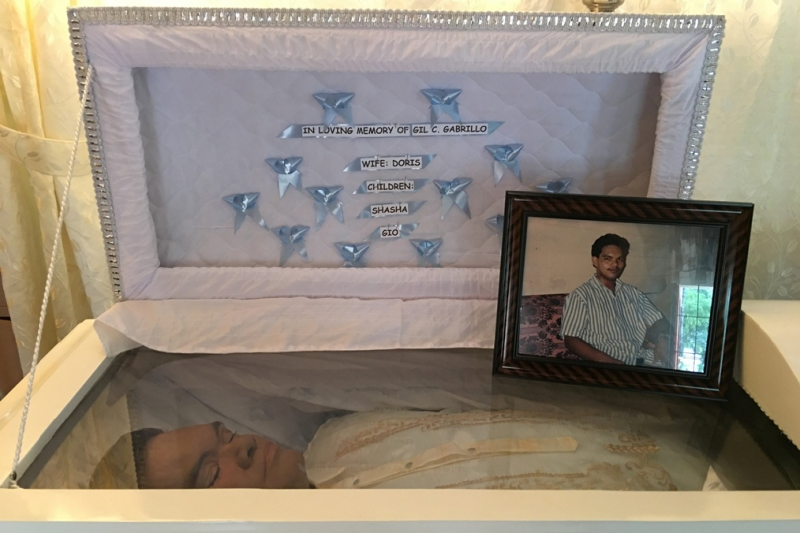
Gil Gabrillo, 47, a drug user, was returning from a cockfight when the gunmen approached. One of them pumped four bullets into Gabrillo’s head and body, killing the small-time trader of goods instantly. Then the motorbike roared off.
The murder made no headlines in Davao, where Duterte’s loud approval for hundreds of execution-style killings of drug users and criminals over nearly two decades helped propel him to the highest office of a crime-weary land.
Human rights groups have documented at least 1,400 killings in Davao they say have been carried out by death squads since 1998. Most of those murdered were drug users, petty criminals and street children.
In a 2009 report, Human Rights Watch identified a consistent failure by police to seriously investigate targeted killings. It said acting and retired police officers worked as “handlers” for death-squad gunmen, giving them names and photos of targets – an allegation denied by Davao police.
But a four-year probe into such killings by the National Bureau of Investigation, the Philippines’ equivalent of the FBI, hasn’t led to a single prosecution. The nation’s Justice Secretary last week told reporters the probe may not be able to proceed.
Such impunity, and Duterte’s recent demands for more summary justice, will embolden death squads across the country, say human rights and church groups. Already there has been a spate of unsolved killings in nearby cities, with other mayors echoing Duterte’s support for vigilante justice.
“We’ve seen it happen in Davao and we’ve seen copycat practices,” Chito Gascon, chairman of the Commission on Human Rights (CHR), an independent Philippine watchdog, said.
“Now can you imagine he is president and the national model for crime-fighting is Davao?”
Ask Clarita Alia, 62, who still lives in the Davao slum where her four sons were murdered, and she gives a mirthless chuckle.
“Blood will flow like a river,” she says.
Denies directing killings
Duterte, who has been Davao’s mayor or vice-mayor for most of the past 30 years, has denied any involvement in the murders.
“I never did that,” he said on the campaign trail in April, responding to allegations he had directed the killings. An Office of the Ombudsman investigation also found there was no evidence connecting Duterte to the murders.
He has, though, repeatedly condoned them.
For example, in comments to reporters in 2009, he warned: “If you are doing an illegal activity in my city, if you are a criminal or part of a syndicate that preys on the innocent people of the city, for as long as I am the mayor, you are a legitimate target of assassination.”
And more recently he has vowed to wipe out crime in six months across the country by killing criminals, drug pushers and “sons of bitches” after he takes office on June 30.
“Do not destroy my country, because I will kill you,” the 71-year-old former prosecutor told a news conference in Davao on May 15.
He has also promised to restore the death penalty, warning he will hang the most heinous criminals twice: once to kill them, then again to “completely sever the head from the body”.
People here remember pre-Duterte Davao as a lawless battleground for security forces and Communist rebels.
Today, thanks to Duterte’s campaigns against drugs and crime, Davao today feels much safer, say the locals. But it still ranks first among 15 Philippine cities for murder and second for rape, according to national police.
Reuters interviews with the families of four Davao victims, one of whom was a 15-year-old, showed that murders continued even as Duterte campaigned for the presidency.
All four killings occurred in the past nine months and bore the hallmarks of a group that locals call the Davao Death Squad. The victims were shot in daylight or at dusk, three of them on the same street in a riverside slum seething with people. The killers rode motorbikes with no licence plates, their faces hidden by helmets and masks.
Reymar Tecson, 19, was executed last August while sleeping at the roadside. A week later, Romel Bantilan, 15, was shot dead while playing a computer game less than 30 paces away.
Tecson’s family said Reymar was a drug user, but Bantilan’s family insisted that Romel was clean.
Romel had a twin brother, and their father, Jun Bantilan, said he had heard “rumours” that the other boy would be next. Most days Jun sits at the end of the street, watching out for assassins.
Nearby, in her tumble-down shack, Norma Helardino still wondered why her husband Danilo, 53, was shot dead in January. He didn’t use drugs, she said, although “maybe his friends did”.
The police filed a report but Helardino said she saw no sign of an investigation: “No witnesses came forward.”
The three dead males in the slum were “noted drug dealers”, claims Major Milgrace Driz, a Davao police spokeswoman. “It is their destiny to be killed because they choose to be criminals,” she said.
Responding to the Human Rights Watch allegations that the police conspire with the death squads, Driz said the police get the names of local criminals through a public hotline but don’t kill them. Human rights activists say official investigations of death-squad killings have been hampered by a lack of witnesses, bureaucratic apathy and political influence.
