
Foreign investment in Asean property expands


PROPERTY DEVELOPERS from Japan, China, South Korea and Hong Kong are expanding their investment in Asean, thanks mainly to the implementation of the Asean Economic Community (AEC), which has led to massive programmes of public investment in infrastructure links between Southeast Asian countries.
Meanwhile, developers from Singapore, Vietnam and Thailand are also expanding their investment in other Asean member countries, after seeing business opportunity in Vietnam, Singapore, Laos and Myanmar, in particular.
For example, Viet Nam News reported that Singaporean investors and realty professionals had attended a recent Sun Group event in Singapore, at which the group introduced its projects on the southern Vietnamese island of Phu Quoc.
Sam Ong, director of Savills Singapore, compared Phu Quoc with Singapore’s Sentosa, saying there were similarities in geography, natural beauty and tourism potential, and adding that Phu Quoc was on the road to becoming Vietnam’s Sentosa in the near future.
He suggested Phu Quoc would enjoy similar success to that experienced by Sentosa, with investors changing the island immensely in the future.
Therefore, with Singaporean real-estate investors tending to expand their portfolio outside the traditional markets of Thailand and the Indonesian island of Bali, Phu Quoc is set to be their new destination, he added.
Meanwhile, Vietnamese investor Gia Phu decided to buy a condominium in Singapore after attending an event in Ho Chi Minh City held to launch three Singapore projects.
Explaining why he had done so, he said: “My daughter will study in Singapore next year, so I want to buy a condo for her. Education in Singapore is as good as in the US or Australia. It has a similar culture to Vietnam’s and is easy to access with many flights every day.”
He is just one of many such buyers. In fact, a new investment trend has begun with Vietnamese pouring money into buying condos in neighbouring countries, including Singapore and Malaysia.
Astra Land Indonesia – a joint venture between Astra International and Hongkong Land – and Mitra Sindo Makmur, a subsidiary of Modernland Realty, have created a joint venture to acquire 70 hectares of land in Cakung, East Jakarta, worth 3.4 trillion rupiah (Bt9.1 billion).
In a collaboration marked under an agreement inked on October 12 in Jakarta, the new entity will develop the land for a project dubbed Jakarta Garden City.
This should provide positive sentiment for Modernland, given the fact that the new partners are well-known firms in Asia.
Astra is a well-known Indonesian conglomerate, while Hongkong Land is a leading property investment, management and development group in Hong Kong, Singapore and mainland China.
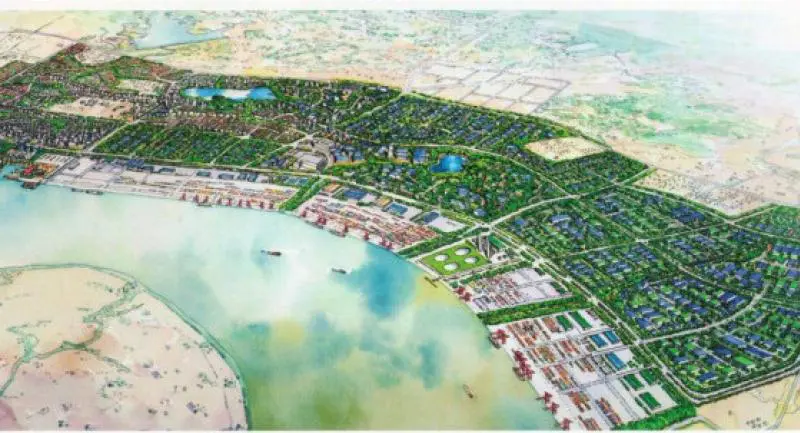
In Myanmar, meanwhile, foreign investors are also expanding their investment in the Thilawa Special Economic Zone, according to a special report by the country’s Eleven Media Group.
The report found the Thilawa SEZ had attracted investment from 13 countries, including Japan, Singapore, China, Thailand, the United Arab Emirates, Panama, Malaysia and South Korea.
Foreign investment in Thailand
In Thailand, Japanese developer Mitsui Fudosan has invested more than Bt20 billion over the past three years via a joint venture with a local residential property company, Ananda Development.
Mitsui Fudosan is also interested in expanding its investment in other areas, such as hotels, offices and retail in the next phase of its activity in the Kingdom.
Another Japanese firm, Mitsubishi Estate Group, also established a joint venture – with AP (Thailand) – to develop condominium projects in Thailand worth nearly Bt20 billion since 2014.
Singaporean businesses are also expanding their investment in Thailand in both the residential and hospitality sectors, such as Frasers Centrepoint (FCL), which is proposing to spend Bt13.23 billion to take a major stake in a Thai property firm.
The deal, which would be the biggest in the real-estate sector by a Singaporean player this year, involves FCL buying 40 per cent of Ticon Industrial Connection.
Property firms from mainland China are also expanding their investment in Thailand, such as King Wai Group’s Bt300-million outlay earlier this year to purchase a 45.45-per-cent stake in Keppel Thai Property, a subsidiary of Singapore’s Keppel Corp, for the development of residential projects here.
In the other direction, Thai property companies are expanding their investment within Asean, such as industrial-estate developer Amata Corp, which has plans to do so in Vietnam and Myanmar.
“We see business opportunity to expand our investment in Asean countries following the AEC’s coming into effect, which will improve investment opportunity between Asean member states and also challenge foreign investors to expand their investment in the region,” Amata chief executive officer Vikrom Kromadit said recently.
Improved infrastructure links
The trend for aggressive investment in the Southeast Asian property sector by non-Asean as well as Asean investors is due largely to the fact that member states of the regional grouping themselves have investment programmes to develop transportation infrastructure, in order to improve links between their countries following the introduction of the single market under the AEC.
For example, the Thai government plans to invest up to Bt2 trillion in infrastructure projects from 2016 through 2027.
In Laos, meanwhile, investment to develop the railway system will turn the landlocked nation into a land-link, according to a Vientiane Times report.
A collaborative venture between the Lao government and its Chinese counterpart plans to construct a high-speed rail route from Vientiane to Boten – a Lao-Chinese border checkpoint – over a distance of 417 kilometres.
The rail line will link Kunming in China all the way down to Singapore, passing through Laos, Thailand and Malaysia, which will boost investment and property-market growth in Laos.
Vietnam also plans to develop infrastructure projects worth up to US$45 billion (Bt1.57 trillion) between 2016 and 2020, according to a recent report by Viet Nam News.
The investment in Asean countries’ transportation systems over the next five to 10 years will drive land prices and property markets in the region, with a change in emphasis from central business districts in the capitals to upcountry provinces in each country.
