
CP Group's Circular Loop: How Thailand's Biggest Conglomerate Is Closing the Agricultural Waste Gap
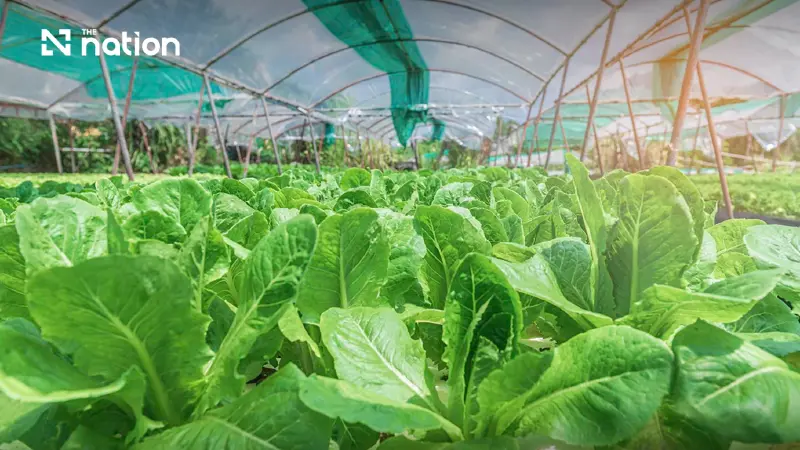


Charoen Pokphand Group's circular agriculture model is turning crop waste and wastewater sludge into soil nutrients and biogas — rewriting the economics of smallholder farming in Thailand
- CP Group converts agricultural byproducts like wastewater sludge, eggshells, and biogas digestate into valuable soil nutrients, which are distributed to smallholder farmers to boost crop yields.
- The conglomerate is replacing coal with renewable energy derived from waste, using biomass and biogas to power its operations and significantly reduce greenhouse gas emissions.
- A zero-food-waste initiative diverts waste from landfills by repurposing it into products such as fertilizer, animal feed, insect protein, and energy.
- This circular model provides a distributed infrastructure that increases the competitiveness of small farmers while reducing the environmental impact of agricultural waste, such as residue burning.
Charoen Pokphand Group's circular agriculture model is turning crop waste and wastewater sludge into soil nutrients and biogas — rewriting the economics of smallholder farming in Thailand.
In the rice fields of Prachinburi province, a farmer named Praphan Manop expanded his operation from five rai to 24 rai between 2022 and 2024 — not by acquiring new land, but by unlocking yield improvements from a resource he had previously ignored: treated water recycled from a nearby Charoen Pokphand Foods egg-laying farm.
His rice yields, which had averaged 40 to 70 tang per rai in sandy fields, climbed to 100 tang per rai in clay fields after he began applying the nutrient-rich water as a fertiliser substitute. The cost reduction on synthetic inputs alone changed his margin structure.
This story — replicated thousands of times across Thailand's provinces — is the human face of the country's Bio-Circular-Green (BCG) economic model and of Charoen Pokphand Group's (CP Group) most consequential strategic pivot: the transformation of agricultural waste from a liability into a distributed asset.
CP Group's food subsidiary CPF was among the first major Thai agribusinesses to formalise the shift, eliminating coal from its Thailand operations entirely under the Coal Free 2022 initiative and shifting to biomass energy in its place.
By 2023, renewable energy accounted for 30 per cent of CPF's total energy consumption — comprising 69 per cent biomass, 29 per cent biogas, and 2 per cent solar — reducing greenhouse gas emissions by more than 600,000 tonnes of carbon dioxide equivalent.
The company's targets call for renewable energy to reach 50 per cent of total consumption by 2030 and 100 per cent by 2050.
The waste-to-value pipeline is more intricate than energy alone. CP Group's Fertiliser for Community Project, launched by its swine business in 2004 and later extended to egg-laying farms, distributes treated biogas system water to surrounding smallholders year-round.
In 2024 alone, nine egg-laying farm complexes delivered over 480,000 cubic metres of fertiliser water, supporting 3,500 rai of farmland.
Beyond water, the programme shares eggshell waste — a natural calcium fertiliser — and biogas digestate, distributing over 86,000 kilograms of eggshells and 3.7 million kilograms of digestate to smallholders growing rice, sugarcane, and organic herbs.

CP Group's broader zero-food-waste commitment adds another layer. At the Thailand Zero Food Waste Forum in October 2025, CEO Suphachai Chearavanont outlined a roadmap to reduce annual food waste from 41,513 tonnes (the 2024 baseline) to 5,480 tonnes by 2030 — a 24.25 per cent average annual reduction since 2019.
Current processing diverts 25,207 tonnes to fertiliser production, 13,586 tonnes to animal feed donation, 6,436 tonnes to Black Soldier Fly protein cultivation, and 4,290 tonnes to energy generation. Zero tonnes to landfill is the stated ultimate goal.
The systemic significance of CP Group's model extends beyond the corporation itself.
By distributing nutrient-recovery infrastructure across Thailand's provinces — rather than centralising it — the company effectively subsidises smallholder farming competitiveness while reducing the ecological burden of agricultural residue burning, one of the primary causes of seasonal air quality crises in northern and central Thailand.
The BCG model, formally endorsed by the Thai government as a national development framework, has found its most comprehensive large-scale private sector demonstration in the CP Group. Whether other conglomerates and smaller agribusinesses can replicate its pipeline at a provincial scale remains the critical policy question.
