
Bank of Thailand Crackdown on 'Grey Capital' Targets Cash Deposits and Stablecoins
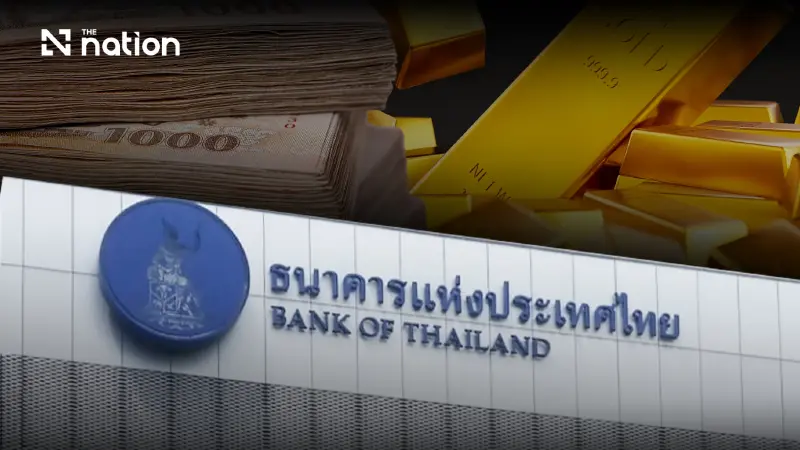


Bank of Thailand Governor Vitai Ratanakorn targets the shadow economy with strict Q4 deposit checks, bullion tracking, and a joint SEC audit into USDT
- The Bank of Thailand will require individuals depositing 5 million Baht or more in cash to formally verify the source of their funds, complementing existing rules on large withdrawals.
- In a joint effort with the Securities and Exchange Commission (SEC), the central bank is auditing high-volume stablecoin transactions, specifically focusing on Tether (USDT), to identify and stop illicit financial flows.
- The crackdown also includes tighter controls on bullion trading, requiring banks to report suspicious patterns like rapid digital purchases followed by same-day physical withdrawals to combat money laundering.
Bank of Thailand Governor Vitai Ratanakorn targets the shadow economy with strict Q4 deposit checks, bullion tracking, and a joint SEC audit into USDT.
The Bank of Thailand (BOT) is prepared to launch a sweeping regulatory crackdown in the fourth quarter to isolate illicit financial flows, forcing individuals depositing 5 million Baht or more in cash to formally verify the source of their funds.
According to Thansettakij reporter Sininat Phadungkan, BOT Governor Vitai Ratanakorn announced that the central bank will step up measures targeting the "grey economy".
The intervention expands commercial bank compliance duties across cash networks, bulk currency exchanges, bullion trading, and suspicious stablecoin transactions, directly preventing regulated entities from facilitating systemic corruption or shadow economies.
"The measures we are implementing are not short-term fixes; they require the continuous deployment of multiple parallel strategies," Governor Vitai noted during an address at the 2026 Advanced Economic Journalist Capacity Development Project training session.

High-Value Cash and Banknote Controls
The fourth-quarter deposit rules build upon capital restrictions introduced in April, which mandated that anyone withdrawing 5 million baht or more in cash must provide a verified commercial justification to their bank explaining why electronic transfers or cheques could not be utilised.
The central bank confirmed that this initial layer of friction caused high-value physical cash withdrawals to plunge by 35% nationwide. To close the circuit, the upcoming guidelines will compel a matching source-of-funds declaration on the deposit side.
Additionally, the BOT is assessing tracking mechanisms for high-value banknote swaps, specifically targeting individuals seeking to exchange massive volumes of 1,000 baht notes into smaller 100 or 500 baht denominations without clear business reasoning.

Restricting the Liquidity of Shadow Bullion Trading
The central bank has similarly tightened reporting frameworks for gold trading. Although designed to shield the Thai Baht from the volatility of speculative bullion transactions, the controls are actively squeezing money laundering loopholes.
Regulators flagged a recurring pattern where buyers purchased large quantities of gold via digital applications in the morning and executed immediate, same-day physical withdrawals from retail gold shops in the afternoon.
Lenders are now legally required to flag and report these structural anomalies directly to the Anti-Money Laundering Office (AMLO).
Following the intervention, physical gold withdrawals collapsed from a monthly average of 4,000 kilograms to approximately 700 kilograms, demonstrating that irregular trading channels are being restricted.
Combatting Digital Loopholes and Online Gambling
On institutional banking, the BOT has instructed all commercial operations to enforce heightened Know-Your-Customer (KYC) screening at account opening stages, specifically aiming to eliminate mule accounts tied to online gambling networks.
The central bank confirmed that thousands of high-risk retail accounts linked to digital betting syndicates have already been systematically frozen.
To counter capital flight through digital assets, the central bank is deploying advanced data analytics alongside the Securities and Exchange Commission (SEC), which maintains direct statutory authority over virtual currencies.
The joint oversight team has initiated deep audits into trading volumes surrounding major stablecoins, specifically focusing on Tether (USDT).
Analytical models identified a subset of high-volume stablecoin transactions specifically structured to conceal ownership details or circumvent standard onshore remittance channels. The investigative findings have been handed over to the SEC for formal disciplinary and statutory enforcement action.
