
Koh Lanta and Songkhla bridges move closer to construction
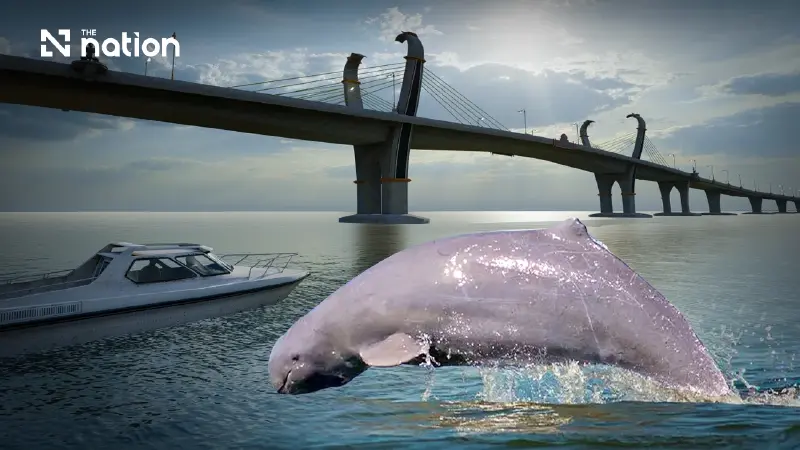


Thailand plans to begin building the Songkhla Lake and Koh Lanta bridges in 2026, with safeguards covering sensitive habitats and Irrawaddy dolphins.
- Construction on Thailand's Songkhla and Koh Lanta bridges is scheduled to begin in 2026, following the finalization of a World Bank loan agreement.
- The Songkhla Lake bridge will connect Songkhla and Phatthalung provinces, while the Koh Lanta bridge in Krabi will replace reliance on vehicle ferries.
- Both projects aim to shorten travel times, improve local connectivity, and boost economic and tourism development in southern Thailand.
- Strict environmental and social safeguards are central to the plans, with specific measures to protect endangered Irrawaddy dolphins near the Songkhla bridge site.
Thailand is moving closer to starting construction of two major bridge projects in the South this year, while putting environmental and social safeguards at the centre of plans for the ecologically sensitive areas.
The Ministry of Finance is completing the legal and administrative procedures needed for a World Bank loan agreement to take effect, paving the way for the Ministry of Transport’s Department of Rural Roads (DRR) to sign construction contracts and begin work in 2026.
The process follows the signing of a loan agreement and a grant assistance agreement with the World Bank by Deputy Prime Minister and Finance Minister Ekniti Nitithanprapas on July 23.
The Songkhla Lake bridge, with a budget of 4.841 billion baht, will connect Krasae Sin district in Songkhla with Khao Chaison district in Phatthalung. The Koh Lanta bridge project in Koh Lanta district, Krabi, has a budget of 1.854 billion baht. Winning bidders for both projects have already been announced.
The bridges are intended to address longstanding transport difficulties in the two areas. Travellers crossing Songkhla Lake have had to make lengthy road detours, while journeys to Koh Lanta have relied on vehicle ferries that can involve long queues.
Both projects, however, face significant environmental challenges. The Songkhla Lake bridge lies in a protected area inhabited by endangered wildlife, including Irrawaddy dolphins, while the Koh Lanta bridge is planned in an environmentally sensitive conservation area.
Once completed, the two bridges are expected to shorten travel times, improve connections between communities and support further economic and tourism development in southern Thailand.
Local input shapes environmental safeguards
Jindarat Viriyataveekul, Director-General of the Public Debt Management Office (PDMO), outlined the preparations following a visit to assess construction readiness at the Songkhla Lake and Koh Lanta bridge sites.
To address the environmental challenges, PDMO has worked with the DRR and the World Bank to organise public consultation forums for communities affected by both projects.
According to PDMO, local residents expressed strong support for the projects while contributing suggestions to the design process aimed at limiting disruption to natural ecosystems and protecting the livelihoods of traditional fishing communities.
PDMO has also sought World Bank support in developing an integrated plan to manage environmental and social impacts during construction. The plan will follow the World Bank’s Environmental and Social Standards (ESS).
The approach is intended to ensure that the two bridges improve economic opportunities, quality of life and safety for local communities while protecting the surrounding environment.
Irrawaddy dolphin protection built into bridge plan
Particular attention is being given to the conservation of Irrawaddy dolphins in Songkhla Lake, where the population is estimated at just 14–20 animals.
Alongside strict measures to protect the dolphins from threats during construction, the conservation and recovery plan includes ongoing improvements to their habitat and food sources, as well as efforts to restore the ecological health of Songkhla Lake.
Relevant agencies have also signed a memorandum of understanding to enforce stringent environmental measures throughout construction of the Songkhla Lake bridge.
These include continuous monitoring of Irrawaddy dolphin movements around the construction area and measures to control water pollution. Sediment-trapping systems will be used to prevent soil and construction debris from dispersing into the lake and increasing water turbidity, which could affect dolphin feeding grounds and their ability to hunt.
Areas used for refuelling machinery or handling lubricants will also be tightly controlled and contained to prevent oil or other contaminants from entering the water.
With construction expected to begin in 2026, the two bridge projects will test how major transport infrastructure can improve connectivity and support local economies while meeting strict environmental safeguards in some of southern Thailand’s most sensitive ecosystems.
