
Sufficiency Economy Philosophy Key to Bridging Thailand’s Economic Divide, Summit Hears
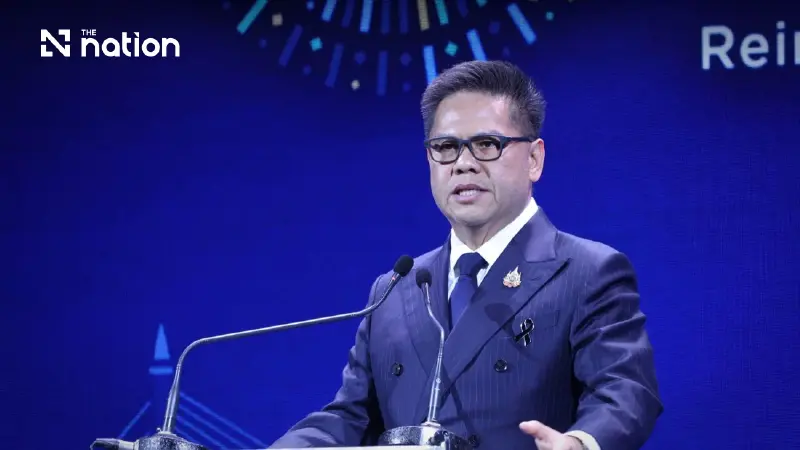


At the Bangkok Business Summit, Thai leaders set out how the Sufficiency Economy Philosophy can make growth more inclusive and resilient
- Thailand is promoting the Sufficiency Economy Philosophy (SEP) as the primary solution to its "K-shaped" economic divide, where high-tech sectors advance while small enterprises and agriculture lag behind.
- The philosophy, centered on moderation and resilience, is being used to guide industrial restructuring away from a sole focus on GDP growth toward more inclusive development.
- A key implementation is the "AI²" strategy, which aims to develop both advanced high-tech industries and modernize the agricultural sector to boost rural incomes and bridge the economic gap.
- Practical tools, such as the TISI 9999 corporate management standard, are being deployed to help small and medium-sized enterprises apply SEP principles to build resilience and meet ESG standards.
As Thailand prepares to host the world's financial leaders in October, senior government officials, royal advisers, and corporate executives at the Bangkok Business Summit argued on Thursday that economic growth cannot be measured by headline gross domestic product (GDP) or foreign investment figures alone.
Instead, true progress must be judged by whether ordinary communities, small enterprises, and agricultural workers advance alongside the national economy.
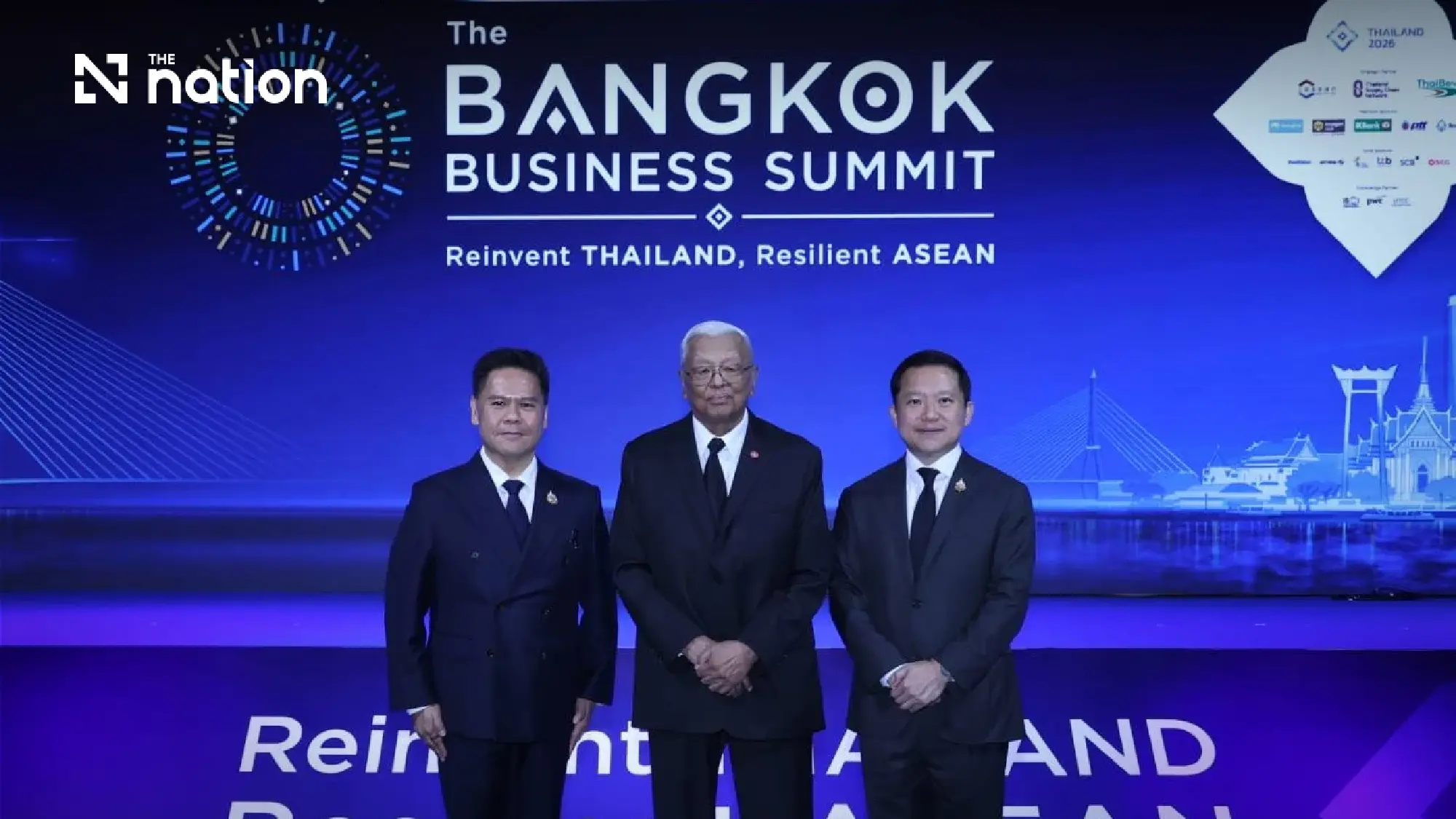
Delivering a keynote address titled "Sufficiency for Sustainability: From Philosophy to Actions" during The Bangkok Business Summit: Reinvent Thailand, Resilient ASEAN, Industry Minister Varawut Silpa-archa warned that Thailand’s economy risks splitting into two distinct paths.
He cautioned that a "K-shaped" divergence—where high-technology sectors race ahead while local supply chains and small-and-medium-sized enterprises (SMEs) lag behind—presents a fundamental systemic risk.
A Strategy for the "K-Shaped" Economy
Varawut noted that compounding global disruptions, including geopolitical friction, technological shifts, climate change, and fragile supply chains, have widened the divide between capital-intensive multinational ventures and vulnerable local firms.
"Growth that leaves more than half of the population behind is not genuine advancement," Varawut said.
To counter this, the Ministry of Industry is deploying King Bhumibol Adulyadej’s Sufficiency Economy Philosophy (SEP)—centred on moderation, reasonableness, and self-immunity—to guide industrial restructuring.

A core practical tool being promoted is the TISI 9999 standard, which applies SEP principles to corporate management, helping SMEs build long-term resilience and align with international Environmental, Social, and Governance (ESG) standards.
To operationalise this vision, Varawut outlined the "AI²" strategy, structured around two distinct growth engines:
Advanced Industry (AI¹): Leveraging foreign direct investment in robotics, semiconductors, data infrastructure, and artificial intelligence.
However, Varawut emphasised that capital inflows must deliver genuine skills development, engineering capabilities, and intellectual property for local firms, rather than treating Thailand merely as an assembly base.

Agriculture Industry (AI²): Bridging the lower arm of the "K" by transforming traditional farming into high-value agri-food and biotechnology sectors.
By integrating tools such as the Internet of Things (IoT) and automation into agricultural supply chains, the initiative aims to boost land productivity, reduce waste, and raise rural incomes.
Varawut highlighted that this strategy aligns with recommendations in the World Bank’s newly published Building Thailand’s Future Today report, which calls for an accelerated transition towards a high-value, knowledge-based economy.
"Don't just chase growth — build resilience," he urged delegates.

A Framework Tested by Crisis
Reinforcing the minister's message, Dr Chirayu Isarangkun Na Ayuthaya, Privy Councillor to the King of Thailand, grounded the discussion in the lessons of the 1997 Asian financial crisis.
Drawing on his experience serving on commercial bank and industrial boards during the downturn, Dr Chirayu noted that SEP provided a practical framework for navigating volatility and evaluating essential risks.
Addressing contemporary disruptions from AI, climate change, and supply chain realignments, Dr Chirayu stressed that the philosophy is a flexible decision-making tool rather than a rigid formula.
He urged business and policy leaders to weigh three fundamental questions:
What present-day practices create unnecessary vulnerability?
What actions can be taken immediately to strengthen institutional resilience?
What foundations must be established to ensure the next generation possesses the capacity to build lasting prosperity?

Community-Centred Development
Hosting the panel, Thapana Sirivadhanabhakdi, Chief Executive of ThaiBev, framed the presentations around ensuring economic gains filter down to grassroots communities.
He noted that as Bangkok prepares to host the IMF-World Bank Group Annual Meetings, Thailand has a vital platform to demonstrate how sustainable economic frameworks can deliver inclusive, long-term stability across ASEAN.
