
Beyond the Power Plant: How Nuclear Technology Powers Daily Life
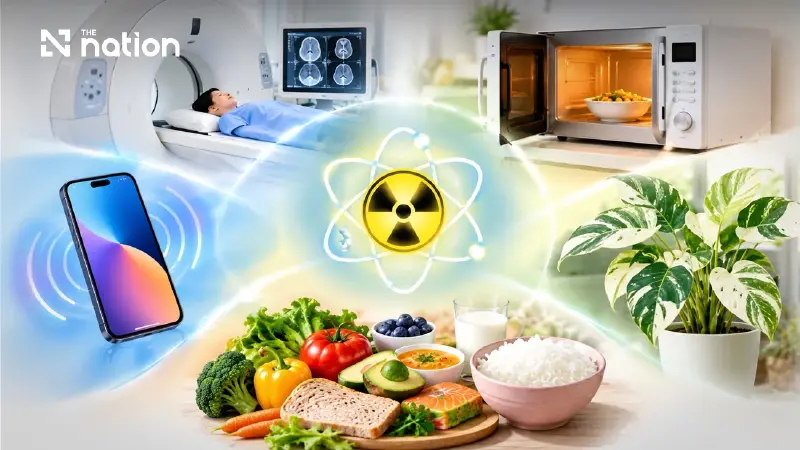


As Thailand embraces Small Modular Reactors in its latest power plan, explore how nuclear science already drives medicine, agriculture, and global transport
- Nuclear technology is fundamental to modern healthcare, powering diagnostic tools like X-rays and CT scans, as well as cancer treatments such as radiotherapy.
- In agriculture, it is used to improve crop varieties through mutation breeding, control pest populations with the sterile insect technique, and enhance food safety and shelf life via irradiation.
- The technology provides long-term propulsion for global transport, enabling nuclear-powered vessels like aircraft carriers to operate for more than 20 years without refueling.
As Thailand embraces Small Modular Reactors in its latest power plan, explore how nuclear science already drives medicine, agriculture, and global transport.
As nations worldwide accelerate their transitions towards net-zero emissions, discussions surrounding Small Modular Reactors (SMRs) have entered the mainstream.
Positioned as a clean and reliable energy option of the future, SMRs have officially been incorporated into Thailand’s draft Power Development Plan (PDP 2026), marking a pivotal step towards achieving the nation’s carbon neutrality goals by 2050.
Yet, mention the word "nuclear", and many people immediately conjure images of catastrophic past accidents or colossal power generation facilities. According to experts, however, nuclear technology is far from being a distant or abstract concept—it is already deeply embedded in our daily lives.
Demystifying the Atom
Assoc. Prof. Dr Jessada Denduangboripant, a faculty member in the Department of Biology at Chulalongkorn University’s Faculty of Science, explains that the term "nuclear" stems from the nucleus—the core of a living cell or an atom.
When these cores interact or collide, they release immense energy through two primary processes: nuclear fission (splitting) and nuclear fusion (combining).
"Today, we utilise nuclear science across numerous sectors, including medicine, environmental monitoring, and agriculture, without many of us even realising it," Dr Jessada notes.
In healthcare, diagnostic tools such as X-rays and CT scans, alongside radiotherapy and chemotherapy for cancer treatment, rely fundamentally on nuclear technology. Even the security scanners used to inspect luggage at airports operate on these same scientific principles.

Agricultural Innovation and Food Safety
Agricultural science has harnessed nuclear technology for decades to drive crop improvement through mutation breeding. By exposing crop seeds or plant rhizomes to targeted radiation, scientists alter DNA structures to produce drought-resistant varieties, enhance photosynthesis, boost yields, or even generate unique ornamental plant traits.
A prime biological application is the sterile insect technique (SIT), used to combat agricultural pests like the oriental fruit fly. By irradiating fly pupae to render them sterile before releasing them into the wild, authorities can disrupt the breeding cycle and sustainably suppress pest populations without heavy chemical pesticide use.
Furthermore, radioactive tracers are deployed to monitor industrial waste emissions and verify environmental compliance. Public perception is also evolving regarding food irradiation.
When food products undergo irradiation, gamma rays pass cleanly through the items to destroy harmful pathogens, microbes, and parasites without altering their nutritional value, chemical structure or leaving any radioactive residue. This process safely extends shelf life under strict regulatory oversight.

Real-World Propulsion: Nuclear-Powered Vessels
The practical viability of complex nuclear systems is regularly demonstrated on a global scale. For instance, nuclear-powered United States aircraft carriers—such as the USS Abraham Lincoln (CVN-72) and USS George H.W. Bush (CVN-77)—frequently dock in Thailand for crew respite.
These vessels are propelled by Westinghouse A4W pressurised water reactors, which utilise heat from nuclear reactions to generate steam that drives onboard turbines.
This technology allows massive warships to operate continuously for 20 to 25 years without refuelling while easily generating sufficient electricity for a population of roughly 5,000 crew members.
Crucially, these reactors feature closed-loop safety systems designed to prevent any radioactive leakage into the external environment.

From Large-Scale Power to SMRs
As the public grows more familiar with the controlled, everyday applications of nuclear science, heavy industrial adaptations are beginning to shrink in scale for safer, more accessible civilian use.
Transitioning from legacy nuclear stations to SMRs represents a major leap forward for clean energy security.
Under Thailand’s strategic roadmap, the Electricity Generating Authority of Thailand (EGAT) has been entrusted to pilot an initial 300 megawatts of SMR capacity into the national grid towards the end of the plan's horizon around 2030, reinforcing the nation's steadfast journey towards a sustainable, net-zero future.
