
Which eco-friendly products appeal to young Thai consumers in 2026?
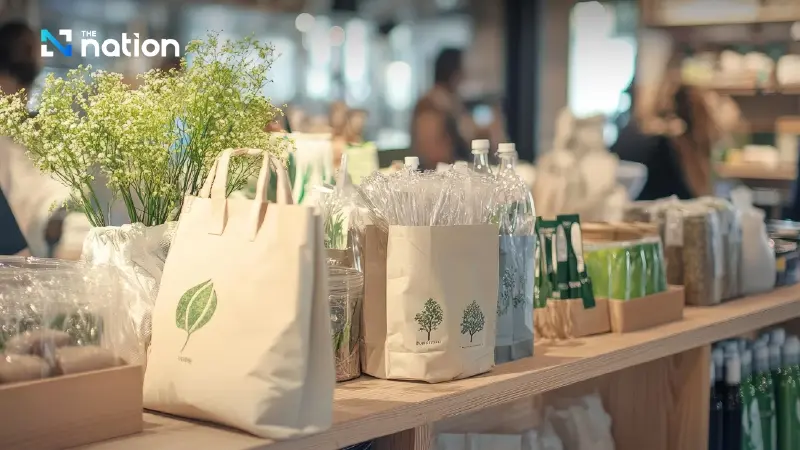


Food and drink lead sustainable choices at 48% across six markets. In Thailand, 69% of online shoppers buy sustainably sourced goods monthly, while Gen Z wants value and proof.
- Young Thai consumers show the most interest in sustainable everyday essentials, particularly food and drink, cleaning supplies, and personal care products.
- Value for money is a crucial factor due to cost-of-living pressures; shoppers demand quality and will only pay a small premium for products with clear, verifiable environmental benefits.
- There is a growing trend towards circular consumption, with many young consumers increasingly buying second-hand or refurbished goods to reduce waste and manage budgets.
- Appealing product features include minimal or eco-friendly packaging, pesticide-free ingredients, and transparent, credible information that avoids greenwashing.
Young Thai consumers are increasingly drawn to sustainable products, and international research places food and drink at the top of the list. Yet green credentials alone no longer guarantee a sale. As household budgets come under pressure, shoppers want good quality, reasonable prices and credible evidence that a product genuinely benefits the environment.
Research published in 2025 and 2026 suggests that Generation Z and millennials are looking beyond labels to consider where ingredients come from, how goods are manufactured and whether brands take responsibility for their environmental impact.
Thailand’s Trade Policy and Strategy Office (TPSO), under the Ministry of Commerce, reports that younger consumers increasingly weigh these factors alongside price and value.
Some are prepared to pay roughly 5–10% more for sustainability-certified, organic or products designed to reduce plastic use, provided the benefits are clear and trustworthy.

Green ambitions meet the cost-of-living squeeze
A nationwide survey by Marketbuzzz and Thammasat University’s School of Global Studies found that the cost of living was Thai respondents’ biggest concern, cited by 45%. Even so, 72% were willing to support environmentally responsible brands.
The apparent contradiction highlights a practical shift: shoppers still care about sustainability, but they are unwilling to pay a premium for promises alone.
The College of Management, Mahidol University (CMMU), identified a similar trend towards value-conscious behaviour in its THAI SMARTSUMER 2026 research.
More than 90% of Thai consumers across generations reported making more considered purchasing decisions, particularly when evaluating sustainable products.
For sustainability-focused brands, transparent and verifiable claims are crucial to building trust and avoiding accusations of greenwashing.
A survey by Thailand’s National Innovation Agency (NIA) also found that 36% of Thai Gen Z consumers had become more interested in environmentally friendly products, while 53% were willing to spend more on goods offering health benefits.
The findings suggest that products combining everyday usefulness, wellbeing and sustainability have a stronger appeal.
Which eco-friendly products are consumers buying most?
Food and drink topped the list in Blue Yonder’s 2025 Sustainability Survey, which covered more than 5,000 consumers in the United States, United Kingdom, France, Germany, Australia and New Zealand.
Over the preceding year, 48% of respondents had chosen more sustainable food and drink options, followed by cleaning products at 37%, personal care and beauty products at 30%, and clothing and footwear at 26%.
Although the international findings are not specific to Thailand or Gen Z, they point to a wider trend: consumers are more inclined to make greener choices in everyday essentials than in expensive, infrequently purchased products.
This creates opportunities for businesses offering sustainable food, beverages, household cleaning products and personal care items at accessible prices.
Nearly seven in 10 Thai online shoppers buy sustainably sourced goods
Thailand-specific findings in DHL’s E-Commerce Trends Report 2025 reinforce the trend.
Among Thai online shoppers, 69% bought sustainably sourced products at least once a month, while 65% indicated they would be likely to use a retailer’s recycling or buy-back programme.
Another 41% bought pre-owned or refurbished clothing online, highlighting demand for alternatives that reduce waste while stretching household budgets.
Second-hand purchases can therefore serve two purposes: making goods more affordable and extending their useful life.
The figures suggest that sustainable consumption is expanding beyond certified green products to include reuse, recycling and other forms of circular consumption.

Why young consumers are sceptical of green marketing
A study of 1,541 Thai Gen Z respondents, published in Frontiers in Sustainability in January 2026, identified brand image as an important influence on intentions to buy sustainable products.
However, the research revealed a substantial gap between environmentally conscious habits and actual purchasing behaviour.
Some 76% brought reusable bags when shopping, 71% separated recyclable waste and 65% conserved energy.
Yet only 29% chose products made with sustainable materials and packaging, while approximately one in six expressed a willingness to pay extra for sustainability.
These findings highlight a challenge for businesses: environmental awareness does not automatically translate into purchases.
A separate study of 400 Thai Gen Z consumers aged 20–28, published in the Journal of Business, Innovation and Sustainability in March 2026, found that accessibility, personal attitudes and perceived value significantly influenced intentions to buy sustainable groceries.
Together, the studies suggest that environmental awareness must be supported by affordable prices, convenient access and dependable product performance before it turns into sales.
For younger shoppers, a product's environmental credentials may attract attention, but quality, practicality and value ultimately influence whether they buy it.
Proof, not greenwashing, is the selling point
PwC Thailand’s Voice of the Consumer Survey 2025 found that Thai respondents valued pesticide-free products (44%), minimal or environmentally friendly packaging (43%) and manufacturers supporting local environmental initiatives (41%).
Seven in 10 also intended to buy only what they needed, helping to reduce food waste.
Meanwhile, Mastercard’s The Next Era of Conscious Consumption report, published in 2026, found that 38% of consumers were seeking second-hand products more often than before.
The proportions were higher among younger consumers, reaching 43% among Gen Z and 41% among millennials, underscoring the growing appeal of pre-owned goods among younger generations.
These findings illustrate how sustainability increasingly overlaps with affordability, durability and the reuse of existing products.
For brands hoping to appeal to younger consumers, the message is clear: sustainable products must deliver practical benefits as well as environmental ones.
Traceable sourcing, credible certification, honest information, good quality and fair prices count more than vague green slogans.
Shoppers may pay extra for a product that helps protect the planet. They are far less likely to pay for an environmental claim a brand cannot substantiate.
Source: Springnews
