
Carmakers in top gear


Play
Indefinite extension of vehicle deliveries and upcoming motor show strengthening industry
After the Cabinet approved the indefinite extension of vehicle deliveries for the First Car Buyer Programme under which orders have to be placed by December 31, many automobile companies have been quickly adjusting their strategies to claim a bigger market share before the year ends.
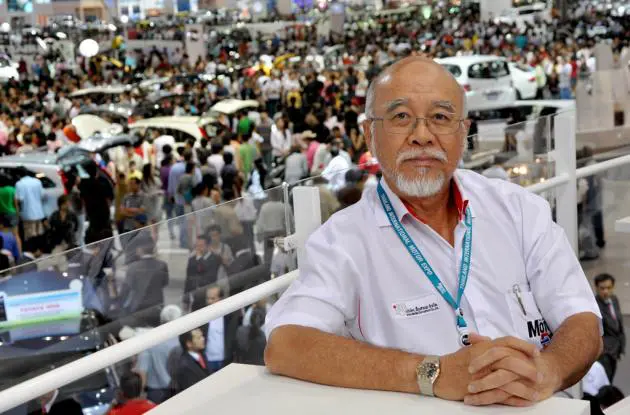
There is a major event to be staged at the end of the year – the Thailand International Motor Expo, which is organised by Kwanchai Paphatphong, who is also publisher of several automotive magazines and and host of television programmes.
Kwanchai said 38 brands will be taking part in this year’s event, to be held in late November at Muang Thong Thani.
“Newcomers to the show include Jaguar and Land Rover, while a large number of motorcycle companies will be exhibiting big bikes. They include Honda, Suzuki, Ducati, Kawasaki, KTM, Triumph, UDA, SYM, M Bike, GPX, etc. The accessory zone is also totally filled up,” he said.
The show area for this year’s event is 60,000sqm.
Kwanchai said the First Car Buyer Programme has definitely helped boost the auto industry.
“The extension for vehicle deliveries dramatically helps those who decide to place orders at our event,” he said.
The motor expo is the last major auto sales event of the year.
The sales target by the show organiser has been raised from 35,000 to as much as 45,000 to 50,000 orders, with 10,000 vehicles being purchased under the First Car Buyer Programme.
“If there are no major changes then, this is an achievable target,” he pointed out, adding that the amount of circulated money would rise from Bt33 billion last year to Bt53 billion this year. Meanwhile, attendance is expected to rise from 1.34 million visitors in early 2012 to 1.7 million in late 2012.
“The programme is like a bonus for auto companies, but we must also understand that it will steal future demand and there is no delivery deadline. The auto market usually grows by 10 per cent each year, but today it is surging by 20-25 per cent. We must wait and see the effects and hope that the government will not switch policies again,” he said.
Excise Department puts brakes on some projects
The indefinite delivery period has led to many headlines, including the news that Toyota’s planned eco-car for March 2013 could be instead launched at the November motor expo. Orders can be accepted before the year ends and vehicle deliveries could be carried out in 2013.
However, all these news has forced the Excise Department to come out and announce the details once again.
Excise Department director-general Benja Louicharoen explained that the government decided to extend the delivery period under the First Car Buyer Programme because it saw that auto-makers may not be able to deliver vehicles in time to meet the original deadline or March 31, 2013.
“However, we are not aiding auto companies too much – just allowing them to deliver the vehicles at a suitable time,” she said.
She stressed that vehicles eligible for the programme must be models produced and taxed in 2012. Models that are to be launched in 2013 but which are not assembled, gone through taxation or sold within this year, are not eligible for the excise tax rebate.
Benja added that auto companies need to consult with the Excise Department concerning the details of models under the programme before eligibility is granted.
“Models to be launched next year cannot participate in the programme,” she clarified. “We have already said that the vehicles must be sold this year. We have just extended the delivery period, not the programme. And we must also see whether the model intended to be sold has been assembled and gone through tax formalities at the factory within this year. So we can confirm that we are not aiding auto companies that much,” she said.
She made it clear that if new 2013 models are exhibited at the November motor expo with orders being accepted, they will not be allowed as part of the First Car Buyer Programme if they don’t pass all the requirements.
The original requirements of the programme are as follows:
1. New vehicles must be purchased from September 16, 2011, to Dec 31, 2012;
2. The retail price should not exceed Bt1 million;
3. Passenger cars must have an engine capacity of 1,500cc or lower; pickup trucks and double cab pickup trucks are eligible;
4. Vehicles need to be assembled locally; re-assembled vehicles are not eligible.
According to the Excise Department’s website, nine auto brands (with 161 models) are taking part in the programme this month. Toyota leads with 48 models, followed by Mazda with 36, Honda 20 (including the newly launched Jazz Hybrid), Chevrolet 19 (including the new Sonic), Nissan 14, Mitsubishi 10, Ford 5, Kia 5 and Suzuki 3.
There are eight brands (with 248 models) on the pickup side. They are Isuzu with 64 models followed by Toyota with 43, Chevrolet 37, Mitsubishi 28, Nissan 22, Mazda 20, Ford 19 and Tata 15.
The Excise Department said that according to an initial survey, an expected 425,000 vehicles will be purchased under the First Car Buyer Programme. As of July 23, approximately 110,000 applications (Bt8 billion in excise tax rebates) have been received.
Toyota just knocking for response
According to an industry source requesting anonymity, many are concerned whether Toyota, the largest auto-maker in the country, will decide to speed up its eco-car project in order to allow it to meet the First Car Buyer Programme deadline.
But he said this is just market research by Toyota, not something it would seriously consider.
“Toyota Motor Thailand president Kyoichi Tanada has always insisted that Toyota’s eco-car project is progressing as originally planned, and there is no way that the company will speed up the launch in order to steal customers in the First Car Buyer group, because the production system is what controls everything. And there is no reason for Toyota to speed up the launch of its eco-car because the company has a production target of 480,000 vehicles this year and they are able to achieve that. A new model would be more suitable for marketing during the second half of 2013. Once the First Car Buyer Programme is concluded, a new vehicle like the Toyota eco-car should be able to stimulate the market once again,” he said.
“The eco-car is a product that enjoys very high popularity since it is highly affordable. It doesn’t need the First Car Buyer Programme to succeed. So the movement that we are seeing is just Toyota throwing a pebble into the water to see the effect. If Toyota really wants to increase the number of orders, it would likely concentrate on the new Vios because it would be a more complete product than the eco-car. However, Toyota may introduce another minor change of the Vios at the end of the year with a big sales promotion. The new Vios would be kept for debut at the Bangkok International Motor Show in March next year,” he said.
Presently major auto companies are running at full capacity and are having 3-4 months of back orders. They are unable to raise capacity further this year, he pointed out.
“What will happen next is that medium to small brands that still have the capacity or leftover capacity will rev up production to cater to the increased demand, especially for sales of new models to buyers under the First Car Buyer Programme before the designated deadline,” he added.
