
GM Powertrain sets an example on reducing waste


Play
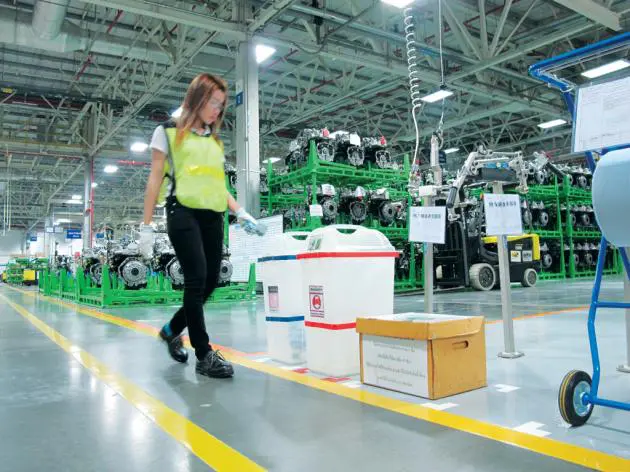
By achieving and maintaining "landfill-free status", GM Powertrain Thailand is making an important contribution to General Motors' global environmental initiative to reduce waste at GM plants around the world, while helping conserve Thailand's natural res
Approximately 97 per cent of the waste generated from everyday manufacturing operations at GM “zero-landfill” plants is recycled or reused, and the remaining 3 per cent is converted into energy.
GM’s engine plant in Rayong is the company’s first landfill-free operation this year, while 30 of the company’s overseas plants have now attained zero-landfill status.
GM has set a sustainability goal to certify 100 operations as “landfill-free” by 2020. The company is ahead of schedule, with 105 facilities both manufacturing and non-manufacturing worldwide already meeting this target.
“We’re committed to reducing our environmental impact in Thailand and around the world,” said David Clarkson, vice president of Powertrain, General Motors Thailand and Southeast Asia. “Our employees in Rayong deserve credit for their enthusiasm and effort to achieve ‘landfill-free’ status. The GM Powertrain team has worked hard to meet this goal on behalf of Thailand and the entire GM global manufacturing community. They are clearly dedicated to environmental sustainability.”
GM Thailand’s Environmental Services group is responsible for the management and reduction of all waste and manufacturing by-products, recycling and re-using as much of the material as possible.
GM Powertrain Thailand, the producer of the efficient Duramax diesel engine, has been working to achieve landfill-free status since the plant opened in 2011. Today, the facility recycles 50 per cent of all solid waste, including metal filings and chips, cafeteria waste, office materials and general trash.
According to Clarkson, GM recycles more waste from its worldwide facilities than any other auto-maker. At all of GM’s worldwide manufacturing facilities combined – landfill-free and all others – 90 per cent of the waste is recycled or reused, on average. Every GM site is serious about finding ways to reduce and reuse waste.
“In 2011, GM recycled or reused 2.6 million metric tons at its facilities worldwide,” said Clarkson. “Our landfill-free programme strengthens our business by creating efficiencies, generating revenue and inspiring innovation with products made from recycled content. Every member of our team contributes to this initiative.”
GM recently earned the highest recognition a corporation can receive from the US Environmental Protection Agency – the 2013 Energy Star Partner of the Year – Sustained Excellence award for energy management. In 2012, GM improved the energy efficiency of its US operations by 11 per cent over 2011, and saved US$20 million (Bt578.4 million) in energy costs. The 280,000 metric tonnes of reduced carbon dioxide emissions is equivalent to annual emissions from 52,900 passenger vehicles.
Generating waste, such as scrap metal, paint sludge or shipping materials, is unavoidable for a car manufacturer as large as GM. But the company is constantly finding innovative ways to re-use and recycle manufacturing by-products and waste.
GM plants monitor, measure and report monthly on how they perform in reaching waste-reduction goals. This data, which set the stage for the landfill-free initiative, shows what materials are being generated, reused and recycled, and reveals areas for improvement. This forms the basis for a waste-reduction process that enables facilities to replicate global best practices.
GM Powertrain Thailand is also working closely with its suppliers and logistics providers to share these environmental best practices and promote sustainable environmental management throughout the supply chain.
