
'BYOD' trend growing in Thailand


Play
Benefits are many, but firms require well-thought-out usage policies to cut down on risk of fraud
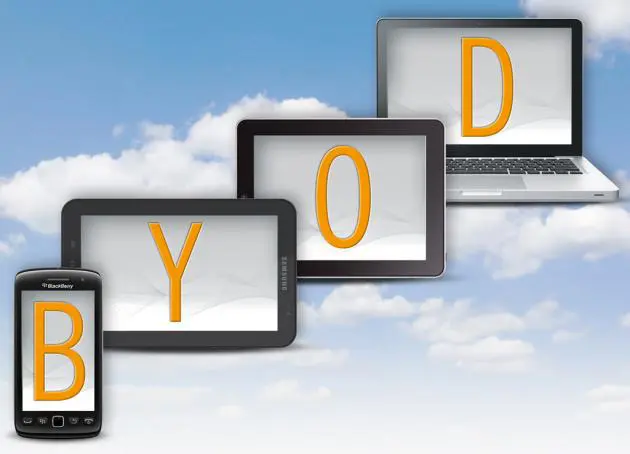
“Bring your own devices” (BYOD) has rapidly become the new trend for businesses and organisations in Thailand, with IDC reporting that more and more firms are allowing staff to use their mobile devices for company purposes in the work environment.
Nearly 60 per cent of companies provide smart phones to support their employees’ work, said the IT market research company.
Moreover, IDC points out that Android and Apple devices dominate the Thai smart-phone market, with a combined share of more than 70 per cent.
Michael Araneta, head of operations at IDC Thailand, said that with the tablet market growing by 94 per cent and the smart-phone market up 70 per cent year on year in the Kingdom, devices would become entrenched in the lives of consumers, including in their work environment as they would increasingly want to do work on their mobile devices.
A high percentage of Thai enterprises already allow their staff to work using non-corporate personal devices. The virtues of BYOD for productivity, staff satisfaction and business- process efficiency have been recognised, and are clearly understood by Thai workers and employers, he said.
However, a BYOD policy that is not well thought through can expose the enterprise further to IT risk and fraud, and might in fact be counter-productive to the business, he added.
Vasun Thirapatarapong, managing director of Cisco in Thailand and Indochina, said BYOD had become one of the most influential trends that has or will touch each and every IT organisation.
It is about end users being able to use the computing and communication devices they choose in order to increase productivity and mobility. These can be devices purchased by the employer, purchased by the employee, or both. BYOD means any device, with any ownership, used anywhere.
There is speculation that in the future a single device will be used for all needs – computing, communication and applications – he said.
Explosive growth
It is estimated that mobile devices and the traffic they create on networks will have increased by 26 times between 2010 and 2015, driven by more powerful smart phones and tablets, with users demanding Internet access and access to applications wherever and whenever they want, he said.
Enabling this is an explosive build-out of WiFi networks by employers, 3G and 4G networks by mobile providers, as well as public WiFi by retailers and municipalities, he added.
However, the many benefits of BYOD – such as having the choice of any device and anywhere, anytime access – are somewhat antithetical to traditional IT requirements for security and support.
Mark Wilson, strategy manager of Fujitsu, said of the BYOD model that it did not just apply to new entrants to the workplace: it impacts many of today’s mobile workers who are confused or annoyed by having separate “work” and “home” devices (PCs or phones) and who want to simplify their IT, consolidating personal and corporate computing onto the same devices.
BYOD is an exciting model with a number of potential benefits for the consumer, the
business and the provider of IT services, he said.
The benefits include the ability to use a device that fits each need and style, while there is also a reduction in hardware assets owned – as the capital expenditure relating to devices moves from the business to the employee.
Meanwhile, an executive from Trend Micro said the company had allowed its employees to use their personal devices for work since it created productivity enablement, business IT capital-cost saving and social collaboration, besides which executives want it and it has become the workplace trend.
Chawapol Jariyawiroj, country manager Thailand and Indochina for VMware, said more than half of companies now allowed allow employees to use personally owned devices to access the corporate network.
Moreover, new companies are using BYOD as the foundation for their network infrastructure, and a growing number of organisations – including VMware – give employees complete freedom to purchase and use their own devices to access corporate data.
The attraction of BYOD is easy to understand, he said, adding that smart phones and tablets offer an unprecedented level of flexibility, and when employees buy their own devices, the company can save on hardware and IT-support costs.
Chanwit Rattanabodee, solutions manager of nForce Security, said that with more than 70 per cent of employees in organisations and businesses now bringing their device to support their work in the office, firms should create a policy and authority for their employees to access information in the network.
This would reduce the risk from cyber-crime and anti-authority users accessing important information in the network via such tactics as DOS (denial of service) attacks, MAC spoofing, WiFi-phishing honeypots, and flooding attacks.
“I think BYOD is important for businesses and organisations. However, they should develop a policy to prevent and protect against cyber-attack by using policy-per-device, policy-per-application and context-aware policies,” said Chanwit.
