
Thailand's 'digital economy' part of 'networked society'


Play
Global trends point to more collaborative culture: Ericsson
Mobile telecommunications and the Internet have played an increasingly prominent role in the economic and social aspects of many nations, including Thailand, creating what Ericsson calls a “networked society”.
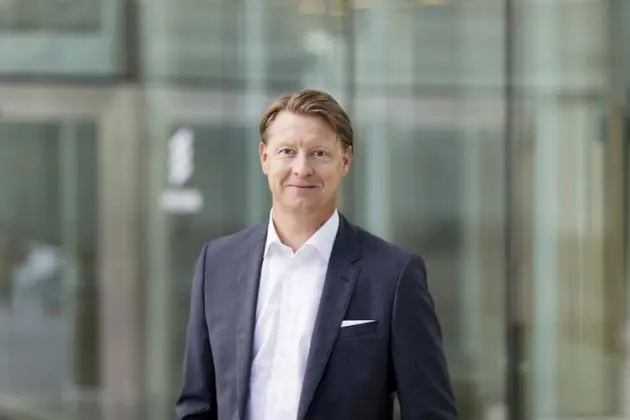
Hans Vestberg, president and chief executive officer of Ericsson, said this networked society was transforming entire industries. They are being reshaped and redefined by technological developments, while society’s needs are changing into a more collaborative culture.
Businesses are turning to smarter ways of working and new collaborative models, all of which are driving demand for greater levels of connectivity and mobility.
“The networked society is driven by mobile, cloud and broadband,” Vestberg said.
The networked society will transform economic fundamentals that enable consumers, companies and the country to realise the benefits of the online economy. Therefore, the networked society will transform Thai lifestyles and industries as well as government.
“The government’s ‘digital economy’ strategy is very much aligned with the networked society. We work closely with governments a lot when comes to digital economies. One of my tasks is talking about [how a digital economy will] transform a country through economic growth.
“When it comes to Thailand, what we can do is share the experiences [of] other countries.”
He said mobility and a mobile broadband network could support the government’s digital-economy policy. A total of 130 countries have broadband plans and most of them have digital economies. It is the right time for the Thai government to go in this direction.
Ericsson sees three factors being in place by 2020: new technology that can handle one-third of the globe; progress to the fifth generation of broadband technology; and new devices and new frequencies coming out.
“We spend US$5 billion a year on research and development. We have a lot of patents on 2G, 3G and 4G, and we are No 1 [in terms of] mobile broadband technology in the world. We have a clear research and development plan to handle the enormous data-traffic growth,” Vestberg said.
The Thai telecom industry will need more spectrum access to assure affordable mobile broadband and to stay competitive and attractive in the region. Also, advanced network capabilities will help consumers, companies, and the country realise the true benefits of a digital economy.
Vestberg visited Thailand in March to meet with the firm’s main customers, employees, and media. He has also been visiting South Korea, Japan and Indonesia. He said this allowed him to listen to customers and learn how the company can support each market and channel its direct investments accordingly.
“Of course, Thailand is an important market for Ericsson. Next year [will mark] our 100th year in Thailand. Some of our 180 markets are more important than others. We select which markets to visit, and Thailand is one of the larger markets for Ericsson. We visit Thailand almost every year,” he said.
Enormous mobile data traffic
Of the 7.1 billion mobile subscriptions in the world, more than 4 billion are still on 2G, and the majority of the world population is still using feature phones.
Vestberg said the role of Ericsson was to handle all technologies and all frequencies to migrate these subscribers all around the world.
“We think is positive to look for more frequencies to come on the market – it is important for the digital economy,” he said.
Fewer than 400 million subscribers in the world are on 4G networks, and 85 per cent of those are in just four countries – the United States, South Korea, Japan and China.
Vestberg said there would be changes in the way business is done. There will be connected cars, healthcare applications, and new types of digital services in countries that have 4G networks.
Mobile data traffic is continuing to grow. By 2020, there will be 9.5 billion mobile subscriptions; around 3.5 billion will be LTE (long-term evolution 4G) subscriptions; and 55 per cent of mobile data traffic will come from video. Video is the largest and fastest-growing segment of mobile data traffic. It is expected to grow by about 45 per cent annually through to 2020.
Fifth-generation technology will entail substantial requirements regarding interfaces, core networks, support solutions and devices. It will require enormous technological advances. It will need to meet new performance levels. However, it will enable the networked society to realise its full potential, where everything is not only connected, but connected for a purpose.
Vestberg said 5G “is the transformative technology for society and businesses. We should see a commercial 5G network coming out by 2020. Now we are shaping the future for 5G. We are a long-term company doing long-term investments.”
The company says it is enabling change in the networked society by offering hardware, software and services to advance digital experiences. For example, the Ericsson Radio System is a generational shift in how mobile networks are built on the road to 5G. Ericsson’s Media Delivery Network is a transformative media-delivery solution introducing opportunities to improve the overall media chain, turning disruptive network demand into sustainable business growth.
Vestberg said that by becoming an information-technology as well as a telecom company, Ericsson aimed by 2020 to earn 75 per cent of its revenue from software and services and the rest from other industries apart from the telecom business. Ericsson’s three focus areas are utilities, transport, and the public sector.
