
Easier to launch start-up in the US but more opportunities here


In Thailand, entrepreneurs can see problems as opportunities
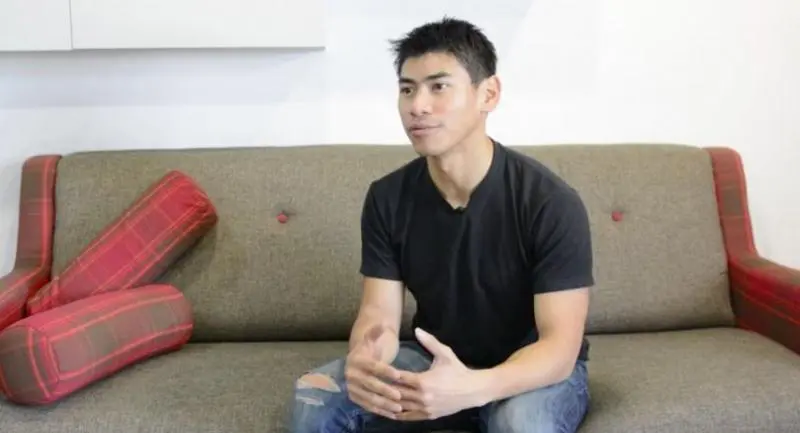
Jarupon Sathirapongsasuti, the Thai co-founder and chief technology officer of US firm SQ Technologies Inc and computational biologist at 23andMe Inc, gave The Nation an interview on the differences between establishing start-ups in the US and in Thailand, and his recommendations for Thai start-ups. Jarupon holds a PhD in bio-statistics from Harvard University, and graduated in computer science from Stanford University.
How does setting up a start-up in the United States compare with doing so in Thailand?
It is a lot easier in the US, since the ecosystem is already set up – there is so much talent, and many technologies. Funding is also easier to find, since there are more established venture groups or venture capitalists. People there, even friends and family, understand the start-up culture more.
But what is better here in Thailand than [in] the US is that there are more opportunities for entrepreneurs to look at problems as opportunities. So there are more opportunities and innovation here. One problem, perhaps, is that the Thailand market, in dollar terms, seems to be smaller. A lot of innovations get started in the US and then get out of [that country] because it is easier to start there. They can actually apply the same version [of their innovation] somewhere else.
The problem is that the total addressable market in the US is always bigger than in Thailand. It makes more economic sense in the US. At the same time, we do not think [about Thailand alone], we think about all of Southeast Asia or Asia, since the market is bigger.
Finding investors is one of the major differences between the US and Thailand. Investors in the US are easy to find. Investors are understanding of risk. Most start-ups by far fail, and investors in the US understand this. If you fail the first time, they might give you money again for the next idea, because they know you have learned from the first mistakes and you will make a better company at the second time. Investors do not [just] give start-ups money, they give them other values like connections and experience.
A lot of times, investors invest in your company because they worked with similar ideas or similar sectors before, they know people who can contribute to you, and they might sometimes run [other] companies that can be customers of your company. A lot of large companies have an investment arm that invests in smaller start-ups that then become their own customers.
Moreover, in the US, there are a lot of incubators that start-ups can engage for three or six months, depending on the kind of incubators. Y Combinator is the most successful one. But there are some more specific ones like those in healthcare, or in biotechnology. The universities sometimes offer incubation programmes.
What is your recommendation for Thai start-ups?
The start-up ecosystem in Thailand is just beginning and has a lot of potential. Start-ups need to look outside Thailand a little bit, since an attractive solution that only serves one country is probably not going to be economically vibrant. It will never be a unicorn if it serves only Thailand. So start-ups need to look a little further. They have to look for solutions that address bigger problems.
People like to think of start-ups becoming unicorns ... but this depends on the founder’s purpose for establishing the start-up. If the purpose is to solve a problem that just happen not to be worth a billion dollars, that is fine, just go and do it, and it is [satisfying] if you can solve a problem even though it does not make you a billionaire. But if becoming a billionaire is the purpose of establishing the start-up, they have to look at a problem that is bigger; it could be regional or international.
To find the right idea for a start-up, always understand users and their pain-points. They have to look at problems as opportunities. They always think they have a better way. Once they see the problem, they see it as an opportunity, they can always find the way to work it out. It needs practice.
An entrepreneur’s most successful company may not be the first [attempt]. Success might come with the second, the third, or the fourth. If they test out the first idea and it does not work, they stop and scale back. Finding problems, finding ideas is a practice that start-ups have to do all the time.
That is why the total addressable market is so important. Because if you can solve a problem that is going to be worth a million dollars or a smaller amount, that is how much your company going to be worth. But if your solution [targets] a multibillion-dollar problem, even if you solve only 1 per cent of it, your company is going to be like 10 billion dollars. So finding the problem is always the most important.
A unicorn start-up is one with valuation of a billion dollars or more. If money is the most important part of your thinking, you need to find a problem that is big enough. Generally, such problems are concerned with the fundamentals of life. This might be real estate, travel or transportation, or healthcare, while entertainment and communications are the big ones. Think about something fundamental to people’s life.
What are the main key factors of establishing a start-up?
It is about the founders and ideas. To become a successful start-up, the founder is more important than the idea. There are also the two most important things for venture capitalists to consider when investing in a start-up. One is the problem area, not just the problem itself but the categories of the problem. The company should not try to solve [only] one problem, but should eventually expand into something else.
My SQ Technologies is going from sexual app to sexual-education app and to health-education app. If that space is not attractive, venture capitalists will ignore it – no matter how good you are, they are not going to invest in it. Because it is not a big enough problem for them.
Second is people. [Investors] do not care about the start-up’s solution [it presents in its pitch for investment] since they know it is going to change. But the one thing that is never going to change is the founders. Most start-ups fail not because of the idea, but because of people. Founders are more important than ideas.
A successful start-up company with one founder is very rare, because a start-up’s journey is a long and difficult one. It is really hard to keep yourself motivated just by yourself. Being the co-founder of a company is like getting married. You have to be OK with living with that person in both good and bad times. You solve conflicts [together] and bring different things to the table and respect each other.
Ideation is the next step. Ideation is coming up with the idea, which actually involves brainstorming. The most important role of brainstorming and ideation is “always say yes”. When you brainstorm an idea, you have to think outside the box and never stop anyone from thinking something. If you say no, it will never work, that idea will never become anything else. You have always to say “yes and …”, for example yes and why don’t we do this, or yes and we would make something happen by doing this.
