
A question of politesse


Play
The picturesque town of Lijiang in south-western China bursts with tourists and souvenir vendors where Naxi minority farmers sold their wares from the ancient cobbles until 20 years ago.
Once a trading hub on the Tea and Horse Road through Yunnan province to Myanmar and India, Unesco-listed Lijiang is a more extreme example of how a tourism boom has transformed the favourite destinations of tens of millions of affluent Chinese looking for escape from larger cities.
At night, groups of noisy tourists sometimes stagger between neon-lit, bass-shaken bars in scenes that would not be out of place in Ibiza or Phuket.
The Lijiang government has posted signs urging visitors to behave as “civilised tourists”, joining a national campaign that received fresh impetus in May after online photographs showed a 14-year-old Chinese boy’s name scrawled over a 3,500-year-old relief carving in Egypt's Luxor Temple.
Most Chinese travel in groups, especially on overseas trips, partly because of many nations’ visa restrictions for independent travellers from China.
Yet while the rest of the world may be impressed by the scale of China’s foreign travel boom, it is nothing compared with the exponential growth of domestic tourism.
China’s 1.34 billion people made 83 million overseas trips and 3 billion domestic trips last year, according to government statistics.
During the debate about Luxor, state media reported similar incidents in China. In February, a Chinese tourist etched his name on a cauldron in the Forbidden City, Beijing’s world-famous former imperial palace.
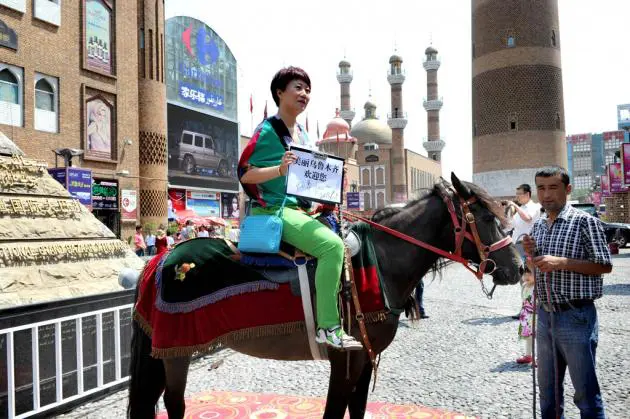
Critics of domestic tourism often accuse visitors, local governments, developers and tour operators of cultural insensitivity in less developed, remote areas of China traditionally inhabited by Tibetans, Uighurs, Mongolians and other minorities.
“In general, people from wealthier places travel to poorer places,” says Wu Bihu, an expert in tourism at Beijing University.
“Then there is a collision between ‘higher culture’ and ‘lower culture’. During that collision, some people respect local customs and culture, some people may be more egocentric and rude. This is a problem among all peoples, not just Chinese.”
Following the public debate over the Luxor graffiti, the government issued a code of conduct for tourists as part of a new tourism law to be implemented from October.
“Being a civilised tourist is the obligation of each citizen,” said the document, which urges tourists to refrain from damaging or climbing on cultural relics and to take photographs only if allowed by local customs and regulations.
Chinese tourists should “observe public order and respect social morality,” maintain a clean environment, respect other people's rights and seek “appropriate entertainment,” it said, apparently advising against the gambling and sex-centred entertainment favoured by many Chinese tourists.
