
Destination danger


Play
A "dark tourist" and other motley travellers visit Afghanistan
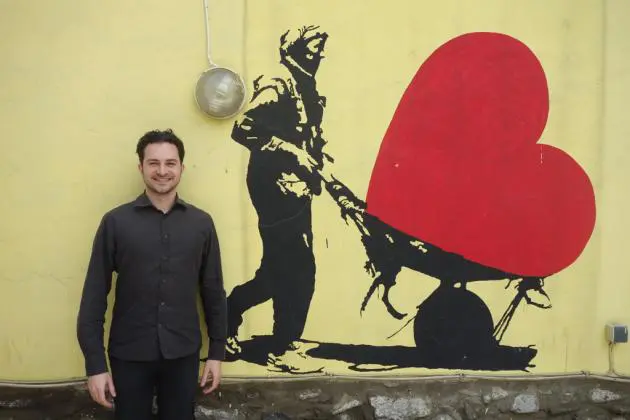
Alexandre Hryszkiewicz, a French IT professional, came to Afghanistan as a visitor, but not as your conventional tourist.
Calling himself a “dark tourist”, he is among a minority who enjoy travelling to sites associated with death, destruction and tragedy.
Their destinations may include battlefields, prisons and sites of genocide and natural disasters.
Among big draws for such travellers are Chernobyl in Ukraine, where a nuclear plant self-destructed, the Nazis’ Auschwitz concentration camp at a location in modern-day Poland and the Killing Fields of Cambodia.
“Dark tourism means going to places that are not touristic at all, because of their difficult history. The role of human survival is interesting for me,” Hryszkiewicz said during his visit to tragedy-scourged Afghanistan in May.
It is not certain whether Afghanistan has become a hot new “dark tourism” destination just yet, but it certainly fits the requirements after decades of war.
It continues to attract a motley band of tourists despite the ongoing Taleban insurgency, now in its 12th year.
“I love to travel. I like difficult places, because you see more humanity there. You see real people and a different society,” said Hryszkiewicz, who has also travelled to North Korea and Chernobyl.
From snowy mountains to blue lakes, with ancient monuments, forts, palaces and minarets along with plentiful Islamic heritage sites, Afghanistan possesses plenty of tourist attractions by regular criteria.
In the early years after the US-led invasion in 2001, thousands of tourists would show up each year to visit, despite the dilapidated infrastructure, which Afghans generally blame on the years of war.
Wais Ahmad, an official at Afghan Tour, a unit of the government which organises trips for such incoming visitors, says that some 1,360 tourists have visited the country’s secured areas since January this year.
Another official, with a private tour company, says he had had 120 clients this year, compared to 350 annually during a 2004-2007 uptick in arrivals. Half of the 120 travellers arrive from abroad specifically to sight-see.
The other half are expatriates working in Kabul, says Muqim Jamshidi, the chief executive of the Afghan Logistic Company.
Due to the Taleban insurgency, parts of the country can be quite dangerous for tourists.
One couple, a woman from the United States and her husband from Canada, have been missing since October. They were said to have been travelling on local transport, and staying among villagers when they went missing in insurgency-infested Wardak province, south of Kabul.
There have also been incidents of killings and kidnappings of foreigners.
But the insecurity does not seem to dissuade those tourists with a bit of crazy streak in them.
In 2011, a German hippie driving a 1960s fire-truck was sighted in northern Kunduz province and was sent to Kabul after local officials did not know what to do with him.
A Czech who was lodging with locals in Kabul recently thanks to an online accommodation exchange said he had planned to travel to the south, but gave up after learning that he could not find a “couch-surfing host” in Kandahar and Helmand.
Couch-surfing allows travellers and hosts to meet directly and make arrangements to stay in local people’s houses.
Oliver Heilwagen, an art and culture critic from Berlin who visited Afghanistan in June solely for pleasure said he would not have come at all if he had not had a friend in Kabul.
“I am not a thrill-seeker, and I won’t go to anarchic areas, no-go areas. But I wanted to visit Moldova, for example, before it was Pepsi-fied,” he said while waiting for his plane at crowded Kabul airport.
“You have to be cautious in Afghanistan, but travelling through Africa is more demanding, and the New York Bronx is more dangerous than Kabul,” he asserted.
Somewhat in the dark tourism tradition, Heilwagen has travelled to South Ossetia, Bosnia, Madagascar and Congo, because he wants to visit the awkward, untidy places before globalisation makes the whole world “aesthetically unified”.
“I usually look for traditional, untouched infrastructure that is not heavy with tourists, guest-houses, gift shops and lounge music.”
Hryszkiewicz, who was staying at a European diplomat’s house in Kabul, said he had gone to all the tourist attractions near Kabul including the Panjshir Valley, some four hours drive from the capital.
He also visited the tranquil Qargah Lake, just outside Kabul, only to find out later that the picnic spot was the site of a gruesome Taleban attack last year in which more than 30 people were massacred.
“There is a big difference between what we see on television and what I saw in reality here. We see Afghanistan as war-torn, with a suicide bombing every day. This is not the case,” Hryszkiewicz said.
“It may not be safe, but everyday life is very different from what the media shows us.”
Hryszkiewicz said that from every place visited, he sent a postcard or two home to his friends in France.
“In North Korea, I knew they had to pass through the censorship. So I played along, and said that the country was booming under the great leader. It was passed and my friends received them,” he said.
“I have learned that the Afghan postal service is the worst in the world. Let's see if my friends get them.”
Two months later, there had still been no sign of the postcards arriving in France.
