
PM pushes for resumption of potash mining project
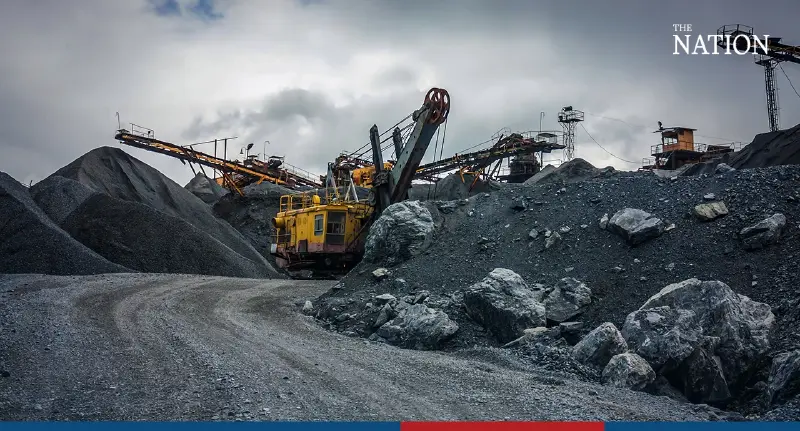


Prime Minister Srettha Thavisin has issued a directive to the Ministry of Industry to expedite the mineral mining project in the Northeast, Prime Minister's Office spokesman Chai Watcharong announced today.
The prime minister reminded yesterday’s cabinet meeting has Thailand has an abundance of potash minerals in the northeastern region, covering provinces from Udon Thani to Nakhon Ratchasima. Potash is one of the three essential minerals used in fertiliser production. Canada is currently the top producer of fertiliser from potash globally.
Three entities have already been granted mining licenses but have not been able to commence mining operations. One of the license holders has held the rights for 8 years, but has yet to start mining. The other two companies are having problems raising funds to support their operations.
The Prime Minister thus instructed the ministry to study whether there are potential new players ready to develop potash resources in the northeastern region if the previous license holders cannot utilise the valuable mineral resources that Thailand and the world need.
According to the ministry, Thailand has the fourth-largest potash reserves in the world, totalling 400 billion tons, following Canada, Belarus, and Germany. The country's significant potash sources can be found in two main areas: the Sakon Nakhon Basin, including Sakon Nakhon, Nong Khai, Udon Thani, and Nakhon Phanom provinces, and the Khorat Plateau, including Khon Kaen, Kalasin, Maha Sarakham, Roi Et, Yasothon, Ubon Ratchathani, and Chaiyaphum provinces.
The underground mining licence approval process under the Mineral Act of 1967 consists of three stages: license application, ministry approval, and mining permission.
Two companies, ASEAN Potash Mining and Thai Kali are prepared to start mining operations. They have announced their intent and have submitted environmental impact assessments (EIA), gaining approval from the Department of Mineral Resources. ASEAN Potash Mining, located in Chaiyaphum province, covers an area of 1,553 hectares and has a production capacity of 1.1 million tonnes per year.
Another company, China Mingda Potash Corporation (Thailand) has applied for an extension to the already awarded a special prospecting licence for potash exploration covering 18,700 hectares.
However, these companies have been unable to raise funds for their projects. Private sector representatives suggest that the government needs to instill confidence in investors, express support for these projects, and facilitate rapid investment. In another area, groundwater sources have not been found, making further exploration unfeasible. The surveyed area is considered to have low-quality potash, with a ratio of 1 part potash to 6 parts salt.
Asia Pacific Potash Corporation, meanwhile, is currently in the first stage of exploration, finding a ratio of 1 part potash to 2 parts salt. This project is considered to have the highest production potential among all the applications. There have been continuous complaints from local communities regarding the application process, mainly concerning land subsidence due to mining, soil salinity, dust, and salt piles on the ground.
Due to the prevailing drought conditions and occasional flooding in some areas this year, coupled with a sluggish economy, the use of chemical fertilisers has decreased slightly compared to the previous year, with just 4 million tons of fertilisers imported. Earlier in the year, fertiliser prices decreased but now appeared to have stabilised.
