
All state spending must be in line with govt policies, says Thai PM
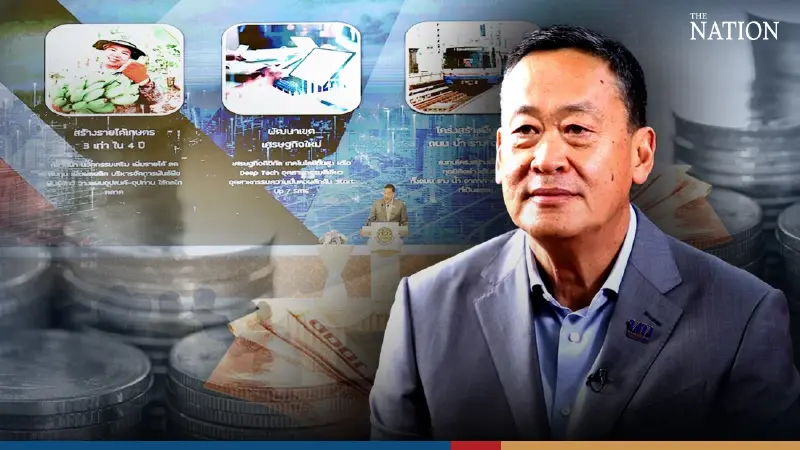


At a seminar in Bangkok on Monday, Prime Minister Srettha Thavisin said all state agencies should align their budget allocations with his government’s policies.
The government’s key focus is revitalising the country’s economic growth, with an aim to expand the gross domestic product (GDP) by 5% over the next four years.
The administration’s plan is to guarantee a minimum income of 600 baht for citizens and a monthly salary of 25,000 baht for degree holders by 2027.
Srettha added that tax will be channelled into investments once the economy is flourishing and the quality of life for citizens has improved.
He urged government officials to be adaptable, learn to prioritise tangible results, establish clear metrics and be responsive to public feedback.
In terms of economic stimulus, a cornerstone of the government’s policy is injecting 560 billion baht through digital wallets. This ambitious initiative is designed to stimulate both the supply and demand sides of the economy, facilitating circulation and revenue generation for the government.
Ensuring that funds reach grassroots levels, the government envisions extensive community participation within a six-month timeframe.
Srettha said a relevant committee is considering this, along with advancements in app development, financial resource preparation and regulatory readiness.
The government also reaffirmed its commitment to implementing the 10,000-baht digital wallet policy by February 2024.
Meanwhile, the government plans to allocate 3.48 trillion baht for the fiscal 2024 budget in tandem with these key principles:
• Alignment with policies: Budget planning and expenditure of all units must align with that of the government and adhere to financial discipline while following due processes.
• Collaborative planning: Units are encouraged to collaborate to prevent project overlaps and replicate successful past projects.
• Efficient budget planning: Planning should be efficient and effective, with an emphasis on maximum benefit for the nation. Urgent plans should be promptly implemented and reflect current circumstances. Transparent digital systems will be employed to make taxpayers’ contributions visible.
• Measurable outcomes: Projects should have clear objectives and metrics, ensuring tangible benefits for citizens and the economy. The government will not endorse projects that do not have meaningful contributions and will discourage vague or ambiguous proposals.
• Comprehensive resource utilisation: A comprehensive spending plan should harness all available funding sources, both from within the budget and outside. Units with external funding will be urged to prioritise their spending to reduce a burden on the national budget. Collaboration with the private sector and financial tools is encouraged.
Srettha said that while the implementation of the 2024 fiscal budget may face delays, units should expedite disbursements within legal frameworks and exercise caution to avoid economic disruptions. The government has called for strict adherence to five principles, namely ensuring a streamlined approach, reducing redundancy, maintaining financial discipline and submitting detailed plans to the Budget Bureau by October 6.
