
UN Women Urges Corporate Leaders to Champion Gender Equality as a Business Imperative
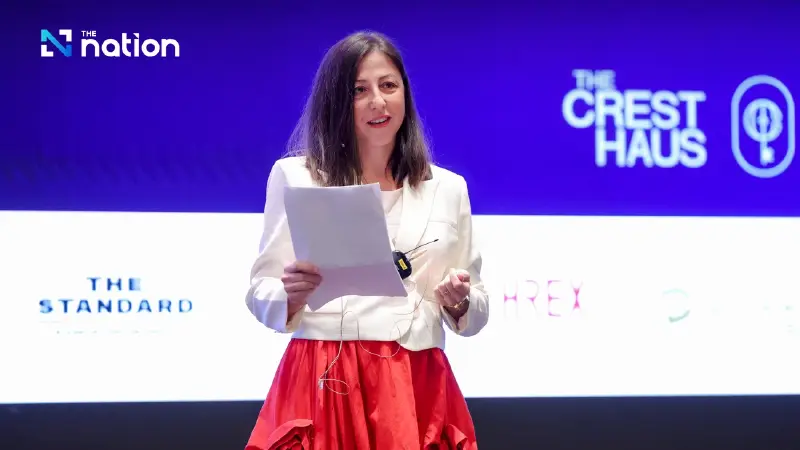


UN Women consultant Sara D'anzeo urged business leaders to turn gender inclusion into measurable action ahead of International Women's Day
- UN Women is urging corporate leaders to reframe gender equality not as a social obligation, but as a significant business imperative and a major economic opportunity.
- The organization highlights substantial financial incentives, citing projections that gender parity could add $342 trillion to the global economy and that companies prioritizing it see increased profitability and market opportunity.
- Business leaders are encouraged to take measurable action by adopting frameworks like the UN's Women's Empowerment Principles (WEPs) and committing to concrete steps to empower women.
- The message emphasizes that companies can become "decisive agents of change" by embedding gender equality within their core operations and supply chains.
UN Women consultant Sara D'anzeo urged business leaders to turn gender inclusion into measurable action ahead of International Women's Day.
A UN Women consultant has challenged Thailand's business community to treat gender equality not as a social obligation but as one of the most powerful economic opportunities available to them, speaking at a leadership forum in Bangkok days before International Women's Day.
Sara D'anzeo, a sustainable finance consultant of the UN Women Asia Pacific Regional Office, delivered the keynote address at the EMPOWERHER Asia Leadership Forum 2026 on Thursday, an event hosted by The Crest Haus.
The forum, which brought together executives and senior leaders from across the region, was held in recognition of the pivotal role of women in leadership and to mark the upcoming International Women's Day on 8 March.
"Gender equality is not a problem — it is an opportunity. It is the biggest unfinished business of our time," D'anzeo told the audience, citing projections that achieving gender parity could contribute $342 trillion to the global economy by 2050, while removing barriers to women's full economic participation could increase global output by as much as 20 per cent.
D'anzeo, who works across capital markets in the region through UN Women's Gender Action Lab — a programme supported by the Australian Department of Foreign Affairs and Trade (DFAT) — described how she pivoted her own career eight years ago after concluding that professional advancement alone was insufficient.
"I wanted to contribute more to the community, and for me, that meant advancing gender equality," she said.
She pointed to Thailand's own progress with cautious optimism. The Stock Exchange of Thailand (SET) recorded women holding 14 per cent of corporate leadership roles — double the regional average of seven per cent for specific leadership positions.
However, D'anzeo noted that the next critical step was translating that representation into systemic influence throughout organisations.
Companies that prioritise gender equality, she argued, benefit tangibly — reporting greater market opportunity, increased profitability, and improved talent retention.
She encouraged attendees to explore the UN Women's Women's Empowerment Principles (WEPs), a framework of seven principles covering leadership, workplace policy, and community engagement that has attracted more than 11,000 corporate signatories globally, with 3,000 in Asia alone.
D'anzeo also highlighted We Rise Together, a UN Women initiative implemented in Thailand in partnership with the private sector to strengthen gender-responsive and responsible supply chains.
"Companies can either entrench inequities, or they can become decisive agents of change when they embed gender equality within their operations," she said.

She closed her address with a direct challenge to the room, asking each leader to commit, in writing, to one concrete action to empower women — whether through mentoring, cultural change, or skills training.
"Transformation does not start from big strategy documents; it starts from your conviction and your choices."
The forum also featured a panel discussion on artificial intelligence and leadership, with experts from IBM and Techsauce stressing that AI transformation is fundamentally a human and management challenge.
Panellists emphasised a shift from using AI merely for operational efficiency towards deploying it for measurable effectiveness and return on investment, while urging leaders to establish strong governance frameworks and maintain human judgement at the centre of decision-making.
A further session, titled Leading the Next Chapter: Lessons from the C-Suite, featured personal accounts from senior executives on navigating career pivots with mindfulness and authenticity.
The EMPOWERHER Asia Leadership Forum 2026 positioned itself as a platform for leaders to collectively reimagine their professional trajectories as International Women's Day approaches, with organisers framing the event as an opportunity to write what they called the "first page" of a new chapter in purposeful leadership.
