
From Intern to CNN Executive: Ellana Lee on Leading Through Chaos, Diversity, and the Myth of Work-Life Balance
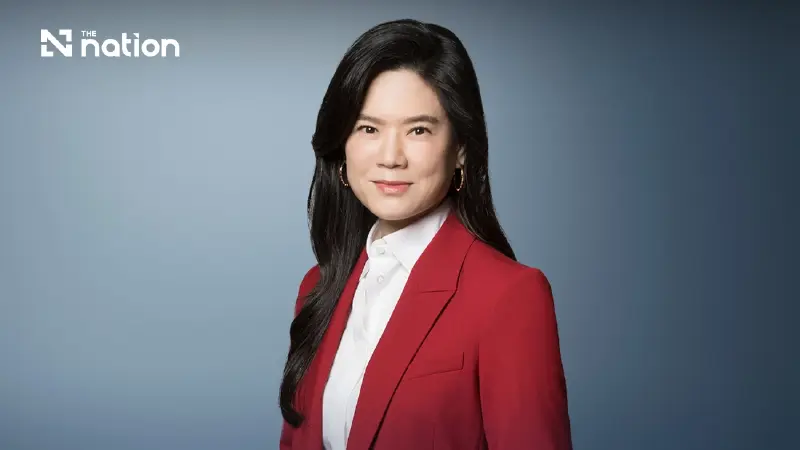


CNN's top Asia-Pacific executive on breaking newsroom ceilings, mentoring the next generation, and why she never wanted work-life balance
- Ellana Lee progressed from a CNN intern to a senior executive by learning to remain exceptionally calm during crises, a skill she developed in chaotic newsroom control rooms.
- As an Asian woman in a male-dominated industry, she overcame early challenges like being mistaken for an interpreter and now feels her organization celebrates her layered diversity.
- She rejects the concept of "work-life balance," advocating instead for "work-life integration," which blends professional life with physical travel and real-world connections.
- Her leadership style is based on trust and collaboration, focusing on hiring people with a good attitude and sharing knowledge collectively rather than leading alone.
CNN's top Asia-Pacific executive on breaking newsroom ceilings, mentoring the next generation, and why she never wanted work-life balance.
Long before she became one of the most senior women in global broadcasting, Ellana Lee was a young intern chasing rundowns in one of the most chaotic control rooms in television news.
It was there, amid the noise of CNN's financial news desk, that she learned the lesson that would define her career: the bigger the crisis, the calmer she needed to become.
"For me, the bigger the crisis is, I tend to become exceptionally calm," Lee says. "I think the stillness and the calm actually helps me get through a lot of the big breaking news."
Today, Lee is CNN's Group Senior Vice President, General Manager for Asia Pacific, and Global Head of Productions — a role that places her at the helm of newsrooms and documentary teams spanning continents. But her story did not begin in a corner office.
It began as an intern walking into CNN's control room in New York, absorbing the discipline of live television, one breaking story at a time.
"I started at CNN as an intern, and then I went into show production, and I learned quite a lot by being in the control room," she recalls. "We would walk in with a rundown, and then we would walk out with a completely different rundown."
That grounding in chaos, she says, taught her something no leadership course could: that composure under pressure is a skill, not a personality trait.

From New York to a 20-Year Love Affair with Asia
Lee's career took her from CNN's New York headquarters to Hong Kong, a move she originally intended to last just two years. More than two decades later, she still calls the city home—and has turned down every opportunity to return West.
"I came to Hong Kong with the intention of staying just two years and then going back to New York," she explains. "But instead I've stayed there more than 20 years, and now I call it home… every time there was an opportunity to go back to the West, I just found Asia to be far more interesting."
For a journalist, she says, the pull was simple: proximity to the story.
"I think as journalists, you want to be in a place where things are happening, where it's dynamic, and I find that to be Asia. I think we're living in a time where we are witnessing this great transformation, and I want to be here to witness it."
Grounded by Diversity, Not Despite It
Rising through what she describes as an industry historically dominated by men was not without friction. Lee recalls being mistaken for an interpreter in external meetings simply because she was the only woman in the room.
"For some reason they always thought that I was the interpreter," she says. "Now things are different. The world has improved."
What keeps her grounded today, she says, is working inside an organisation that actively celebrates the careers of women—and, for her personally, a layered kind of diversity that goes beyond gender.
"For me, it's not also just diversity of being a woman, it's the diversity of being Asian," Lee reflects. "In the old days, I felt like I would have a three-part deficit. I was young, I was female, and I was Asian. And I've somehow managed to be part of an organisation that celebrates all of that. So I feel very privileged and lucky."

Giving Others a Voice — and Learning from Them Too
As a senior woman in global media, Lee is candid about the responsibility she feels toward the next generation of female journalists. Her philosophy centres on something she calls "reverse mentoring" — a two-way exchange rather than a top-down lecture.
"There is a wonderful blend where people like myself can share a lot of the knowledge, a lot of the mistakes that we've made, with the new generation," she says. "But at the same time, there's so much to learn from the new generation."
For Lee, mentorship boils down to two essentials: opportunity and voice. She recalls her own early struggles to speak up in meetings, unsure whether her opinions carried weight — until mentors intervened.
"I had mentors who gave me a chance and an opportunity. I found mentors who also gave me a voice," she says. "They actually pulled me out from the silence and said, I think what you say is important enough for others to hear."
Leading Through People, Not Around Them
Running newsrooms that cover everything from breaking news to sensitive documentary work on North Korea demands a particular kind of composure. Lee's answer lies less in personal heroics than in trusting the people around her.
"You have to hire good people," she says. "Good people doesn't mean you're hiring the smartest people… what you're looking for is attitude, people who are collegiate and willing to work with others. There's no point in being smart and lonely."
She describes leadership as a "collective knowledge-sharing process", where the pressure to have every answer is distributed rather than carried alone. Integration Over Balance Perhaps Lee's most striking piece of advice for young women — in journalism or any demanding career — is her rejection of the phrase "work-life balance".
"I don't believe in work-life balance, because it seems as if you'll never achieve it," she says. "I do believe in work-life integration."
That philosophy extends to simplifying life, staying connected to the physical world, and stepping away from screens.
"I think the time you spend away from the computer and trying to learn about the world through a computer should instead be spent trying to learn about the world through your actual physical travels, physical time in nature, and physical time in meeting people face-to-face."
Asked to sum up her management style in three words, Lee doesn't hesitate: transparent, collective, and trust. It is a fitting summary of a career built not on titles, but on showing up, staying calm, and making space for others to find their voice — exactly as she once found her own.
