
Singapore celebrates 60 years of independence, but the journey is far from over
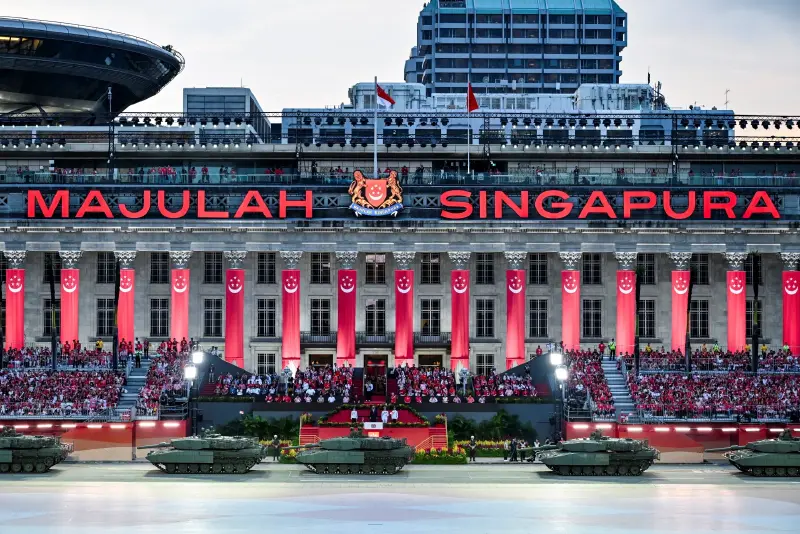


Marking six decades since independence, Singapore’s SG60 National Day highlighted both pride in past achievements and a call to press on towards the future.
On August 9, 2025, Singapore commemorated its 60th year of independence with a spectacular National Day Parade (NDP) at the historic Padang, drawing tens of thousands of spectators and millions more watching from home.
Known as SG60, the milestone celebration carried both a spirit of nostalgia and a forward-looking optimism as the nation reflected on six decades of progress.
A milestone celebration at the Padang
The Padang, where Singapore declared independence in 1965, provided a symbolic backdrop for the parade. About 27,000 people attended at the venue, while another 200,000 gathered at Marina Bay to join in the festivities. The area was transformed into a sea of red and white, the national colours, as citizens and residents celebrated together.
The parade showcased Singapore’s multicultural identity, with vibrant performances, school contingents, cultural floats, and musical showcases. The Singapore Armed Forces and Home Team contingents displayed precision and discipline, while the Republic of Singapore Air Force impressed crowds with a flypast featuring fighter jets and helicopters.
The iconic Red Lions parachute team received roaring applause as they landed flawlessly onto the Padang.
In the evening, a dazzling fireworks display lit up the Marina Bay skyline, synchronised with music and storytelling that retraced Singapore’s journey from its uncertain beginnings in 1965 to its transformation into a modern metropolis.

Prime Minister Lawrence Wong’s message of resilience
Ahead of the parade, Prime Minister Lawrence Wong delivered the National Day Message on August 8, broadcast from the Padang. He acknowledged the challenges Singapore has faced, from economic turbulence and the Covid-19 pandemic to global uncertainties in trade and geopolitics. Wong emphasised resilience and unity as the keys to Singapore’s survival and success.
On August 10, at the National Day Rally held at the Institute of Technical Education (ITE), Wong expanded on his message under the theme “Beyond SG60: Writing Our Next Chapter.”
He outlined the government’s vision for the future, focusing on three pillars: economic competitiveness in the age of artificial intelligence and green transition, strengthening the social compact to ensure inclusivity, and building a resilient nation ready for external shocks.
“Sixty years ago, we had little certainty about our survival. Today, we can be proud of what we have built together. But our journey is not finished. The next chapter will demand the same grit, imagination and unity that brought us this far,” Wong said.
The history of Singapore’s National Day
Singapore’s National Day is celebrated annually on August 9, marking the country’s independence from Malaysia in 1965. On that day, then-Prime Minister Lee Kuan Yew declared Singapore a sovereign and independent nation after its separation from Malaysia.

The first National Day Parade was held in 1966, just one year after independence, at the Padang. The early parades were modest but emotionally charged, reflecting the nation’s uncertainty about survival. Over the decades, the parades have grown into grand national spectacles, moving between venues such as the National Stadium, Marina Bay Floating Platform, and the Padang itself.
The event has become a cornerstone of Singapore’s national identity. It brings together military displays, cultural performances, and mass participation, symbolising both unity and progress.
The celebrations also include the National Day Message and, since the 2000s, the National Day Rally, where the Prime Minister outlines the government’s vision for the nation.

National Day has evolved from a show of survival to a celebration of success, while still reminding Singaporeans of the challenges that come with limited resources and a small population.
The 60th anniversary in 2025 thus marked not only a significant milestone but also a continuation of the journey begun six decades ago.
National pride across the island
Beyond the parade, celebrations were felt across the country. Neighbourhoods hosted community gatherings, featuring traditional games, cultural performances, and local food.
Singaporeans abroad also joined in through the Singapore Global Network, which organised overseas National Day events, connecting citizens and friends of Singapore worldwide.
Buildings across the island were illuminated in red and white, with the national flag flying prominently from HDB flats, offices and schools.
Commemorative logos, special SG60 merchandise, and themed activities at malls and public spaces added to the festive atmosphere.
Looking back, moving forward
National Day 2025 was not only about celebration but also reflection. Many Singaporeans recalled the nation’s humble beginnings when, in 1965, the island faced unemployment, housing shortages, and a lack of resources.
Over six decades, Singapore has become a global financial hub, a leading centre for innovation, and one of the most liveable cities in the world.
The celebrations highlighted the values that have shaped Singapore’s success: multiracial harmony, meritocracy, self-reliance, and adaptability. At the same time, they underlined the challenges ahead: an ageing population, climate change, and economic competition in a rapidly shifting global order.

A vision beyond SG60
As Singapore enters its seventh decade of independence, the government is positioning the nation to navigate future uncertainties while staying anchored in its founding ideals.
National Day 2025, therefore, served both as a reminder of past achievements and as a rallying call for collective effort in the years to come.
The closing fireworks over Marina Bay symbolised more than just celebration. They were a bright declaration of confidence that Singapore’s story — from vulnerability to strength, from survival to prosperity- is far from complete.
For Singaporeans, SG60 was not just a birthday party. It was an affirmation of national identity, resilience, and the enduring spirit of “Majulah Singapura” — Onward Singapore.
