
Kalmaegi death toll climbs to 66 as Philippine survivors confront destruction
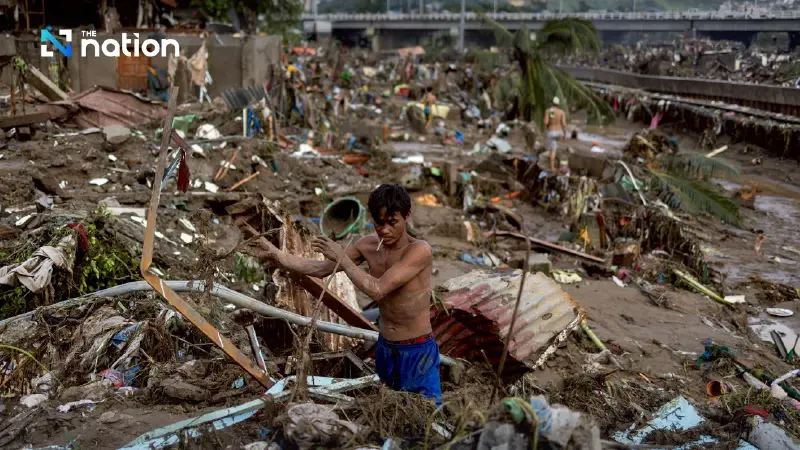


As Typhoon Kalmaegi's death toll in the Philippines reached 66, residents in Cebu, the hardest-hit province, are grappling with the aftermath: shattered homes, streets buried under debris, and lives devastated.
In Talisay City, survivors are digging through the wreckage, hoping to salvage anything they can. Among them was 38-year-old Eilene Oken, who walked through what was once her neighbourhood, only to find her home completely destroyed.
"We worked and saved for this for years, then in an instant, it was all gone," Oken said, her voice choked with emotion. Despite the loss, she expressed gratitude that her family, including her two daughters, had escaped unharmed.

Cebu, a key tourist destination, revealed scenes of destruction as floodwaters receded, exposing the full extent of the damage: collapsed homes, overturned cars, and a landscape strewn with debris.
Of the 66 confirmed deaths, six were military personnel who perished when their helicopter crashed in Agusan del Sur on Mindanao during a humanitarian mission. The disaster agency also reported 26 people as missing and 10 others injured.
Kalmaegi, known locally as Tino, struck just over a month after a magnitude 6.9 earthquake hit northern Cebu, killing dozens and displacing thousands. As the typhoon continued its path through the South China Sea towards Vietnam, where landfall is expected on Friday, it slightly intensified.


In the Philippines, more than 200,000 people were evacuated across the Visayas, parts of southern Luzon, and northern Mindanao as the storm flooded homes and caused widespread power outages. In September, Super Typhoon Ragasa had already swept through northern Luzon, forcing school and office closures with its powerful winds and torrential rains.
Reuters
