
Thailand–Cambodia border clash tests Trump's tariff diplomacy
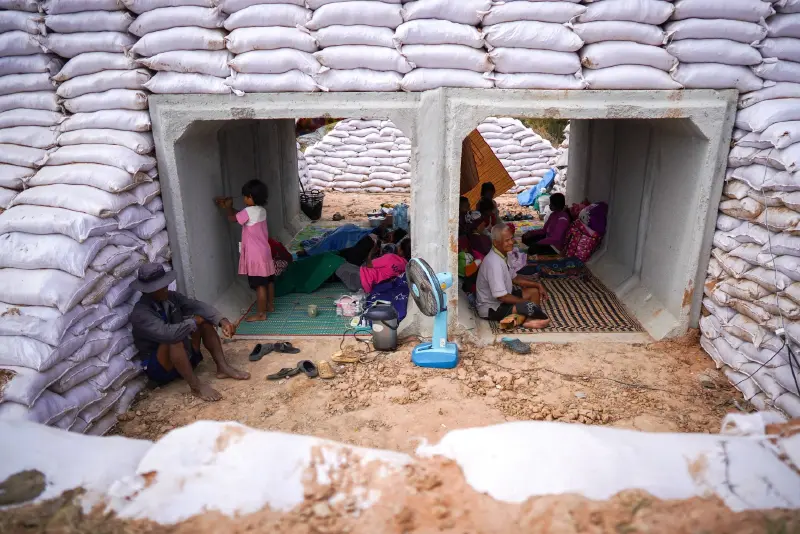


In July, five days of heavy fighting between Thailand and Cambodia were only brought to a halt after a phone call from US President Donald Trump and the threat of steep tariffs on Thai exports.
Now, renewed clashes along the border have shattered that Trump-brokered ceasefire, and Bangkok is making it clear that trade pressure will not be allowed to dictate how peace is made.
“Thailand’s pushback is a real test of Trump’s tariff strategy, but tariffs have always been a crude tool,” said Chong Ja Ian, a political scientist at the National University of Singapore.
“How they could ever deliver a durable ceasefire in the face of such long-running, deep-rooted hostility has always been questionable,” he added.
In recent months, Trump has cast himself as a dealmaker-in-chief in search of a Nobel Peace Prize, offering to mediate in multiple disputes with mixed outcomes – and often at the cost of straining relations with key partners.
Tariffs as a blunt instrument
One of his earlier interventions came in May, when he claimed that “very high tariffs” were used as leverage to help end hostilities between India and Pakistan. That episode rattled ties between Washington and New Delhi and raised concerns about the impact on a strategic partnership between the two democracies.
India, for its part, insists tariffs had nothing to do with the cessation of fire.
Speaking at a rally in Pennsylvania on Tuesday, Trump said he expected to make a phone call on Wednesday to try to halt the latest fighting between Thailand and Cambodia, offering no details on what he planned to put on the table.
Thailand’s foreign minister, Sihasak Phuangketkeow, has been at pains to separate the border crisis from trade talks with Washington.
In October, the United States and Thailand unveiled a reciprocal trade framework that keeps a 19% tariff on Thai products while earmarking sectors where duties could potentially be reduced.
“We already think it is unfair that we face a unilateral 19% tariff, and now they might consider imposing even more if they are unhappy,” Sihasak said in an interview on Tuesday.
Risk and reward ahead of snap elections
Thailand and Cambodia have been at odds over stretches of their 817-kilometre (508-mile) frontier for more than a century. Competing claims have repeatedly stalled formal demarcation efforts, setting the stage for periodic military flare-ups.
The latest violence comes at a politically sensitive time for Bangkok. Prime Minister Anutin Charnvirakul, who assumed office in September after his predecessor was forced out over the border issue, is expected to dissolve parliament next month and call snap elections for March.
Anutin is already under pressure for what critics say was a sluggish response to deadly flooding in the south last month, a misstep that could undermine his Bhumjaithai Party’s electoral prospects.
“This situation puts Bhumjaithai in a position where it feels compelled to prove it can lead in a crisis during a very short time in power, and clearly with one eye on the upcoming vote,” said Laura Schwartz, a senior analyst at risk consultancy Verisk Maplecroft.
Fears of further tariff action from Washington remain in the background. Yet Anutin and his party may see political advantage in drawing a sharp line between trade and security, projecting a tougher stance on both.
According to Voranai Vanijaka, a lecturer at Thammasat University in Bangkok, Anutin was sharply criticised by hardline nationalists when he signed the Trump- and Malaysia-brokered ceasefire earlier this year.
“So for now, he is going to keep Trump at arm’s length,” Voranai said.
Public opinion also appears to favour a firm line. A nationwide survey conducted in August indicated that Thais place far greater trust in the military, which has taken the hardest stance against Cambodia, than in civilian politicians.
“Thailand may well suffer a tariff backlash in the short term, but it is counting on its military superiority and on the limited scale of the conflict,” Chong said.
“The calculation in Bangkok is that it can ride out the pressure, and that the Trump administration will eventually accept the outcome on the ground.”
Reuters
