
Myanmar opens polls amid civil war, with military-linked party tipped to win
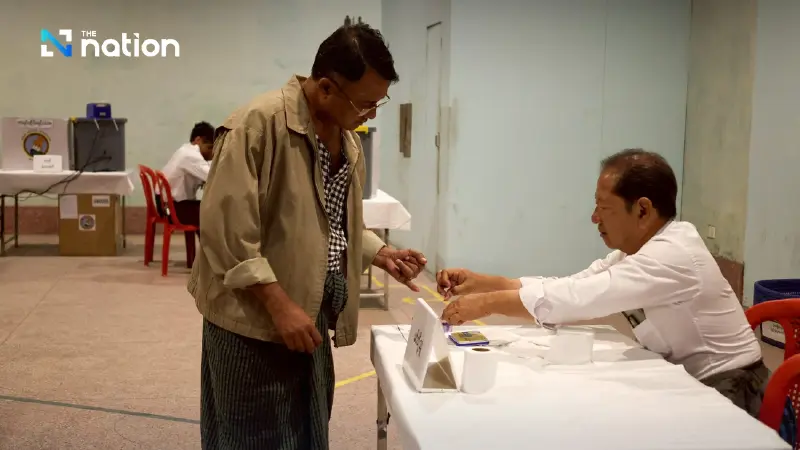


Myanmar began voting in a general election on Sunday (December 28), the first national poll since the military overthrew the elected government in 2021, but the ballot is taking place amid ongoing conflict and widespread doubts over its legitimacy.
The generals who seized power say the vote could help reset the country’s politics and revive an economy battered by years of instability. Critics, however, including the United Nations, several Western governments and rights groups, have dismissed the process as neither free nor credible, pointing to the absence of key anti-junta forces from the contest.
Aung San Suu Kyi, the Nobel laureate whose National League for Democracy (NLD) won a landslide in the 2020 election, remains detained. The NLD, which led the last civilian government, has also been dissolved.
Opposition sidelined, rebellion entrenched
The military takeover sparked mass protests that were later crushed, pushing many opponents into armed resistance and fuelling a nationwide rebellion that has continued to destabilise the country.
Against that backdrop, the Union Solidarity and Development Party (USDP)—a military-aligned party led by retired generals—is widely expected to emerge as the strongest force, aided by a political landscape in which competition has been sharply reduced.

Lalita Hanwong, a Kasetsart University lecturer and Myanmar specialist, said the election was structured to extend military influence through allied parties forming the next administration.
Voting in phases, results unclear
After Sunday’s opening phase, two further rounds of voting are scheduled for January 11 and January 25. The plan covers 265 of Myanmar’s 330 townships, although the authorities do not fully control all of those areas as fighting continues.
The military government has not announced a timetable for counting ballots or releasing results.
UN human rights chief Volker Turk warned last week that the vote was unfolding in a climate of repression and insecurity, arguing that basic freedoms needed for meaningful political participation were not in place.
State media promotes election as a way out
The junta has portrayed the election as a route towards ending the crisis, citing past military-backed polls, including the 2010 vote that ushered in a quasi-civilian government which later introduced political and economic reforms.
An opinion piece in the state-run Global New Light of Myanmar said the ballot could shift the country away from years of turmoil and towards reconstruction and stability.
Residents in major cities said the campaign atmosphere felt muted compared with previous elections, with little of the enthusiasm typically seen during national polls. They did not describe overt pressure to vote, but said the USDP was the most visible presence on the ground.
Founded in 2010, the USDP governed with military support until 2015, when it was decisively defeated by Suu Kyi’s party.
Voter resignation and limited recognition abroad
Analysts say the military’s attempt to project stability through an election carries significant risk while the conflict remains unresolved—and that broad international acceptance is unlikely for any administration still controlled by the armed forces, even if presented with civilian trappings.
In Yangon, a 31-year-old man said the outcome felt predetermined. Fearing repercussions if identified, he said he planned to vote for the USDP, believing it would win regardless of his choice.
Reuters
