
Philippines struggles to draw tourists as it lags regional peers in arrivals
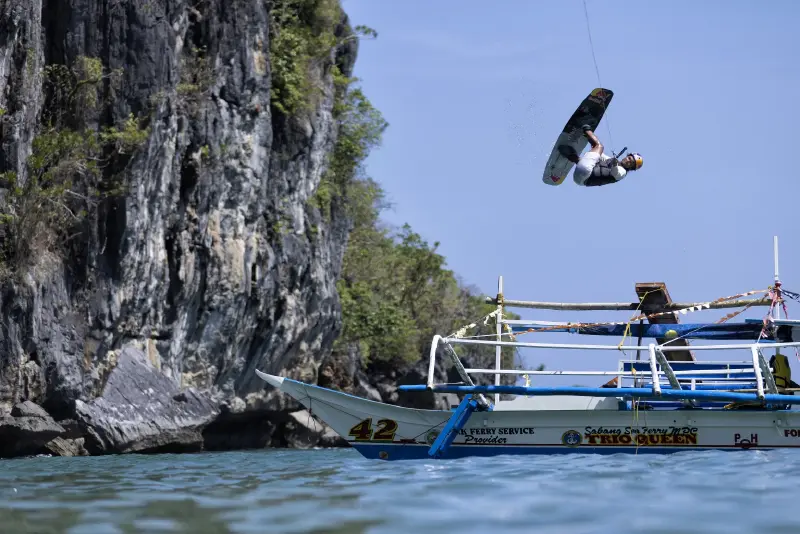


There are many reasons to visit the Philippines. The pristine lagoons of Palawan, the white beaches of Boracay and the dive sites scattered across the archipelago continue to appeal to tourists.
Yet, as visitors return to Southeast Asia following the Covid-19 pandemic, the Philippines appears to be moving in reverse, suggesting that it lags behind its neighbours in competitiveness.
Tourist arrivals fell to 5.24 million in the first 11 months of 2025, down 2.2 % from the same period the year before, data from the Philippines’ Department of Tourism showed.
Arrivals remained about 37 % below the pre-pandemic level of 2019, when 8.26 million visitors travelled to the Philippines.
The decline stands out in a region where tourism has largely recovered, with Vietnam notably recording 22 million arrivals, a 22.2 % increase from pre-COVID-19 levels.
The shortfall reflects more than a cyclical slowdown.
A study by the Philippine Institute for Development Studies found that while tourism activity rebounded after the pandemic, much of the recovery was driven by domestic travel rather than foreign visitors.
International arrivals and tourism receipts have lagged behind those of regional peers, pointing to structural constraints that long predate the pandemic.
Infrastructure woes
Those constraints are felt first at the country’s gateways.
Curtis Chin, a senior adviser at the Milken Institute and former US ambassador to the Manila-based Asian Development Bank, said travel in the Philippines too often feels “more hassle than fun”, an ironic inversion of the country’s long-running tourism slogan, “It’s more fun in the Philippines.”
He told The Straits Times that congested airports, fragile connectivity between islands, and uneven transport infrastructure introduce friction that many travellers, especially those with limited time, simply choose to avoid.
“The Philippines is such a great destination. When I advise people visiting the Philippines, I always say, build in some wiggle room in case your plane is late or if the weather interrupts things,” Chin said.
“But too often, people don’t have an extra three days.”
Manila’s Ninoy Aquino International Airport remains a drag on the country’s reputation.
While regional hubs have invested heavily in technology to process large passenger volumes, long queues, tarmac delays and baggage backlogs persist in the Philippine capital.
For a country where most visitors must transit through Manila to reach island destinations, the first impression carries disproportionate weight.
That friction continues beyond the airport. American journalist Justin Dawes, who travelled through island destinations Cebu, Siquijor, Bohol and Palawan in 2025, described the Philippines as rewarding travellers with an “adventure mindset”.
He told ST that ferries, long bus rides and uneven roads are part of the experience, appealing to seasoned backpackers, but less so to mainstream tourists accustomed to smoother logistics elsewhere in Southeast Asia.
“Many of my friends who are travellers probably wouldn’t be down for that, as there are different types of tourists. Some people just want to be in a city, or some people just want to chill,” Dawes said.
In several destinations, he observed that a motorbike is often the only practical way to get around, while ride-hailing services are uneven. Internet and mobile connectivity, even in Metro Manila, proved unreliable, limiting the country’s ability to attract longer-stay travellers and digital nomads.
Geopolitical complexities
Heavy reliance on a few key markets leaves Philippine tourism exposed when conditions shift beyond its control.
South Korea remains the Philippines’ biggest source of tourists, but arrivals fell by 21 % in the first 11 months of 2025.
Erwin Balane, Manila’s tourism attache for South Korea, said South Korean travellers tend to be particularly sensitive to weather-related disruptions and safety concerns, with natural disasters often prompting cancellations or delays.
“In 2025, successive typhoons as well as earthquakes in Cebu and parts of Mindanao (southern Philippines) disrupted flights, damaged tourism facilities and altered travel itineraries,” Balane said in a statement.
“Extensive media coverage in Korea reinforced the perception that travel to the Philippines carries heightened uncertainty, even when conditions normalise quickly on the ground.”
Visitor numbers from China, a market historically sensitive to geopolitical tensions, including tensions in the South China Sea, declined by 16.5 % from 2019 to 2025.
In 2019, China was the Philippines’ second-highest source of tourists, with 1.74 million, just behind the 1.98 million from South Korea. But by the end of December 2025, China ranked only sixth, with over 262,000 tourists coming to the Philippines.
The Philippines’ Department of Tourism, in a statement, also noted the reduced number of China-Philippines flights amid ongoing tensions in the South China Sea, with routes operating at only about 45 % of pre-pandemic levels.
Chin said: “History has certainly shown that the Chinese government has been willing to use tourism as a pressure point, turning on and turning off the flow of tourists based on geopolitics. That is unlikely to change, underscoring the importance of diversification.”
While the Philippines has sought to counter this by streamlining visa processes, including the roll-out of electronic visas for Chinese travellers, such measures have struggled to offset broader geopolitical unease and economic headwinds in China, which has also pushed Beijing to prioritise domestic tourism over overseas travel.
Improving visitor experience
The Philippines also lacks a consistent approach to branding its destinations as “experiences”, rather than standalone sights.
Arquiel Dimalanta, a Filipino frequent traveller who visited Thailand and Vietnam in 2025, pointed to how those countries integrate transport, services and storytelling into the visitor experience.
In Vietnam, he said, tours routinely weave food and history into places, from the Mekong Delta to the Cu Chi tunnels, explaining not just what visitors see, but also why it matters.
“They talked about banh mi and pho and how the Vietnamese came up with these foods,” Dimalanta said. By comparison, he said Philippine destinations often treat scenery in isolation.
Even in Pampanga province, north of the capital Manila and widely regarded as the Philippines’ food capital, cuisine is rarely integrated into tourist itineraries.
Dimalanta said this is a “missed opportunity” in a country whose food reflects layers of indigenous, Spanish, American and Chinese influence.
Execution gaps have further complicated efforts to reposition the sector.
The Department of Tourism has faced criticism over its missteps, from the 2023 launch of its “Love the Philippines” campaign using footage from other countries, to recent controversy surrounding Tourism Secretary Christina Frasco and allegations that the department has been used to elevate her personal media profile.
While officials have denied wrongdoing, the episodes have reinforced perceptions that government officials are not doing enough to boost tourism in the Philippines.
Chin said that while the Philippines does not lack attractions, it lacks clarity on why it should be chosen over a different destination.
The question gains added weight in 2026, with the Philippines chairing ASEAN and hosting a succession of regional meetings.
He noted there is every opportunity to use those visits to spotlight gateways such as Manila and Cebu, and to show that the country’s food, history and everyday experiences are as compelling as its beaches.
“The opportunity exists for the Philippines to showcase that theme in its tourism sector, but planning, partnership and execution remain key to moving beyond branding and slogans,” he said. -
The Straits Times
Asia News Network
