
Global bloc divide widens after US–Israel begin attacks on Iran
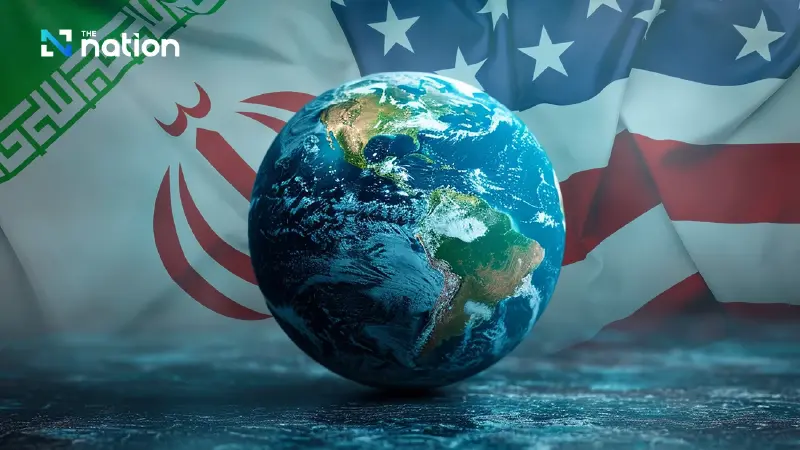


Global rift deepens after US–Israel strikes on Iran, with Russia and Iran condemning the attacks, the UN urging restraint, and allies split on next steps
- The United States and Israel launched military strikes on Iran, describing them as “pre-emptive defensive attacks” aimed at destroying Iran’s nuclear and military capabilities. Iran’s Supreme Leader was killed.
- Russia and Iran strongly condemned the strikes, calling them “irresponsible” and “illegal”, warning they could trigger a wider conflict.
- The United Nations called for an immediate halt to the fighting, while most European countries did not take part but urged Iran to stop destabilising activities.
- US-aligned Arab states such as Saudi Arabia condemned Iran’s retaliation, while Oman voiced deep disappointment over the use of military force.
March 2, 2026 — Amid rapidly escalating tensions, US and Israeli forces launched strikes on multiple cities across Iran. President Donald Trump said it was a “major military operation”, describing it as a “pre-emptive defensive attack” intended to destroy Iran’s nuclear capability and its broader military-strategic capacity.
Iranian state television confirmed that Ayatollah Ali Khamenei, Iran’s Supreme Leader, has died.
Meanwhile, the Islamic Revolutionary Guard Corps (IRGC) began retaliatory operations under the name “Truthful Promise 4”, targeting US bases and assets across the Middle East.
Sharply polarised positions
The developments have become a clear fault line in the international community.
Key reactions can be summarised as follows:
1) United Nations (UN): concern over stability
UN Secretary-General António Guterres condemned the military escalation, warning that international peace and security are being undermined.
He called for an immediate end to hostilities to prevent the crisis from expanding into a regional conflict that would harm civilians.
UN High Commissioner for Human Rights Volker Türk stressed that civilians pay the highest price, and that international humanitarian law must be upheld and protected.
2) The US and Israeli perspective
Mike Waltz, the US ambassador to the UN, said the operation had strategic objectives: dismantling missile capabilities, reducing naval capacity seen as destabilising, and preventing nuclear development.
Danny Danon, Israel’s ambassador, said Israel believed it had no choice, arguing the threat posed by Iran — including policies framed as “death to Israel/America” — was real, serious, and had to be decisively addressed.
3) Positions among Middle Eastern partners
Saudi Arabia and allies
Bahrain, the United Arab Emirates, Qatar, Jordan, and Kuwait issued statements condemning what they called Iran’s “blatant aggression” in retaliatory attacks that hit these countries.
Saudi Arabia said it stood firmly alongside them and supported whatever measures “brotherly countries” would take.
Oman
Oman’s Foreign Minister Badr Albusaidi, who has served as a mediator in nuclear talks, expressed profound disappointment, saying proactive diplomacy had been undermined.
He also warned the United States: “This is not your war.”
4) Europe and other partners
France, Germany and the United Kingdom
Leaders of the three countries said they were not involved in the strikes, but urged Iran’s leadership to stop destabilising activities and its nuclear programme.
UK Prime Minister Sir Keir Starmer said Britain’s forces were only carrying out “regional defensive” missions.
France (under President Emmanuel Macron) said it was ready to mobilise resources to protect close allies.
Germany said it had been informed of the strikes in advance.
Italy, the European Union (EU) and Australia
The EU emphasised sanctions and diplomatic approaches.
Italy said it was preparing consultations with allies to reduce tensions.
Australia said it supported the United States’ effort to prevent nuclear proliferation for global security.
Brazil was among the few countries to express “grave concern” and to condemn the US and Israeli strikes.
5) Russia and Iran
Russia condemned the strikes as “irresponsible” and an “aggression” that could spill beyond borders.
Iran — Foreign Minister Abbas Araghchi condemned the action as “illegal and unprovoked”, and criticised Trump’s policy as shifting from America First to Israel First (meaning America Last).
As the situation remained intense, President Trump addressed the Iranian public directly in a video, urging them to stay safe. He said:
“When we are finished, take over your government. It will be yours to take. This will be, probably, your only chance for generations.”
This echoed Israeli Prime Minister Benjamin Netanyahu, who called on Iranians to “throw off the yoke of tyranny” to build a free and peaceful Iran.
All of this forms the unfolding picture of a conflict that the world is watching closely — both in terms of an increasingly polarised global political landscape, and regional security risks whose ending no one can confidently predict.
