
Myanmar holds second phase of military-run election amid war
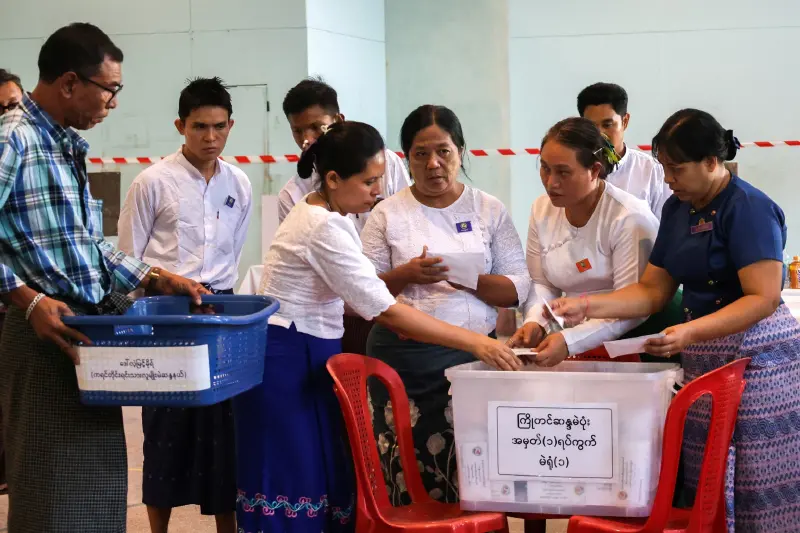


Voters in Myanmar went to the polls on Sunday (๋January 11) in the second phase of an election organised by the military authorities, pressing ahead despite ongoing conflict and international criticism that the vote is designed to cement junta rule.
The country has been in turmoil since the army toppled an elected civilian government in a 2021 coup and detained its leader, Nobel Peace Prize laureate Aung San Suu Kyi. The takeover triggered a civil war that has spread across wide areas of the nation of about 51 million people.
Suu Kyi’s National League for Democracy (NLD), which won a landslide in the 2020 election, has been dissolved, along with dozens of other anti-junta parties, after they failed to register for the latest polls. Armed opposition groups have also refused to take part.
The United Nations, Western governments and human rights organisations have branded the election a sham, arguing it cannot be considered free, fair or credible without meaningful opposition
USDP leads after first phase
The military-backed Union Solidarity and Development Party (USDP) opened a commanding lead in the first phase of voting on December 28, winning 90 of the 102 lower-house seats contested. Turnout in that round was reported at 52.13%, far below participation levels seen in the 2020 and 2015 elections.
Richard Horsey, Senior Myanmar Adviser for Crisis Group, said the USDP was “on track for a landslide victory”, adding that the outcome was unsurprising given what he described as a contest skewed in the party’s favour, including the removal of serious rivals and laws aimed at limiting opposition to the polls.
A final round of voting is due on January 25. Overall, polling is planned in 265 of Myanmar’s 330 townships, including areas where the junta does not have full control.
Junta promises stability, analysts warn of risks
The military leadership says the election will bring political stability and improve the country’s future, even as Myanmar faces one of Asia’s most severe humanitarian crises.
At least 16,600 civilians have been killed since the coup, according to the Armed Conflict Location & Event Data Project, while the United Nations estimates that 3.6 million people have been displaced.
Analysts, however, caution that building a stable administration during an active civil war carries major risks, and any military-controlled government may struggle to win broad international recognition.
Junta leader Min Aung Hlaing last month avoided a question about his political ambitions. State media quoted him as describing the first phase as a success during a visit to a township in central Myanmar last week, where he urged officials to further raise turnout. “Therefore, the election can be considered a successful one,” he was quoted as saying.
Reuters
