
Three countries mastering water management: from disaster to success
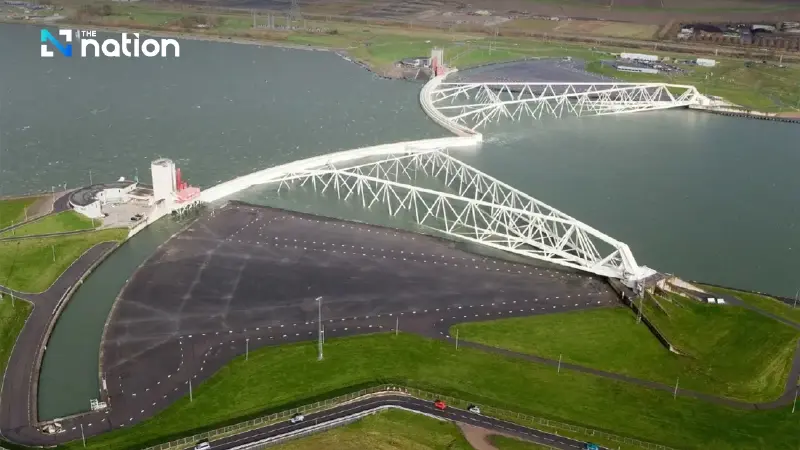


As climate change brings unpredictable weather, countries can no longer rely on mere ‘walls’ or ‘hope’ to fight floods. The world is proving that the countries who thrive in the face of floods are not those lucky enough to avoid disaster, but those that are best prepared. Take a look at the Netherlands, Japan, and Singapore—nations that once suffered devastating floods but have now mastered the art of water management and turned their crises into global success stories.
The recent devastating flood crisis in southern Thailand, where homes were submerged, roads cut off, and entire cities came to a standstill, serves as a stark reminder that Thailand must urgently "upgrade" its water management systems.
Several countries facing similar catastrophic floods have chosen to combat the crisis through "knowledge, policies, and innovation."
These nations have turned their water management challenges into strengths that are now internationally acclaimed.
Let's take a closer look at three countries, the Netherlands, Japan, and Singapore, that have been recognised for managing floods most effectively.
The Netherlands: From the Brink of Disaster to a Global Champion of Water Management
When it comes to countries at risk of sinking, the Netherlands ranks among the most vulnerable, with over 26% of its land lying below sea level, and nearly half of its population living in flood-prone areas. Without proper preparation, the country’s major cities and economy could face chaos.
The turning point for the Netherlands came after the devastating 1953 flood, which caused the dikes to break, resulting in over 1,800 deaths and leaving 100,000 people homeless.
In response to this disaster, the Netherlands launched the historic "Delta Works" project, a network of dams, sluices, seawalls, and water control systems designed to protect the coast and regulate river flow year-round.
The project took 43 years to complete (1954–1997), comprising 13 colossal structures working in sync, such as:
- Hydraulic sluice gates that automatically open and close based on weather conditions
- Massive sea dikes that block access to vulnerable coastal areas
- Water diversion systems and multi-directional canals to reduce flooding pressure
- Artificial islands, beaches, and wetlands to absorb wave energy naturally
The key to the success of the Delta Works lies in the “intelligent management of water flow” rather than attempting to block water completely. During storms, giant gates close only where necessary to protect inhabited areas while maintaining the circulation of the sea-river ecosystem. Once the storm subsides, water is gradually released into the sea without harming the city.
Moreover, while many countries traditionally respond to floods by “fortifying defences,” such as continually raising dikes to keep water out, this strategy can lead to water being trapped or flowing uncontrollably elsewhere. If heavy rainfall exceeds predictions, floodwaters may breach barriers. Additionally, as sea levels continue to rise, the dikes would need to be built ever higher, which could eventually lead to uncontrollable breaches.
This approach represents a "battle against nature," which, ultimately, humans are unlikely to win, as nature is far more powerful and adaptable than human-made structures.
However, the Netherlands has chosen a different approach. Instead of seeing water as an enemy to be pushed away, they embrace the idea that true security comes from “coexisting intelligently and systematically with water.”
A prime example of this philosophy is the "Room for the River" project, where the government sacrificed certain areas for natural water absorption, such as fields, gardens, and wetlands, to reduce flood risks in downstream cities. This method stands in contrast to the traditional idea of continually raising flood barriers, as it embraces working with nature rather than against it.
Furthermore, the Netherlands' success lies in its robust governance structure. The country has an independent body responsible for water management, known as the "Water Board." This body operates outside of regular administrative structures like municipalities or provinces and is managed by experts with stable, long-term funding. This system ensures that water protection projects continue without disruption, regardless of political changes.
Japan Overcomes Floods with World-Class Underground Engineering
When it comes to efficiently preventing urban flooding, Japan is one of the world’s leaders. Despite the country's challenging geography, frequent typhoons, intense rainstorms, and mountain runoff from the surrounding ranges, Japan has never yielded to its harsh climate.
Instead, the country has responded with cutting-edge research, engineering, and urban planning to ensure city life continues unhindered, regardless of the severity of natural events.
A pivotal turning point came when the Japanese government decided to build the "G-Cans Underground Drainage Tunnel," officially known as the "Metropolitan Area Outer Underground Discharge Channel". Located beneath the city of Kasukabe, in Saitama Prefecture, approximately 32 kilometres from central Tokyo, this project serves as a massive underground "city" designed to protect the Tokyo metropolitan area.
This colossal structure lies 50 meters underground, stretches 6.3 kilometres, and connects to several rivers and canals in flood-prone regions.
During heavy rainfall or a typhoon, water from the canals is diverted into five large pressure tanks, connected by enormous tunnels, where it is stored underground rather than overflowing into communities.
Once the situation improves, enormous pumps safely drain the water into the Edo River.
However, Japan’s success is not solely due to its massive infrastructure. Technology plays a crucial role in flood management. Japan's J-Alert system, for example, does not issue broad national warnings. Instead, it uses radar to monitor storms and rainfall, sensors to measure water levels in canals and rivers, flood detection cameras, and AI to analyse storm patterns. This allows for highly targeted alerts to specific areas—homes, schools, train stations, and evacuation centres—ensuring timely and accurate warnings.
Everyone is informed of the level of risk in their area and knows what actions to take, significantly reducing confusion during evacuations.
Another key lesson Japan has learned is that "cities must temporarily accommodate water." It's not enough to rely solely on government drainage systems. Public spaces such as parks, sports fields, football grounds, and many other areas in Tokyo are designed to serve as temporary water storage when needed. Additionally, many roads are graded to act as temporary channels for water during short-term flooding events.

Singapore mandates private buildings to install rainwater retention systems.
Though Singapore is a small island nation measuring only 734 square kilometres, less than half the size of Bangkok, it boasts one of the most sophisticated and efficient flood management systems in the world. While many countries view water as a problem, Singapore sees it as a resource that must be creatively managed, while also addressing the risks posed by heavy rainfall during the monsoon season and rising sea levels in coastal urban areas.
Historically, the heart of Singapore had faced frequent flooding. Urban expansion reduced the available space for water absorption, while annual rainfall continued to increase. If the country had relied on traditional “water barriers” like other nations, it could have solved the problem temporarily, but it would have merely shifted the issue to other areas, risking catastrophic consequences if the water levels became uncontrollable.
Thus, the Singaporean government took a different approach and launched a groundbreaking national project that set a new global standard for water management—Marina Barrage.
Marina Barrage is an intelligent dam located in the heart of the city, rather than in remote valleys or far-off areas like traditional dams. What sets it apart is its ability to perform three vital roles simultaneously:
- Prevent seawater from flowing back into the city and causing flooding.
- Capture and control rainwater to reduce the risk of flooding during monsoon seasons.
- Store fresh water for use as a primary water source for the country.
By combining these three functions into one structure, Singapore not only solves the flooding issue but also turns water management into a cornerstone of its resource security, boosts urban economic activity, and creates waterfront recreational areas that have become one of the country's key landmarks.
However, Singapore’s success is not limited to Marina Barrage alone. The government has also promoted the ABC Waters Programme (Active, Beautiful, Clean Waters), which transforms conventional drainage canals into beautiful green spaces, parks, and natural streams. These innovations slow down the flow of water, reducing the risk of sudden floods, and add valuable leisure spaces for citizens.
One of the standout examples of this transformation is Bishan–Ang Mo Kio Park, where a once-rigid concrete canal has been turned into a park with natural streams that can handle increased water levels during the rainy season.
Additionally, Singapore has enacted laws requiring private buildings to manage rainwater on-site, thus reducing the strain on the national drainage system. These regulations include mandates for buildings to have rainwater storage tanks, permeable surfaces for gardens, and roofs capable of absorbing water. Large buildings must install water retention systems. The result is a drainage system that doesn't become overwhelmed, allowing for faster and more efficient water management in the city.
These three successful models of water management offer valuable lessons for Thailand to adapt in preparing for future floods.
