
Fine Arts chief says Prasat Ta Kwai can be restored despite severe battle damage
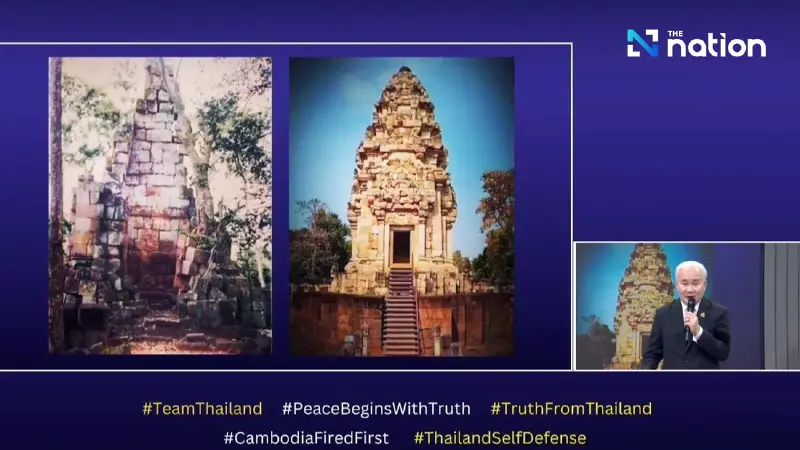


Fine Arts Department chief Phnombootra says Prasat Ta Kwai in Surin can be restored using anastylosis, but only if it remains on Thai soil.
The director-general of the Fine Arts Department said on Monday, December 15, 2025 that Prasat Ta Kwai in Surin can be restored, despite suffering heavy damage during fighting between Thai and Cambodian forces.
Phnombootra Chandrajoti made the remarks at a press conference at the Joint Press Centre on the Thailand–Cambodia border situation, held after Thai troops recaptured Prasat Ta Kwai in Bak Dai subdistrict, Phanom Dong Rak district, Surin.
Cambodia blamed for damage to heritage site
Phnombootra blamed Cambodia for the destruction, saying Cambodian forces had violated international conventions by establishing a military base at the historical site.

He said Thailand had no choice but to regain its territory by striking the Cambodian position at Prasat Ta Kwai, adding that damage to the site was therefore unavoidable.
Anastylosis technique to be used for restoration
Phnombootra said the department could restore the site using the anastylosis method—an archaeological technique that reconstructs a ruined monument by reassembling surviving original fragments in their correct historical positions.
He said the Fine Arts Department has previously used the method to restore major Khmer-era sites, including Prasat Hin Phanom Rung, Prasat Hin Phimai and Sa Dok Kok Thom.

Phnombootra said the department learned the technique from France.
Under the anastylosis process, the damaged structure is first dismantled, with officials recording the location of every stone so that each piece can be returned to the correct position during reconstruction. Once the monument is fully dismantled, a stronger internal structure is built before the original stones are reinstalled.
Modern technology expected to speed up work
Phnombootra said that when the department restored Prasat Hin Phanom Rung and Prasat Hin Phimai around 50 years ago, it did not have computer technology to assist the work.
Now, he said, the department has digital tools and greater experience. He added that Prasat Ta Kwai is smaller and less elaborate, with fewer detailed carvings, and he expressed confidence it can be restored.
Restoration depends on Thai sovereignty
Phnombootra said the Fine Arts Department has legal authority to restore ancient sites only when they are within Thailand’s territory.
“If the land on which these prasats stand were to fall under Cambodia, we would never again be able to touch or restore these heritage sites,” he said.
He said the key priority is safeguarding the land where the monuments stand, adding that once the situation stabilises, the department believes it can restore the site to its original condition—or potentially improve it—based on additional archaeological evidence uncovered during conservation work.

Three-point message
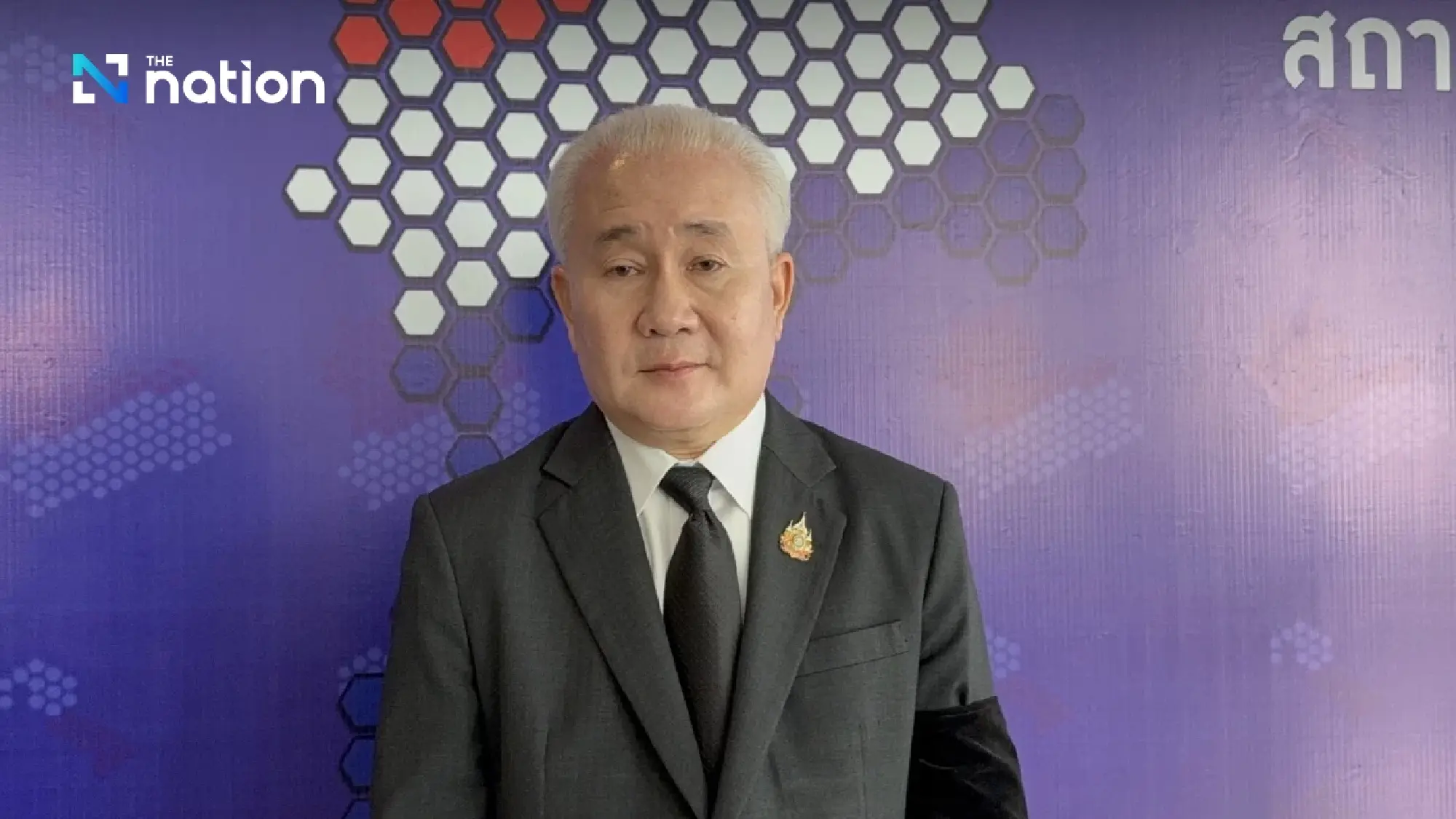
Phnombootra summarised his remarks in three points: Cambodia violated international rules; Thailand’s military operations were aimed at safeguarding sovereignty; and damage caused by battle can be repaired through conservation and restoration. He also expressed support for Thai troops, saying all parties share the same goal of protecting the nation.
