
Ekniti says caretaker government can’t launch new policies, but economy will not stall
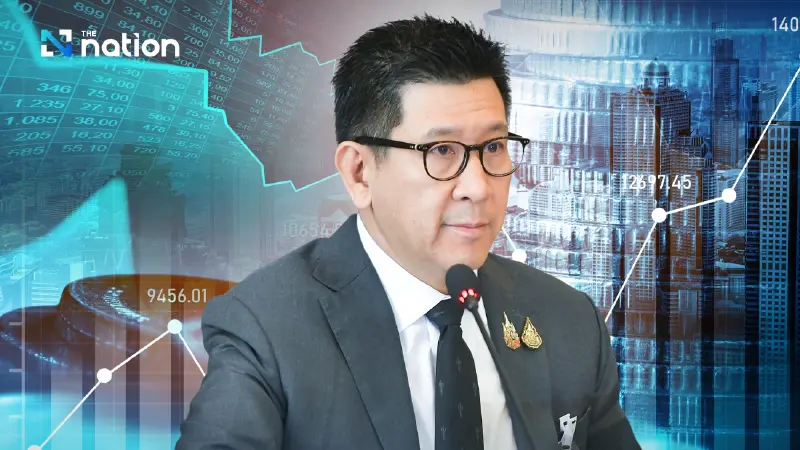


Finance Minister Ekniti says new policies are paused after dissolution, but approved debt relief, investment and SME support will keep the economy moving
Deputy Prime Minister and Finance Minister Ekniti Nitithanprapas has acknowledged that the post-dissolution political vacuum has effectively halted any new economic policies, saying a caretaker government can only carry forward measures that have already been approved.
He said the main impact is the delay of fresh stimulus programmes, including Let's Go Halves Plus Phase 2, which has been prepared but must await a legal review and a decision by the Election Commission (EC) on whether it can proceed. He added that legislative amendments also cannot move forward during this period.

Ekniti said it is also unfortunate that some new initiatives cannot be launched now, including a savings-boosting programme through personal savings accounts under the TISA framework.
On international negotiations, he said Thailand’s talks with the United States on tariffs have reached conclusions, but a caretaker government cannot sign any agreements.
Despite these constraints, he said the economic team had anticipated the dissolution scenario and pushed to complete key work in advance. As a result, several measures can continue immediately during the transition.

He highlighted four areas that will keep moving:
Debt relief: Phase 1 of a debt resolution programme for borrowers with debts below 100,000 baht—covering about 2 million people and a total value of more than 660 billion baht—has been approved and is set to begin on January 1, 2026. Phase 2, expanding coverage to 3.4 million borrowers, may need to wait for the next government.
Investment: BOI-approved investment projects worth 470 billion baht, plus another 170 billion baht under the Thailand FastPass scheme, can continue to support the economy.
SME support: Soft loans and guarantees totalling more than 267 billion baht will continue into next year, alongside tax refunds for businesses. He said more than 60 billion baht in tax refunds has already been returned to SMEs by December.
Savings: Monthly sales of savings bonds will begin in January, with an issuance target of at least 1 billion baht per month.
Ekniti said the government has laid policy foundations in areas such as skills development, debt resolution and fiscal discipline. He also cited S&P’s decision to maintain Thailand’s “Stable Outlook” as a confidence signal, saying he believes the economy will grow by at least 2% next year despite the political transition.
