
Thailand vows proportional response, says it targets military threats only


The Defence Ministry said Thailand did not start the conflict and would continue to operate under humanitarian principles, while blaming Cambodia’s leadership for escalating tensions and delaying evacuations.
- Thailand states its response is proportional, restrained, and adheres to international humanitarian law.
- Military operations are strictly limited to targeting specific military threats while making it a priority to avoid civilian casualties and infrastructure.
- Officials claim Thailand is acting in defense of its sovereignty and was not the aggressor, blaming Cambodian political leadership for initiating the conflict.
- The safety of civilians is described as the overriding priority, with Thailand accusing Cambodia of endangering its own citizens by delaying evacuations.
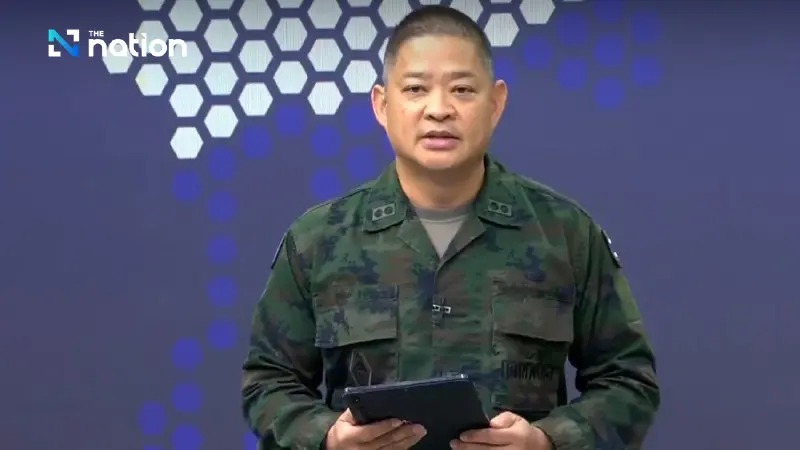
RAdm Surasant Kongsiri, Spokesperson of Thailand's Ministry of Defence, said at the Joint Press Centre on Monday (December 15) at 10am on the Thailand–Cambodia Border Situation at the Army Radio and Television station that Thailand’s position remains unchanged.
Thailand, he said, is acting to defend its sovereignty under humanitarian principles and was not the party that started the conflict.
He blamed the political leadership in Cambodia, including Senate President Hun Sen and the Cambodian government, for initiating the confrontation, stressing that this was not a conflict between ordinary people.

Surasant said Thailand has continued to avoid striking civilian targets, insisting its operations are limited to specific military threats.
He added that the evacuation of civilians from high-risk areas had been thrown into chaos by Cambodia’s own delayed decision-making, accusing Cambodian authorities of leaving people in danger and moving too slowly to evacuate them.
He reiterated that Thailand is adhering to humanitarian standards and international practice, arguing that lasting peace requires security and stability along the border and a reduction in the opposing side’s capability to mount further incursions into Thailand.
Surasant said the situation remains fluid, but Thailand’s operations are being carried out with restraint and a focus on precision, aimed at reducing military threats while minimising any impact on civilians and civilian infrastructure.
He added that Thailand is exercising the highest level of caution and proportionality under international humanitarian law, with the safety of civilians on all sides as the overriding priority.
