
US Supreme Court set to weigh whether Trump tariffs are lawful
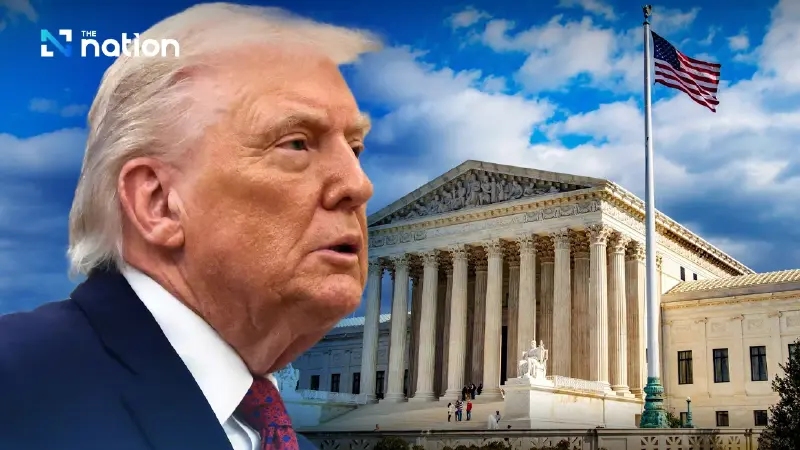


The US Supreme Court is expected on Friday (January 9) to issue opinions that could include a closely watched case challenging the legality of President Donald Trump’s tariffs, a decision that could reshape both US trade policy and the country’s fiscal outlook.
A ruling is not guaranteed, but the court has marked Friday as a decision day, fuelling widespread speculation that the tariff dispute will be among the opinions released.
The case centres on two main questions: first, whether the administration can rely on the International Emergency Economic Powers Act (IEEPA) to impose the tariffs; and second, if that use of the law is found improper, whether the United States would be required to refund importers who have already paid the duties.
The outcome, however, may not be all-or-nothing.
One possibility is that the court narrows the administration’s authority under the IEEPA while ordering only partial reimbursement, alongside other tailored approaches for a politically sensitive matter being scrutinised on Wall Street.
And even if the White House were to lose, it could still pursue tariffs through alternative legal routes that do not depend on emergency powers under the act.
Treasury Secretary Scott Bessent said on Thursday that he is expecting a “mishmash” decision.
Speaking in Minneapolis, Bessent argued that “what is not in doubt is our ability to continue collecting tariffs at roughly the same level, in terms of overall revenues,” but said “what is in doubt, and it’s a real shame for the American people, was the president loses flexibility to use tariffs both for national security, for negotiating leverage.”
Trump has cited the IEEPA in part as an emergency tool aimed at stopping the inflow of fentanyl to the US.
Jose Torres, senior economist at Interactive Brokers, said losing the tariffs would have wide-ranging consequences.
“If the court blocks the tariffs, the administration is going to find workarounds,” Torres said, adding that Trump is “very ambitious” about pushing his agenda forward despite the controversies that could follow.
Torres said blocking tariffs would hurt onshoring ambitions and worsen fiscal conditions, with rates likely to rise, while also benefiting corporate earnings because input costs would fall and trade would be smoother.
Administration officials have pointed to several ways to cushion an adverse ruling.
Prediction markets site Kalshi currently assigns a 28% probability that the court will uphold the tariffs as implemented, and Torres said his firm’s clients hold a similar view.
Bessent has said the administration has at least three other avenues under the 1962 Trade Act that could keep most tariffs in place.
At the same time, he has warned that potential reimbursements could strain the administration’s efforts to reduce the fiscal deficit.
According to Treasury data, tariffs generated about US$195 billion in fiscal 2025 and a further US$62 billion in 2026.
Morgan Stanley analysts Ariana Salvatore and Bradley Tian said they “see significant room for nuance” in what the Supreme Court ultimately decides.
They noted that the court “has wide latitude” and could, for example, limit the scope of existing tariffs without requiring their complete removal, or restrict how tariffs are applied in future.
They also said there may be space for the administration to take a lighter-touch approach to the overall tariff regime, given a recent political focus on affordability.
So far, the effects of the tariff programme have surprised some analysts: inflation has seen only a limited impact, while the trade deficit has fallen sharply.
The trade imbalance in October hit its lowest level since the end of the financial crisis in 2009, a period when imports dropped steeply amid the severe recession triggered by the crisis.
CNBC
