
ERC fixes new power tariff, seeks state support for vulnerable groups
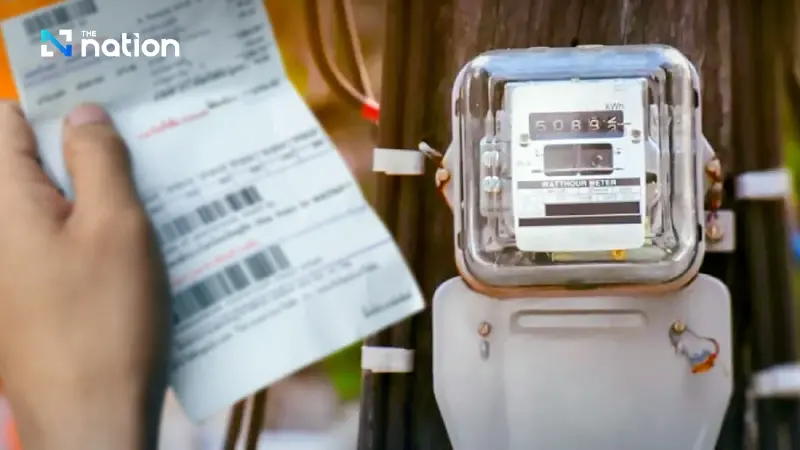


If May-August 2026 tariff is set at 3.95 baht a unit, the state would need 878 million baht to keep bills unchanged for low-use households as ERC says power fuel supplies remain secure.
- The Energy Regulatory Commission (ERC) has prepared a plan for 878 million baht in subsidies to help vulnerable households with their power bills.
- The aid is targeted at households that consume no more than 200-300 units of electricity per month, representing about 80% of all users.
- This subsidy is intended to keep electricity rates the same for these groups, offsetting a planned tariff increase to 3.95 baht per unit for the May-August 2026 period.
- The funding for the program must be provided by the state, as the ERC's own funds are reportedly depleted.
Reports from the Energy Regulatory Commission (ERC) on March 29, 2026, said it had drawn up guidelines to reduce electricity bills for specific groups of users consuming no more than 200-300 units a month so they could continue paying the same rate.
The report said the government would need to find about 878 million baht in subsidies if the ERC finalises the average electricity tariff for the May-August 2026 period at 3.95 baht per unit.
It added that fighting in the Middle East would not cause Thailand to face fuel shortages for power generation, while five approaches are being accelerated to strengthen the country’s electricity security.
Poonpat Leesombatpaiboon, secretary-general of the Energy Regulatory Commission Office and spokesperson for the Energy Regulatory Commission (ERC), said accurate information had been prepared to support guidelines for cutting electricity bills for households using 200-300 units a month, to be submitted to the new government to ease living costs and help with electricity expenses for vulnerable groups, which account for 80% of all electricity users.
The final method to be used will depend on the government’s consideration.
If the electricity tariff for the May-August 2026 period is set at 3.95 baht per unit, up from the current 3.88 baht per unit, a subsidy of 7 satang per unit would be required, amounting to about 878 million baht.
Of this, 333 million baht would be needed for users consuming no more than 200 units a month, and 545 million baht for those consuming no more than 300 units a month.
This funding would have to come from the state.
“We no longer have any money left,” Poolpat said, adding that the remaining 9.471 billion baht from the excess benefit recovery funds retained by the power utilities (clawback) must be used to reduce electricity bills for the May-August 2026 period, equivalent to 13.43 satang per unit, to help ease the impact on electricity users.
Poonpat said, however, that Thailand would not face electricity shortages.
He said measures had been set to strengthen electricity security, with an emphasis on greater self-reliance, including accelerating hydropower imports from Lao PDR by around 100-200 megawatts, purchasing electricity from small power producers (SPPs) in the renewable energy segment, with procurement open until December 2026, and accelerating the use of more natural gas from the Gulf of Thailand.
