
Phiphat to meet PM, attorney-general on three-airport rail amendment
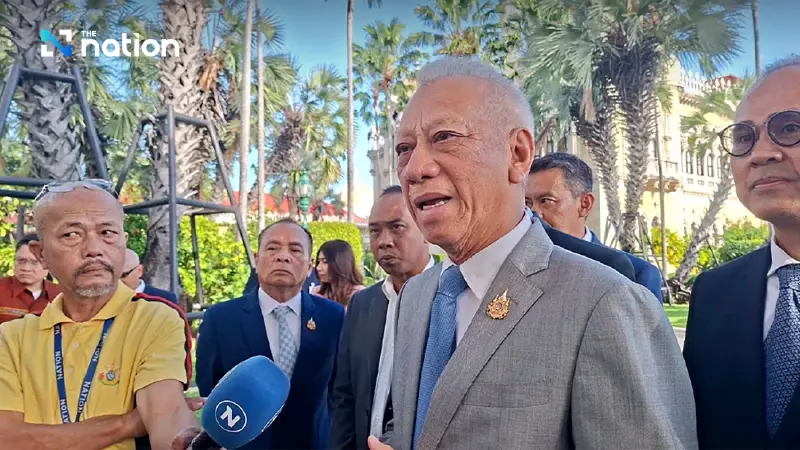


With the 224-billion-baht project years behind schedule, Transport Minister Phiphat Ratchakitprakarn plans to talk with the prime minister and the attorney-general to weigh legal options on a contract amendment and to secure safeguards against potential losses to the government.
Deputy Prime Minister and Transport Minister Phiphat Ratchakitprakarn said on Thursday (October 2) he will hold talks with Prime Minister Anutin Charnvirakul over the contract for the long-delayed Don Mueang–Suvarnabhumi–U-Tapao high-speed rail project, a 224 billion-baht joint-investment scheme between the State Railway of Thailand (SRT) and concessionaire Asia Era One Co.
Phiphat has rejected a proposed amendment to the contract. The amendment sought to change the state’s co-investment payment method to a “pay-as-you-build” scheme, which Phiphat said contradicted the original contract terms.
Phiphat said he will also consult the Office of the Attorney-General to clarify the legal implications of any proposed amendments to the concession agreement, stressing that the government does not want future legal problems to arise from how changes are handled. He added that he cannot make unilateral decisions and needs legal certainty before proceeding.
‘What was agreed in the original contract must be respected,’ Phiphat said. ‘If there are to be changes, I cannot decide on my own; we must ask the Attorney-General which provisions can be amended and which cannot. I will not support anything that causes loss to the state.’
To reach a swift conclusion, Phiphat said he will convene talks with all relevant parties, including the Eastern Economic Corridor Office (EECO), the SRT and Asia Era One. He said he would meet EECO executives on Thursday to review overall progress on EEC projects and to discuss possible remedies.
Phiphat said he wants the project to move forward but stressed that contingency plans must be drawn up for any gaps, for example, transport links between Suvarnabhumi and Don Mueang airports, and that any compensation or mitigation measures be identified. ‘We must look at how to make up for losses,’ he said. ‘These are matters that need urgent attention, but we must consult the private sector and all stakeholders first.’
Asked whether the government would summon the EEC board immediately to speed up a solution, Phiphat said he would first discuss outstanding items with the EEC secretary-general and senior management. He noted the remaining four months of the administration were a crucial window in which to accelerate stalled projects.
