
Julapun tipped as frontrunner for Pheu Thai leadership
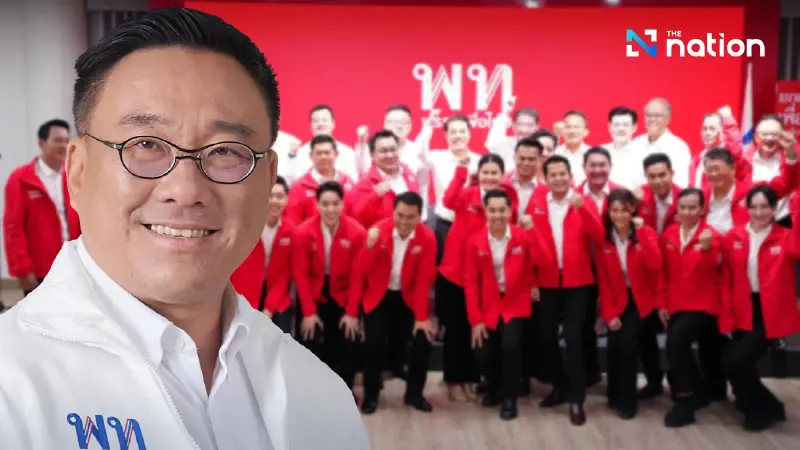


Julapun Amornvivat is seen as a moderate figure capable of reconciling interests among the party’s factions and striking a balance between the old guard and the new generation.
The resignation of Paetongtarn Shinawatra as leader of the Pheu Thai Party is not merely a political tremor; it is a carefully calculated strategic move designed to preserve the party’s stability and long-term survival. Her decision reflects a deep awareness of the growing “crisis of faith” eroding the party’s public trust.
Although she stressed in her resignation that “this DNA remains with Pheu Thai,” the statement implicitly acknowledges that she herself may have become an obstacle to change. Stepping aside, therefore, clears the path for new leadership and fresh vision, enabling the party to adapt freely amid both internal friction and external pressure. Pheu Thai now stands at a historic crossroads, one that could redefine the future of Thailand’s oldest political powerhouse.

Three strategic reasons behind her exit
Analysts interpret Paetongtarn’s resignation as a sacrifice to defuse three political time bombs threatening the party’s stability:
1. Closing legal and ethical loopholes
As party leader, Paetongtarn would have had to endorse MP candidates in the next general election, a move that could expose her to legal interpretation challenges. Stepping down pre-emptively shields the party from future legal attacks and allows a “clean-slate” leader to operate free of controversy.
2. Stemming internal “bleeding” and tensions with the deep state
The exodus of MPs amid fears of Pheu Thai’s “Shinawatra image” has reflected deep internal fractures. Her exit is seen as a tactical effort to halt factional defections, ease friction with entrenched power networks, and bring estranged members back under one roof.
3. Redefining the party beyond the Shinawatra family
Reducing the dominance of the Shinawatra clan is also a strategic attempt to improve cooperation with coalition partners, particularly Bhumjaithai, and symbolically reconcile with traditional power circles, a move to enhance the party’s long-term political resilience.

Internal crisis forces leadership overhaul
The decision to “reboot” Pheu Thai stems from multi-directional pressure:
- The Shinawatra brand is losing its magic; what was once a source of strength has become a liability.
- Back-to-back by-election defeats in Si Sa Ket and Kanchanaburi signal cracks in voter loyalty.
- MP uncertainty and defections point to fading unity.
- Fractured financial backers, some key financiers now support individuals instead of the party.
These combined forces made leadership change not an option, but a necessity, the only viable path to survival.
Julapun emerges as frontrunner
A bridge between generations
With Paetongtarn’s departure, attention turns to Julapun Amornvivat, widely viewed as the favourite to take the helm with a 95% likelihood. As the son of former party leader Sompong Amornvivat, Julapun is seen as a moderate figure capable of bridging factions, balancing the old guard’s influence with the energy of younger progressives.
Known for his measured, conciliatory style, Julapun commands respect across party lines and could steer Pheu Thai through a turbulent transition while maintaining unity and credibility.

Contenders for secretary-general
Three names are being discussed for the key role of party secretary-general:
- Suriya Juangroongruangkit – a heavyweight financier with strong political networks.
- Manaporn Charoensri – a skilled MP coordinator known for connecting party factions.
- Prasert Chanthararuangthong – the former secretary-general, potentially reinstated to ensure stability, though his return could risk reinforcing the “Shinawatra-era” perception.
This leadership reshuffle is not merely a personnel change; it will signal whether Pheu Thai can truly evolve beyond its dynastic roots.
Turning point or tactical pause?
Paetongtarn’s resignation marks the most pivotal juncture for Pheu Thai in a decade. The upcoming general assembly on October 31 will be more than a leadership vote; it will serve as a spiritual referendum on whether the party can become a modern, mass-based political institution or remain trapped within the Shinawatra orbit.
The key question is whether Pheu Thai is reinventing itself to move forward, or merely reshuffling faces to buy time.
By stepping aside, Paetongtarn has opened the door to a new generation. The challenge now falls on Julapun to unify old and new forces. If he succeeds, Pheu Thai may yet revive its lost credibility; if not, it risks becoming a shadow of its former Shinawatra legacy.
