
Anutin plays dissolution card to pressure People’s Party ahead of censure debate
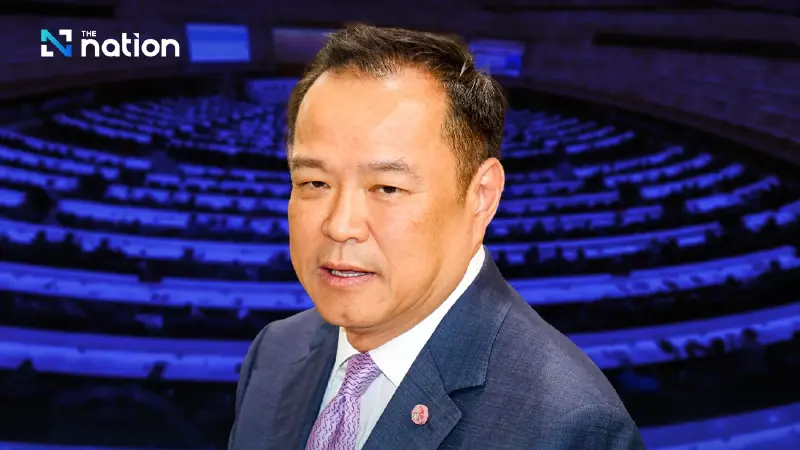


Facing a looming censure debate, Prime Minister Anutin Charnvirakul is playing the dissolution card — a strategic move aimed at discouraging the People’s Party from siding with Pheu Thai and testing the stability of his minority government.
Speculation is growing in political circles after Prime Minister Anutin Charnvirakul, leader of the Bhumjaithai Party, suggested that the House of Representatives could be dissolved earlier than expected, before the four-month mark set in the coalition’s political agreement with the People’s Party.
Speaking candidly at the THE STANDARD Economic Forum 2025 on November 5, Anutin said the government would not stand idle if the opposition used the upcoming no-confidence debate, expected when Parliament reconvenes on December 12, as a tool of political retaliation.
“I’ll assess the situation as it unfolds. If the censure motion is meant purely for revenge or political games, I intend to dissolve the House of Representatives on January 31, 2026. I won’t allow anyone to attack the government for free. If we can’t win the political game, we’ll dissolve the House,” Anutin said.
The remark came after sources within Pheu Thai revealed that the party may submit a censure motion when Parliament reconvenes.
Legislative disruption is likely if dissolution comes early
Lawmakers warn that an early dissolution, especially in December, would disrupt the legislative process for several key bills, especially the political bills that parties are counting on to boost their popularity and strengthen their political momentum. These include:
- Draft laws on local elections and the Progressive Local Governance Bill sponsored by the People’s Party.
- A draft on BTS fare reductions in Bangkok, championed by the Pheu Thai Party under its “20 baht flat fare” policy.
- The Social Harmony Promotion Bill, jointly proposed by the People’s Party, Pheu Thai, and the United Thai Nation Party.
- The ongoing constitutional amendment process, which could pave the way for a new charter, would also be stalled if Parliament is dissolved prematurely.
All these bills are scheduled for debate in early December, ahead of the possible dissolution window between late December 2025 and early January 2026. A sudden dissolution would derail these legislative milestones, undermining parties’ efforts to showcase achievements ahead of the next election.
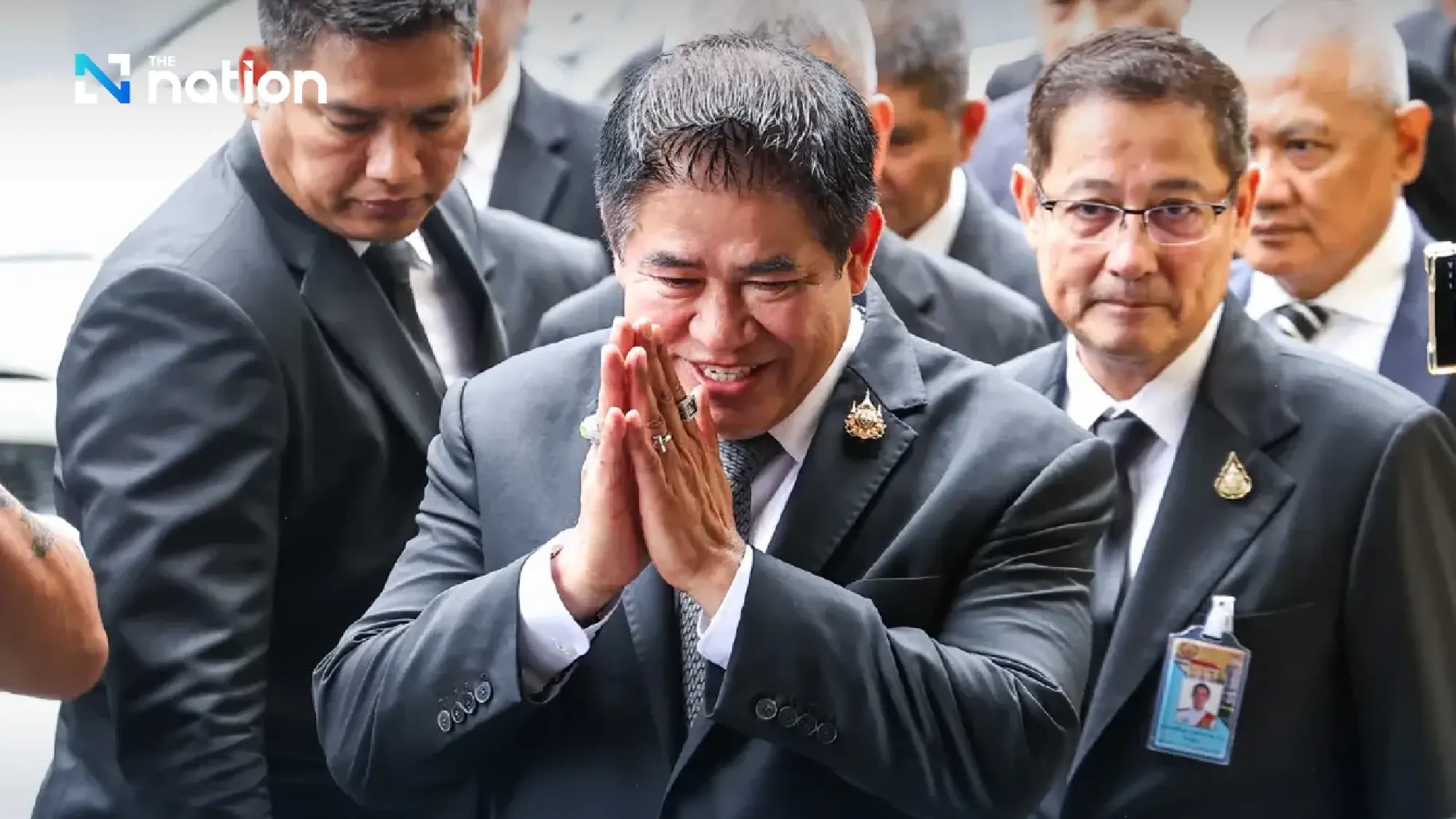

Political calculus behind Anutin’s timing
For the ruling Bhumjaithai Party and coalition allies such as the Klatham Party, the risk of legislative loss appears secondary to political survival.
Anutin’s statement that he would not “let anyone attack the government for free” underscores a calculated move to pre-empt damage from a no-confidence debate that could erode public trust.
Opposition figures are expected to target the government over issues including the failure to curb online crime, allegations linking a cabinet minister to grey business interests, and opaque dealings in the US–Thailand rare earth agreement. They are also likely to revive dormant political cases such as the Senate collusion scandal and the Khao Kradong land dispute.
Although evidence directly implicating Anutin or other ministers remains unproven, history suggests that censure debates can seriously weaken public confidence in a government, especially in the final stretch before a general election.
Another key factor expected to influence Prime Minister Anutin’s decision on when to dissolve Parliament is the balance of votes in the House of Representatives.
Under Section 151 of the Constitution, a no-confidence motion requires more than half of all sitting MPs to pass.
Before Parliament adjourned on October 30, there were 492 MPs. When it reconvenes in December, two newly elected MPs are expected to be sworn in, bringing the total to 494 members, meaning a majority of 247 votes would be needed to topple the prime minister or any censured minister.
If Pheu Thai were to secure a firm alliance with the People’s Party, a censure vote could easily exceed the halfway mark and might approach 300 votes, posing a real threat to the government.
However, if the People’s Party decides to abstain or boycott the session, the opposition’s attempt to unseat Anutin would almost certainly fail. Current political signals suggest the latter scenario is more likely, as the so-called “Orange Party” appears to be positioning itself as a stabilising force rather than a disruptor.
Political observers believe this stance reflects the party’s strategy to push forward key parliamentary agendas, particularly reforms aimed at reshaping Thailand’s political structure, initiatives they wish to complete while still holding leverage over a minority government.
Yet, with Anutin holding the power to dissolve Parliament, that advantage could evaporate overnight, turning the Orange Party’s sense of control into deep uncertainty.
