
UNESCO chief warns: Overtourism and climate threaten world heritage
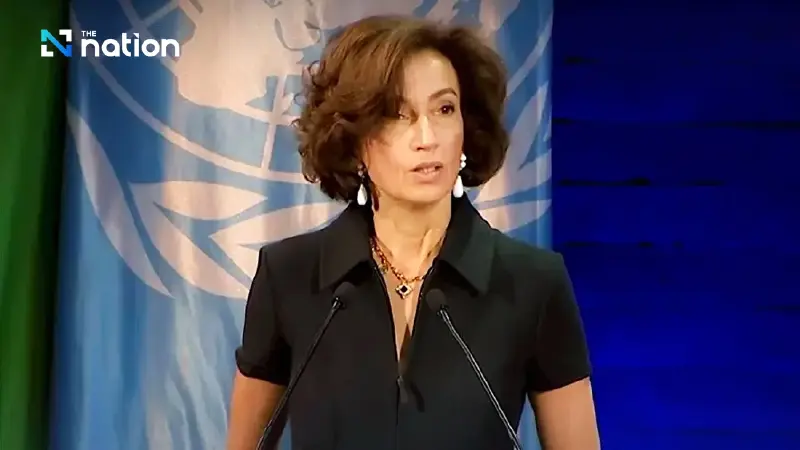


UNESCO chief Audrey Azoulay warns that unchecked tourism and climate change are accelerating the deterioration of World Heritage Sites worldwide, calling for urgent action and sustainable solutions.
The 47th session of the UNESCO World Heritage Committee officially opened on July 6 at the organisation’s headquarters in Paris, France. Held under the presidency of Bulgaria, the session runs until July 16 2025, with the country playing a leading role in this year’s proceedings.
UNESCO Director-General Audrey Azoulay delivered the opening address on July 7, joined by Bulgarian Minister of Culture Marian Bachev and Prof Nikolay Nenov, Chair of the World Heritage Committee.
Azoulay’s speech underscored the central role of the World Heritage Convention — now more than 50 years old — in promoting peace by protecting, transmitting, and elevating the value of cultural and natural heritage.
Over 1,200 World Heritage Sites are recognised globally
Azoulay highlighted a quote by Bulgarian Nobel laureate Elias Canetti: "The recognition and transmission of human diversity lie at the heart of a fundamental ideal — one that must be nurtured and advanced sustainably." — a sentiment reflecting the spirit of the convention.
With 196 signatory states, the World Heritage Convention is one of the most universally ratified treaties in the world. Today, it recognises more than 1,200 World Heritage Sites covering nearly 4.8 million square kilometres, a significant expansion since the first 12 sites were inscribed in 1978.

Climate change threatens one-third of natural sites
Azoulay also addressed urgent contemporary challenges, particularly the impacts of climate change, which now threaten a substantial portion of world heritage.
According to UNESCO, one-third of natural World Heritage Sites and one-fifth of cultural sites are currently under severe threat due to global warming. In the Mediterranean, nearly two-thirds of heritage cities are experiencing extreme weather conditions, while almost three-quarters of all World Heritage Sites face significant water-related risks, from droughts to floods.
This year’s session, she said, aims to reaffirm the World Heritage Convention as a tangible and resilient multilateral commitment — one in which culture must play a pivotal role in addressing the crises of the modern world.
UNESCO warns of overtourism
Azoulay highlighted overtourism as a growing global concern. With popular destinations facing increasing strain, UNESCO has implemented a ‘Sustainable Tourism’ strategy since last year to address the issue.
This approach includes tailored visitor management plans for individual sites, the development of innovative visitor centres, and the creation of diversified cultural routes — all aimed at easing pressure on overburdened locations.
Rising conflicts place World Heritage in danger
Azoulay also raised alarm over the rising number of World Heritage Sites under threat due to armed conflict. Of the 56 sites currently on UNESCO’s List of World Heritage in Danger, half are directly affected by conflict. Notably, the Middle East — which accounts for just 8% of all heritage sites — represents over 40% of those in danger.
UNESCO is increasingly being called upon to assist in the protection and recovery of heritage sites damaged by natural disasters and armed conflict.
New online tools for real-time risk assessment
In response, UNESCO has deployed damage assessment missions — including a recent one in Argentina following major flooding — and launched a new online platform to map the geographic locations of all World Heritage Sites, UNESCO Global Geoparks, and Biosphere Reserves. The platform enables real-time risk analysis of threats such as flooding or wildfires, helping to improve emergency preparedness and protection strategies.
In addition, a separate platform titled ‘Dive into Heritage’, supported by the Kingdom of Saudi Arabia, has been introduced to offer deeper insights into the many dimensions of global heritage.
US$115 million restoration in Mosul and beyond
On post-conflict recovery, Azoulay revealed that UNESCO recently completed a US$115 million restoration project in Mosul, Iraq, and is preparing similar efforts in Syria. These include safeguarding the National Museum in Damascus, listed as a World Heritage Site in danger, and launching initiatives in Aleppo to conserve key monuments and restore the National Museum.
UNESCO continues to monitor damage to cultural sites in the Gaza Strip through satellite imagery following the escalation of conflict in October 2023. In Ukraine, emergency support has been ongoing since 2022, with more than 500 cultural sites affected in cities such as Odesa and Lviv.
Further efforts are underway in Sudan to protect endangered heritage and museum collections, and in the Democratic Republic of the Congo’s Kahuzi-Biega National Park, where UNESCO is working to shut down illegal mining operations and train rangers for site protection.
UNESCO backs African heritage nominations as World Heritage Committee reviews new sites
UNESCO has reaffirmed its commitment to strengthening African representation on the World Heritage List, with targeted support measures in place since 2021. The initiative focuses on enabling African nations to nominate sites for the first time, while also building expertise among a new generation of African heritage professionals.
Key efforts include partnerships with five universities in Cameroon, Morocco, Senegal, South Africa, and Tanzania to promote higher education in heritage conservation and management. Since 2018, 15 new sites across eight countries in sub-Saharan Africa have been inscribed on the World Heritage List. At the current session, four African sites are under consideration, including first-time nominations from two countries.
30 new sites under review, 3 at risk of removal from the endangered list
This year’s World Heritage Committee session is reviewing nominations for 30 new sites and two proposed transboundary extensions. The committee is also assessing the state of conservation of nearly 250 existing sites — double the number reviewed last year — providing a broad picture of current challenges across the global World Heritage portfolio.
Three sites are also under consideration for removal from the List of World Heritage in Danger: the Rainforests of the Atsinanana (Madagascar), the Abou Mena site (Egypt), and the Old Town of Ghadamès (Libya). The move underscores that the endangered list serves as a call to collective action rather than a punitive measure.
Azoulay emphasised the importance of shielding the World Heritage List from political interference in order to preserve the integrity and balance of the international dialogue that underpins the convention.
Bulgaria supports the Paris-hosted session despite hosting constraints
This year’s session, although held in Paris, has been made possible thanks to the support of the Bulgarian government. While Bulgaria was unable to host the event domestically, it played a pivotal role in ensuring the smooth organisation of the session at UNESCO’s headquarters.
In her opening remarks, Azoulay quoted Bulgarian thinker Julia Kristeva: “Each of us is unique, and in that uniqueness lies the essence of being human.” The statement, she noted, reflects the very spirit of the World Heritage Convention — a collective commitment to protecting what is unique and universally valued.
