
Energy Ministry tightens security at key infrastructure, says supply stable
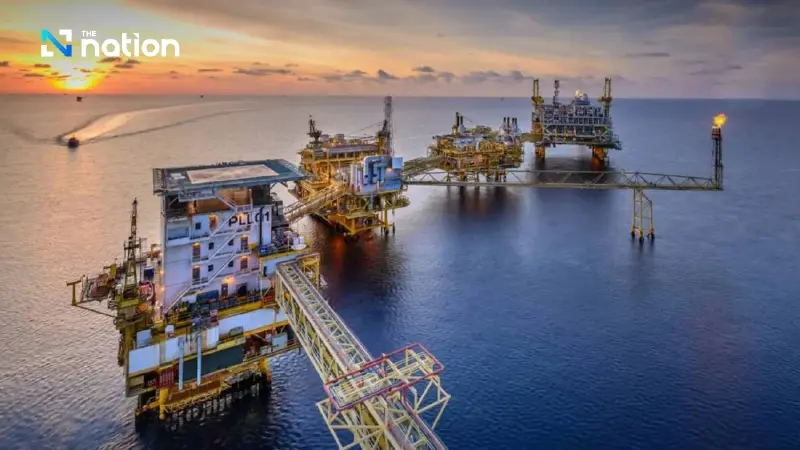


Thailand’s Energy Ministry has stepped up security at Gulf of Thailand petroleum platforms and other energy infrastructure, insisting energy security remains unaffected.
The Energy Ministry has tightened security at critical energy sites, including offshore petroleum platforms in the Gulf of Thailand, power plants and other energy infrastructure, insisting the country’s energy security has not been affected.
Veerapat Kiatfuengfoo, deputy permanent secretary for energy and the ministry’s spokesperson, was responding to reports of unidentified drones entering and causing disturbances near offshore oil and gas platforms since clashes on the Thai-Cambodian border on December 7.
He said the ministry, through the Department of Mineral Fuels — the regulator overseeing petroleum exploration and production onshore and offshore — has been closely monitoring developments with all concessionaires and contractors.
Operators have been instructed to strengthen security measures for personnel, assets and suspicious vehicles, including unregistered drones that may intrude into production areas.

In recent weeks, operators have also detected vessels of unknown nationality and unidentified drones in petroleum production zones in the Gulf of Thailand, including the Erawan production platform, wellhead platforms in the Benchamas area, the Pailin platform, the North Pailin platform, and wellhead platforms in the Platong area.
The ministry said it has held talks with all offshore petroleum operators to set measures to prevent and reduce risks and to prepare for emergencies. Key steps include:
- Stepping up surveillance for vessels and drones that may enter petroleum production zones.
- If any vessel enters a production area, operators should immediately order it to leave. If initial measures cannot be carried out, they must promptly notify the Royal Thai Navy and the Department of Mineral Fuels.
- If a drone is detected within a production zone, operators must immediately inform the Royal Thai Navy and the Department of Mineral Fuels to ensure offshore worker safety.
- Operators are asked to avoid sending offshore personnel to wellhead platforms at night.
- Operators are urged to develop a response plan for maritime sabotage to maximise safety for offshore personnel.

Because petroleum production is critical to national energy security, the ministry said it has set up a coordination and maritime monitoring group with offshore operators to produce daily situation reports.
It has also sought cooperation from PTT Plc to help monitor and report incidents to the navy, the Department of Mineral Fuels, and relevant agencies.
The ministry said it is also working with the Hydrographic Department, the Marine Department and other agencies to request that all vessels operating in the Gulf of Thailand keep radar and AIS (Automatic Identification System) switched on to identify themselves and improve navigational safety across the area.
Veerapat said there has so far been no impact on petroleum production. He added that the ministry would continue to closely monitor offshore drilling operations, power plants and all energy infrastructure, while coordinating with relevant agencies — including seeking military support for patrols and security — to safeguard Thailand’s energy security.
