
'First Love' to Eternal Friendship: Landmark Thai-Chinese Exhibition Opens in Beijing
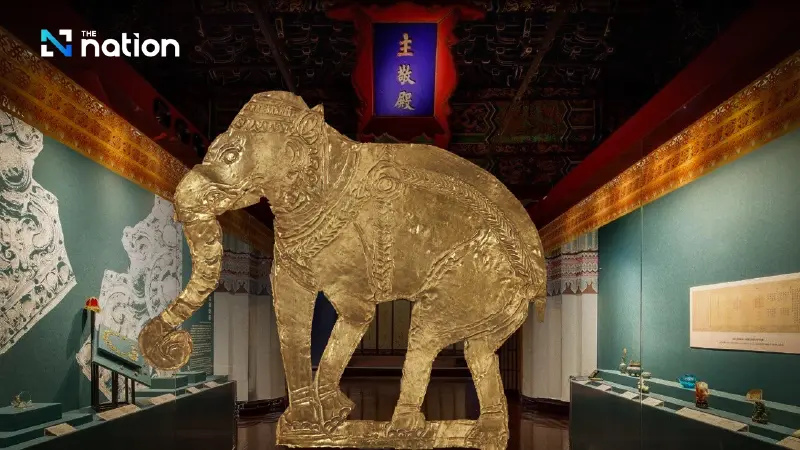


A rare collection of 219 royal treasures and ancient artefacts goes on display at the Palace Museum to celebrate 50 years of Thai-Chinese diplomacy
- A landmark exhibition, "Exhibition of Ten Thousand Auspicious Blessings," has opened at Beijing's Palace Museum to celebrate 50 years of formal Thai-Chinese diplomatic relations.
- The showcase features 219 royal treasures and ancient artefacts from both nations to explore the historical, religious, and artistic bonds between them.
- Key highlights illustrating the cultural exchange include a Thai royal golden nameplate sent to Chinese Emperors and a Thai throne inspired by Qing Dynasty furniture.
- The exhibition's significance was underscored by a royal visit from the King and Queen of Thailand for its premiere.
A rare collection of 219 royal treasures and ancient artefacts goes on display at the Palace Museum to celebrate 50 years of Thai-Chinese diplomacy.
A historic cultural exchange has been etched into the annals of Thai-Chinese history as the "Exhibition of Ten Thousand Auspicious Blessings" officially opened at the Palace Museum in Beijing.
Celebrating 50 years of formal diplomatic relations, the showcase serves as a poignant retrospective of a bond described as "initial love" that has matured over a millennium.
Hosted at the prestigious Wenhua Hall within the Forbidden City, the exhibition features 219 significant artefacts, including 117 national masterpieces from Thailand and 78 rare items from the Chinese archives.
The collection explores the intersection of history, religion, and the shared values of the two nations.

A Millennium of Exchange
Nitaya Kanokmongkol, director of the Office of National Museums, noted that the relationship dates back to the Dvaravati and Srivijaya periods.
These eras aligned with the expansion of the Maritime Silk Road, a trade route that acted as a conduit for Buddhism and regional commerce to flow into what is now modern-day Thailand.
The exhibition is curated into four distinct pillars, ranging from historical development and religious beliefs to rare Royal Court arts and contemporary traditions.


Highlights of the Two Courts
The centrepiece of the Thai collection is the "Phra Suphannabat"—a royal golden nameplate. This cylindrical gold scroll, containing inscriptions from Thai monarchs to Chinese Emperors, highlights the traditional protocol of announcing a new reign to maintain royal ties.
In a symbolic "meeting of the courts," the exhibition features the "Phra Thinang Kong" (the Horseshoe-back Throne) from the reign of King Chulalongkorn (Rama V).
The throne’s curved aesthetic, inspired by Qing Dynasty furniture, is displayed alongside a screen belonging to the Chinese Emperor Jiaqing, illustrating the artistic cross-pollination between the two royal houses.

The Art of Diplomacy
The display also sheds light on early trade, featuring Sangkhalok (Celadon) ware and Benjarong porcelain.
Nitaya highlighted the charming cultural nuances found in Ayutthaya-period porcelain; although the motifs were Thai, the figures were often painted with East Asian features because the Chinese artisans had never seen a Thai person.
Also on display is a handwritten Chinese-Thai dictionary, a vital manual once used by merchants and envoys to navigate the linguistic demands of early diplomacy.

A Royal Premiere
The project was fast-tracked in less than a year, overcoming significant logistical hurdles, including Beijing’s dry winter climate, which posed a risk to delicate wood and leather items.
The exhibition’s prestige was further elevated by a royal visit from Their Majesties the King and Queen of Thailand, who graced the premiere during their official visit to China. This royal endorsement has sparked a wave of interest from the Chinese public and international tourists alike.
The exhibition, a collaborative effort between the Thai Fine Arts Department, the Palace Museum, and the Royal Thai Embassy, will remain open through the Lunar New Year festivities, concluding on 24 February 2026.


