
National Parks of Thailand urges action to restore seas on World Whale Day
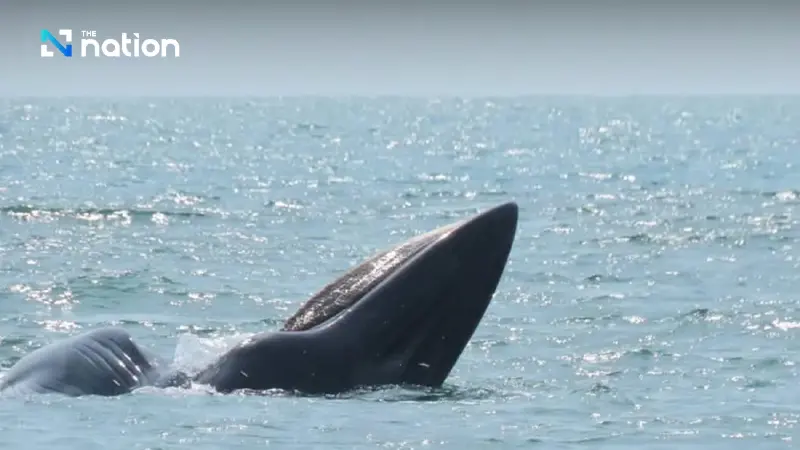


Officials say rising Bryde’s whale sightings, especially around Mu Ko Ang Thong, signal a healthier ecosystem, while reminding boat operators and the public to follow whale-protection rules and cut plastic waste.
- Increased sightings of Bryde's whales in the Gulf of Thailand are being highlighted as a positive sign of a healthy marine ecosystem that requires continued protection.
- Thailand's Department of National Parks is implementing conservation actions, including monitoring whale populations, managing marine protected areas, regulating whale-watching tourism, and running sea clean-up projects.
- All whale species in Thai waters are legally protected, with Bryde's and Omura's whales designated as 'reserved wildlife', the highest level of protection, carrying strict penalties for harm.
- On World Whale Day, the department urges the public to join conservation efforts and raise awareness, emphasizing that the presence of whales signifies a healthy and productive ocean.
Jinda Srisuppatpong, Director of the Marine National Park Management Division at the National Parks of Thailand, said that over the past several months, there have been more reports of Bryde’s whales being sighted in the Gulf of Thailand, especially in Mu Ko Ang Thong National Marine Park.
He said this is a positive sign that Thailand’s marine ecosystem remains abundant, with sufficient food sources for these whales.
Bryde’s whale is the most commonly sighted in Thai waters.
It is about 12–15 metres long and feeds on anchovies and plankton.
The fact that Bryde’s whales choose to live and forage in the Gulf of Thailand shows that the area remains productive, as whales require large quantities of food each day.
Besides Bryde’s whales, Thai seas are also home to false killer whales, which are found in the Andaman Sea, especially around the Similan Islands and the Surin Islands, as well as Omura’s whale, a rare whale species that was only recognised as a distinct species relatively recently.

“Having whales living in our seas is not just something to celebrate; it tells us many things.
It tells us there are still fish in the sea, the water is still clean, and the ecosystem is still in balance,” the Director of the Wildlife Conservation Division said.
All whale species in Thai waters are currently protected by law.
Bryde’s whale and Omura’s whale have been upgraded to ‘reserved wildlife’, the highest level of protection, while other whale species are categorised as ‘protected wildlife’ under the Wild Animal Conservation and Protection Act, 2019.
Hunting, harming, or disturbing whales without complying with regulations is an offence punishable by imprisonment and fines as prescribed by law.

The Department of National Parks, Wildlife and Plant Conservation has carried out conservation work for whales and marine ecosystems in several areas, including monitoring and tracking whales to study population numbers and behaviour in Thai waters so the data can be used for conservation planning; managing protected areas, with marine national parks such as Mu Ko Ang Thong, Mu Ko Similan, and Mu Ko Surin, as well as various non-hunting areas, serving as safe habitats for whales; setting clear whale-watching rules so tourists can watch whales safely without disturbing them, including minimum distance requirements, boat speed limits, and limits on the number of boats; running beach and sea clean-up projects because plastic waste is among the leading threats that can kill whales; providing public education; and working with fishers, who are at sea every day and play an important role in monitoring and reporting whale sightings.
On the occasion of World Whale Day on February 15, 2026 (the third Sunday of February each year), the public is invited to join efforts to raise awareness of whale and marine wildlife conservation.
Even if a single whale may seem small compared with the vast ocean, the presence of whales in our seas means the ocean is still alive, still provides food, and can continue to sustain us.


