
Under-40 population falls at double speed in Okunoto in Ishikawa prefecture


The population of people aged 39 or younger in the disaster-stricken Okunoto region of Ishikawa Prefecture, central Japan, is shrinking at twice the speed of those aged 40 and older, Jiji Press has learned.
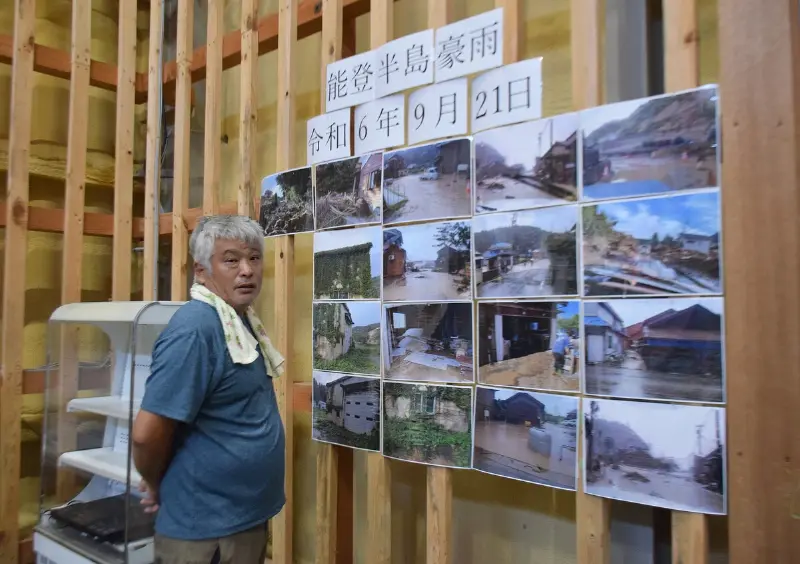
The region in the Noto Peninsula marked on Sunday one year since it was battered by torrential rains. It also suffered massive damage from a powerful earthquake on New Year's Day in 2024.
The area's population outflow continues, and the path to regional recovery is rocky.
According to resident registry data of the four municipalities in the Okunoto region, their combined population, which totalled 58,225 on Jan. 1, 2024, fell 11.8 to stand at 51,344 this month. The four are the cities of Wajima and Suzu, and the towns of Noto and Anamizu.
The rate of decline for people aged 39 and younger came to 20.1 %, more than double the 9.5 % for those aged 40 and up.
The rate is larger for younger age brackets, standing at 17.5 % for people in their 30s, 19.0 % for those in their 20s, 21.9 % for those aged 10-19 and 22.6 % for those aged 9 or younger.

Meanwhile, the decline is smaller among older generations, at 6.8 % for people aged 70 or older.
Retsu Fujisawa, 49, head of the Notorenpuku centre for revitalising the Noto Peninsula through public-private cooperation, indicated that the lack of jobs and the inadequate educational environment are forcing young people to move to urban areas in the prefecture.

In the Najimi district of Wajima, about half of its 11 communities suffered catastrophic damage from the quake and rain. Weeds have grown over the sites of demolished houses, and some farm fields and graves were damaged by wild boars.
The number of households in the district sank from approximately 340 before the quake to about 190, with many of the remaining residents being elderly people in temporary housing.
"It's only natural for young people to question whether they should live here," said district chief Masayuki Kozakaya, 77, who is striving to rebuild the district. "There are few jobs here."
Meanwhile, some people, including 54-year-old Kazuya Okuda, are working to revitalise the Okunoto region.
Okuda is the president of Okunoto Genki Project, a Wajima-based company that aims to expand employment for people with disabilities by promoting food-processing businesses and operating a cafe.
Okuda resumed the operations of his cafe only four days after the September 2024 heavy rain to protect the jobs of his staff workers. He opened an event venue in March this year, which has become a place for locals to gather.
Though feeling doubts about doing business in a place with a falling population, Okuda remains committed to staying in the region, to which he moved two years ago. Okuda says his love for Noto, where his grandparents also lived, remains unchanged.
"I want to create jobs (in Noto) and a model for success," he says.

[Copyright The Jiji Press, Ltd.]
