
US faces midnight shutdown as Senate funding vote fails
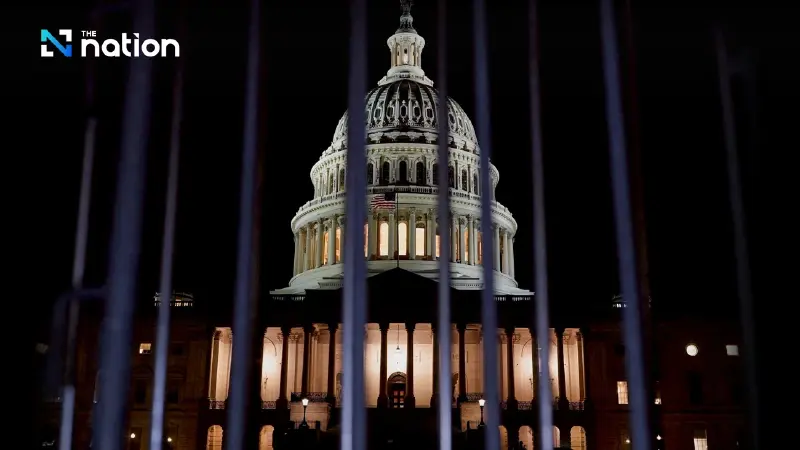


The United States is bracing for a government shutdown after the Senate on Tuesday night failed to pass a stopgap spending bill, while President Donald Trump escalated threats to slash the federal workforce.
The 55–45 vote fell short of the 60 required to advance the measure, effectively guaranteeing that large swathes of federal operations will grind to a halt from midnight. Only essential services, including law enforcement and military operations, will continue, though staff will be left unpaid until Congress resolves the impasse.
A deal appears out of reach. Democrats are demanding that healthcare subsidies be folded into the budget bill, while Republicans insist they be handled separately. Even if the Senate agrees, the package would still need to clear the Republican-controlled House of Representatives, which is currently in recess. Senate Republican Leader John Thune said another vote on the House-passed version would be held on Wednesday.
Trump threatens further purge
Ahead of the vote, Trump warned he would target more federal workers and cut Democratic-backed programmes if funding lapses.
“We’ll be laying off a lot of people. They’re going to be Democrats,” he told reporters.
The threat comes as more than 150,000 employees are already scheduled to exit federal payrolls through buyouts this week, the largest reduction in eight decades. Tens of thousands have also been dismissed since the start of the year. Trump has refused to release billions approved by Congress, fuelling Democratic reluctance to pass new funding.
Several agencies, including the Justice Department and Social Security Administration, circulated furlough notices that blamed Democrats for the impending shutdown, a departure from the long-standing practice of shielding civil servants from partisan disputes.
Fallout across agencies
Government departments have issued shutdown blueprints that would shutter offices involved in scientific research, customer service and other “nonessential” functions. Air traffic could slow, the Labour Department will suspend its closely watched jobs report, the Small Business Administration will halt new loans, and the Environmental Protection Agency will pause some pollution clean-up projects.
Military personnel, border agents and other “essential” staff will keep working but without pay until Congress reaches an agreement.
The previous shutdown under Trump lasted 35 days from 2018 into 2019, the longest in US history, costing the economy an estimated US$3 billion, according to the Congressional Budget Office.
Political deadlock
Democrats argue that healthcare subsidies under the Affordable Care Act must be secured in this year’s budget to prevent steep premium increases for 24 million Americans, particularly in Republican-led states such as Florida and Texas.
“Our promise is to fight as hard as we can for people’s healthcare, plain and simple,” Senate Democratic Leader Chuck Schumer said.
Republicans accuse Democrats of using the issue as leverage ahead of the 2026 midterms. “The far left’s obsession with opposing everything President Trump says or does is no excuse to subject the American people to a shutdown,” Thune countered.
Senator Catherine Cortez Masto of Nevada, one of three Democrats who crossed party lines to back the Republican bill, warned the shutdown would “hand even more power to this reckless administration.”
No clear end in sight
With the deadline looming, the duration of the shutdown remains uncertain. Since 1981, Congress has triggered 15 such stoppages, most lasting only days. But the record 35-day closure in Trump’s first term still looms large, underscoring the risk that this latest standoff could drag on.
Democratic hopes of progress after talks with Trump on Monday evaporated when he later posted a deepfake video mocking party leaders, a move critics said highlighted the deep dysfunction at the heart of Washington’s budget crisis.
Reuters
