
Japan lowers alerts as Typhoon Halong moves away
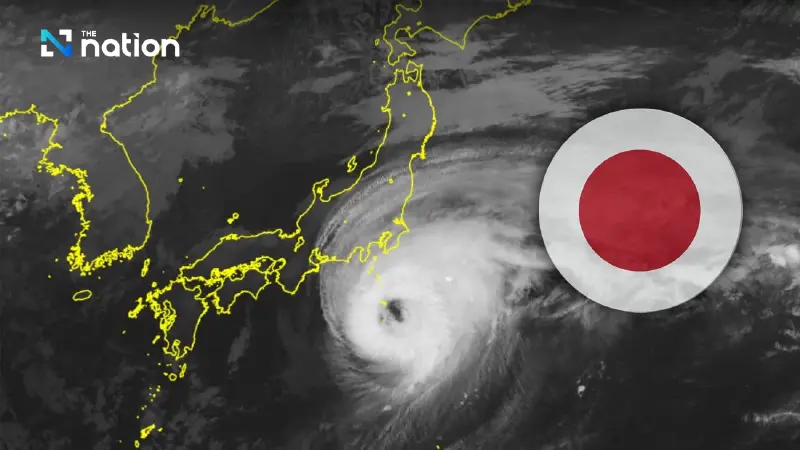


Typhoon Halong is gradually moving away from Japan after lashing the Izu Islands with violent winds and record rainfall on Thursday, according to the Japan Meteorological Agency (JMA).
The powerful storm swept across the island chain south of Tokyo early on Thursday, bringing maximum sustained winds of up to 197 kilometres per hour on Hachijojima Island shortly before 5.30am. The winds tore through homes and damaged buildings across the island.
Over a 12-hour period leading up to noon, 349 millimetres of rain fell on Hachijojimaม, the highest amount recorded there since data collection began in 2003, the agency said.

By midday, the JMA downgraded its emergency alerts for strong winds, high waves, and torrential rain in the Izu Islands to lower-level warnings and advisories. However, it cautioned that rough seas and the risk of landslides remain, as the saturated soil on Hachijojima has become unstable.
A landslide warning remains in place for the island, where similar incidents have occurred after heavy rainfall in past storms. Officials urged residents to remain vigilant and to stay away from steep slopes and coastal areas.
Earlier in the day, a heavy rain emergency warning for Hachijo Town was downgraded to a standard alert at around 2.30pm. The town had recorded 284.5 millimetres of rain in just six hours through 7.20 am, another record since 2003, caused by stationary rainbands hovering over the area.
Peak wind gusts reached over 190 kilometres per hour at Hachijojima Airport, 160 kilometres per hour on Hachijojima Island, and more than 120 kilometres per hour on Miyakejima Island.
Although Halong has started moving away, the Izu Islands and parts of the Kanto region, including Tokyo, remain within the storm’s high-wind zone. The JMA warned of gusts up to 250 kilometres per hour in some areas and waves exceeding 10 metres offshore.

A storm warning is also in effect for southern Chiba Prefecture, with expected gusts of up to 120 kilometres per hour. The agency has urged residents across affected regions to stay on alert for several more hours, warning that gale-force winds could still cause damage or power outages.
