
Trump pushes Gaza peace deal amid unresolved disputes
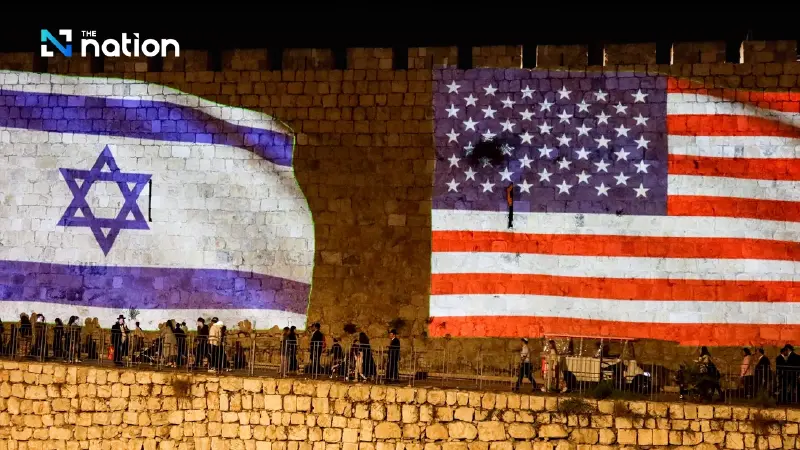


With the war in Gaza now entering its third year, US President Donald Trump has managed what no other leader has achieved: compelling Israeli Prime Minister Benjamin Netanyahu to sign the first stage of a broader peace accord, while rallying key Middle Eastern states to pressure Hamas into compliance.
The agreement, signed in Egypt on Thursday, is being hailed as a potential turning point in one of the world’s most intractable conflicts. Yet analysts warn that the hastily arranged accord leaves numerous unresolved questions that could easily derail its implementation or block progress toward a lasting settlement.
Experts say that while Trump deserves credit for engineering the most promising step yet toward ending the war, the challenge now is translating the text into reality: enforcing the ceasefire, overseeing the exchange of Israeli hostages for Palestinian prisoners, and ensuring Israel’s partial troop withdrawal from Gaza.
Subsequent phases of Trump’s 20-point peace framework are expected to prove far more difficult. They include the disarmament of Hamas, a formal declaration to end hostilities, and an agreement on Gaza’s post-war governance, all issues that remain deeply divisive.
Talks in Sharm el-Sheikh, mediated by Trump’s son-in-law Jared Kushner and special envoy Steve Witkoff, failed to resolve those longer-term disputes. Analysts say reaching a consensus on the remaining points could take months, if not longer.
“There are countless potential pitfalls that will decide whether this truce becomes the start of genuine peace or just another pause in the cycle of violence,” said Jonathan Panikoff, a former US intelligence official now at the Atlantic Council.
Preventing the agreement from collapsing, as several previous ceasefires have under both Trump and former President Joe Biden, will demand sustained engagement from the White House. But Trump’s foreign policy team, weakened by staff cuts and constrained by the ongoing federal government shutdown, faces an uphill task.

Still, the president, who has publicly cited the deal as evidence of his suitability for a Nobel Peace Prize, appears determined to push ahead. If fully implemented, the accord would represent a major foreign policy victory for Trump, who campaigned on bringing peace to global hotspots but has struggled to deliver swift results, including in Ukraine.
Trump’s leverage strategy
Just weeks ago, peace in Gaza seemed remote after Israel’s strike on Hamas leaders in Qatar, a key US ally. Trump’s advisers, however, reportedly turned his frustration with Netanyahu into diplomatic leverage, urging the Israeli leader to accept a framework for ending the conflict, one later introduced to Arab counterparts at the UN General Assembly in New York.
Netanyahu, who had defied Biden’s calls for restraint during earlier phases of the war, found it harder to reject Trump’s pressure, particularly after the US president backed Israel’s airstrikes on Iran’s nuclear facilities in June. Polls in Israel continue to show Trump enjoying greater public approval than Netanyahu himself.
“Without that leverage, there would have been no deal. Netanyahu can’t afford to say no to Trump.”
said Dennis Ross, a veteran US diplomat and Middle East negotiator.
The Israeli prime minister nonetheless faces domestic political risks, as far-right members of his coalition threaten to resign over what they see as excessive concessions.
Trump, meanwhile, has succeeded in securing support from Qatar and Turkey, both of which have long-standing ties to Hamas. The two countries played key roles in persuading the group to release Israeli hostages, both living and deceased, early in the process, rather than holding them as bargaining chips.
Qatar, which hosts the largest US military base in the Middle East, has cultivated closer ties with Trump’s administration since January through defence and trade deals. During a visit to Washington in September, Trump reportedly facilitated a phone call between Netanyahu and Qatar’s prime minister to smooth over tensions following the strike in Doha.
The US leader has also strengthened his rapport with Turkish President Recep Tayyip Erdoğan, who is seeking advanced American weaponry and agreed to help push Hamas toward the deal.
Ever the showman, Trump is reportedly considering a visit to Israel this weekend, around the time the first hostages are expected to be released. Netanyahu has invited him to address the Knesset, Israel’s parliament, a symbolic gesture underscoring their renewed alliance.
Details remain uncertain
Several aspects of the agreement’s initial phase remain unsettled, including the final lists of Palestinian prisoners to be freed in exchange for 20 Israeli hostages, among them 28 bodies of those killed in captivity.
Even greater uncertainty surrounds Gaza’s long-term future. Unresolved questions include whether Hamas will retain any governing role, a prospect Trump and Netanyahu firmly reject, and who will fund the territory’s reconstruction after years of devastation.
From Jimmy Carter to Joe Biden, successive US presidents have struggled with the elusive goal of Middle East peace. Trump’s plan, though fragile and incomplete, may represent the best chance yet to halt the bloodshed, if it holds.
“There’s a sense of momentum behind this,” said Jonathan Alterman of the Centre for Strategic and International Studies.
“But it would be naïve to think everything is settled. The coming weeks will bring some white-knuckle moments.”
