
US Supreme Court questions legality of Trump’s sweeping tariffs
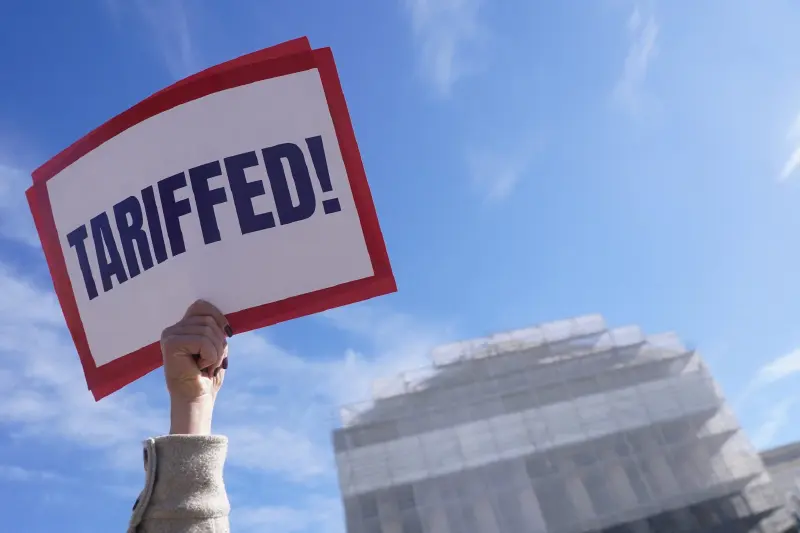


The United States Supreme Court on Wednesday signalled doubts over whether former President Donald Trump acted within his legal authority when imposing sweeping tariffs on imports, a case that could reshape the balance of power between the White House and Congress and carry major implications for global trade.
During more than two hours of intense questioning, justices from both conservative and liberal wings pressed government lawyers on whether a decades-old emergency law, the International Emergency Economic Powers Act (IEEPA) of 1977, truly allows a president to impose tariffs at will.
Chief Justice John Roberts described tariffs as “taxes on Americans” – traditionally a core power of Congress under the US Constitution – and questioned whether the statute had been stretched beyond its intended scope. He suggested the case could fall under the “major questions doctrine”, which requires Congress to explicitly authorise executive actions of significant economic or political consequence.
The Trump administration argues that the IEEPA gives the president wide latitude to regulate imports in a national emergency. Trump invoked the law to justify tariffs on nearly all major trading partners, claiming the US trade deficit posed a threat to national security.
Liberal Justice Ketanji Brown Jackson countered that Congress originally passed the IEEPA to limit, not expand, presidential powers during emergencies. Conservative Justice Amy Coney Barrett also questioned whether the phrase “regulate importation” had ever before been interpreted as authority to impose tariffs.
Still, some conservative justices appeared sympathetic to Trump’s case. Justice Brett Kavanaugh noted that President Richard Nixon had once imposed tariffs under a similar law, suggesting historical precedent might support the former president’s actions.
If the Court ultimately rules against Trump, it could dismantle one of his key economic and foreign policy tools. Treasury Secretary Scott Bessent, who attended the hearing, said the administration would explore “alternative legal pathways” to maintain the tariffs, expressing optimism that the Court would uphold them.
Trump’s use of the IEEPA marked a sharp expansion of presidential power. Traditionally, the law has been used to freeze assets or impose sanctions on foreign adversaries, not to overhaul global trade relations. His tariffs, which have brought in tens of billions of dollars in revenue, have also fuelled global economic uncertainty and strained relations with key allies.
A ruling in the case could take months, but whatever the outcome, it is set to redefine the limits of executive authority in America’s economic policymaking.
Reuters
