
Consumers voice Japan inflation worries ahead of general election
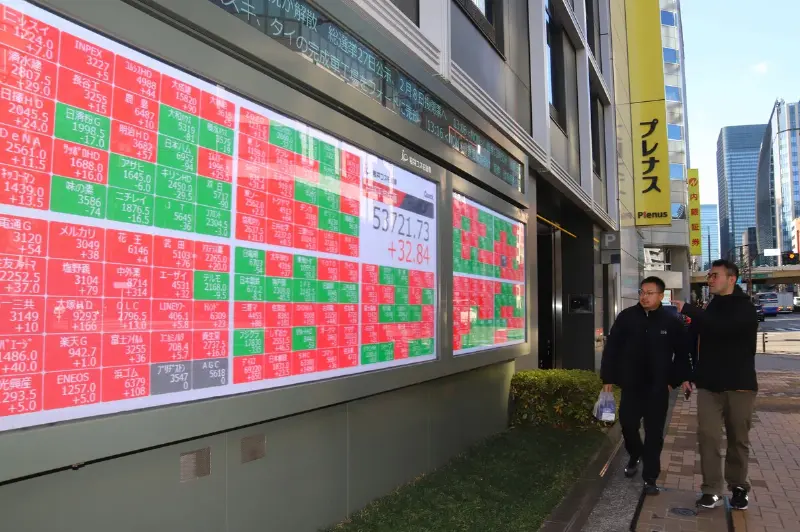


Japanese consumers have expressed worries about rising prices of goods ahead of the Feb. 8 general election for the House of Representatives, the all-important lower chamber of the Diet, the country's parliament.
A 31-year-old company worker who visited midsize supermarket chain Akidai's main store in Tokyo's Nerima Ward with her children, aged zero and 4, said she usually plans meals for the week to avoid purchasing excess ingredients.
"I almost always buy the same ingredients, but their prices are gradually rising," she complained.
"My income doesn't increase even as prices rise," a 41-year-old employee of an organization from the ward said. She expressed hope about ruling and opposition parties' pledges to cut consumption tax on food items to zero, saying, "Nothing will improve if things stay the same, so I think some kind of change is necessary."
Akidai President Hiromichi Akiba, 57, called on the government to clarify a long-term strategy, such as increasing Japan's food self-sufficiency and reducing reliance on imports, instead of seeking short-term results.
On a shopping street in Tokyo's Sugamo district, a popular spot among elderly people, 89-year-old Shinichi Sato of the Tokyo city of Kiyose said he does not believe a consumption tax reduction would be realized. "Saying this just to increase the seats (won) would amount to deceiving the public," he said.
An 84-year-old woman from the Japanese capital's Kita Ward also doubted the feasibility of cutting the consumption tax on food to zero.
Meanwhile, an 82-year-old woman from Tokyo's Toshima Ward voiced her wish for a lower tax rate on food. "Even though I live on a pension, prices are increasing and taxes are high. I can't live like this. I would be grateful if the tax rate on food goes down."
In the Nihonbashi Kabutocho financial district of the capital, a company executive in her 50s questioned Prime Minister Sanae Takaichi's decision to dissolve the Lower House at the start of this year's ordinary Diet session.
"We're already having an election although the (new) prime minister hasn't done anything yet" since taking office last October, said the woman, from the city of Kawaguchi, Saitama Prefecture, a Tokyo neighbor.
The executive, who previously worked at a securities company and experienced the heyday of Japan's asset inflation-driven bubble economy through the early 1990s, said that recent record-high stock prices did not reflect actual living conditions: "I want tax revenues to be spent on measures related to livelihood."
Company worker Konosuke Yamada, 40, of Nerima Ward, said he does not understand what Takaichi wants to achieve through the upcoming election. "She has not fulfilled her accountability, and I think the public does not support the dissolution (of the Lower House)," he said.

[Copyright The Jiji Press, Ltd.]
