
Ruling bloc’s election victory may affect BOJ monetary policy
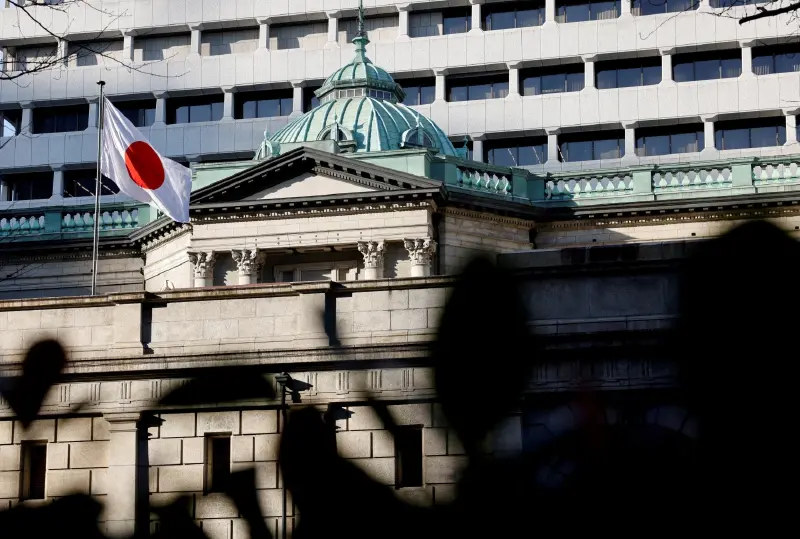


The Japanese ruling bloc's landslide victory in Sunday's general election, which cemented Prime Minister Sanae Takaichi's grip on power, may impact the Bank of Japan's monetary policy steering.
Takaichi, who was inaugurated last October, favours fiscal expansion and monetary easing to achieve strong economic growth, while the Japanese central bank is seeking to continue raising interest rates to normalise its monetary policy.
The BOJ conducted its first rate hike under the Takaichi administration last December.
Financial market players are beginning to factor in an additional rate hike this spring.
But an economic adviser to Takaichi has argued that the central bank should avoid changing its policy for a year.
With the BOJ's current policy rate target standing at 0.75 per cent, the next hike will likely raise the target to 1 per cent, believed to be the lower end of the so-called neutral interest rate, which neither stimulates nor cools the economy.
Takaichi, an advocate of monetary easing, has said in the past, "Raising interest rates now would be stupid."
It is therefore uncertain whether she would readily agree to further rate hikes.
But the BOJ may raise the policy rate earlier than expected if a rapid weakening of the yen leads to higher inflation fueled by rising import prices.
The Takaichi-led ruling bloc's election victory is also seen as impacting appointments of BOJ policymakers, which reflect the thinking of the government.
Of the members of the BOJ's Policy Board with the right to vote on policy matters, Asahi Noguchi and Junko Nakagawa will see their five-year terms end on March 31 and June 29, respectively.
Takaichi has appointed people opposing rate hikes to government posts, tapping former BOJ Deputy Governor Masazumi Wakatabe, a reflationist, as a private-sector member of the government's Council on Economic and Fiscal Policy.
If she selects people in favour of monetary easing to succeed Noguchi and Nakagawa, this may affect the BOJ's discussions on further rate hikes.
Appointing reflationists to the BOJ Policy Board was a tactic adopted by the late former Prime Minister Shinzo Abe, a key mentor of Takaichi.
Takaichi may also be involved in the selection of a successor to BOJ Governor Kazuo Ueda, whose term ends in April 2028.
The Takaichi government's appointments of the two new Policy Board members this year "could be a litmus test for the prime minister's choice of the next governor," a market source said.

[Copyright The Jiji Press, Ltd.]
