
Japan Ambassador views UN funding woes as reform chance
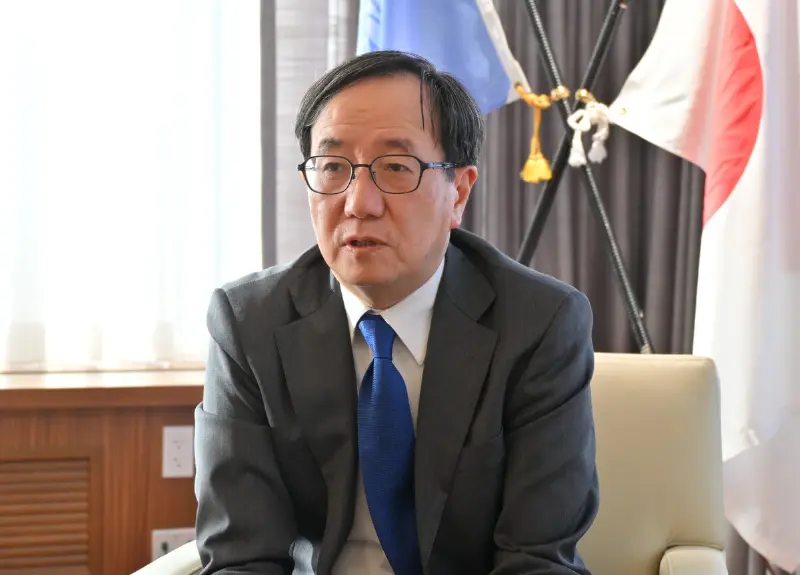


The United Nations' current serious financial difficulties, caused in part by the United States' failure to make some contribution payments, also present a good opportunity for UN reform, Kazuyuki Yamazaki, Japan's ambassador to the world body, has said in a recent interview with Jiji Press.
"Unless we engage in reform with a sense of crisis, we won't be able to promote streamlining," Yamazaki said. "Japan wants to play a constructive role in creating an efficient and effective United Nations."
In the wake of its worsening financial condition, the United Nations has scaled down its regular budget for 2026 by about 10 % from the previous year.
Yamazaki suggested that the United States has stopped some payments to the United Nations due to its strong concerns that UN operations have expanded too much.
Washington's previous huge payments to the international organisation, including voluntary contributions, "should not be taken for granted, and it is unreasonable to ask any single country" to bear so much financial burden, he added.
Regarding the Gaza Strip, the Japanese ambassador praised the actions taken by US President Donald Trump's administration until now, saying, "It's effectively impossible to stop the problems in the Middle East from worsening unless the United States plays a role."
Meanwhile, he declined to discuss in detail whether and how Japan would be involved in the Board of Peace, an international organisation to oversee an interim administration in Gaza following the ceasefire in the region, saying Tokyo is considering whether it will participate in the body while carefully scrutinising details about it.
Some media reports have said that Trump thinks the Board of Peace could be an alternative to the United Nations, while other Group of Seven major democracies have distanced themselves from the board.
Yamazaki rejected claims that the United Nations has become dysfunctional, arguing, "The know-how and organisation of the United Nations are irreplaceable." He particularly highlighted the significance of UN Security Council resolutions, stressing that these "have gained international legitimacy and any country respects them."
"The representativeness and legitimacy of the United Nations carry weight that can't be matched by any other organization," he said.
The ambassador also noted the need for, but difficulty of, Security Council reform.
UN member countries often fail to observe a U.N. Charter provision stipulating that parties to disputes should abstain from voting, he said, adding that permanent members of the Security Council sometimes exercise their veto power in votes on matters involving them.
Yamazaki said he does not believe that China's criticisms of Japan at various U.N. meetings following Japanese Prime Minister Sanae Takaichi's remarks last November on a possible Taiwan contingency have affected other countries' trust in Tokyo.
"We will decisively respond to remarks that contradict the facts," he went on to say, stressing that the Japanese government will continue to refute wrong claims appropriately as needed.

[Copyright The Jiji Press, Ltd.]
