
Inside Trump’s ‘energy dominance’ play to reshape global power through Venezuela
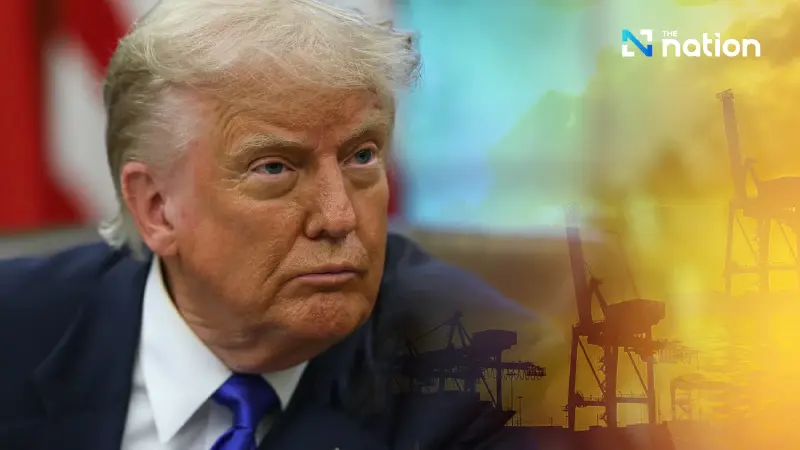


A new US “energy dominance” strategy positions Venezuela as a lever over global supply, prices and geopolitics, prioritising oil and gas while sidelining net zero goals, analysts warn.
A US operation in Caracas, the arrest of President Nicolás Maduro, and the deployment of major US energy firms to revive Venezuela’s oil output are not simply security or foreign policy headlines. They signal what analysts describe as an “energy power strategy” that could reshape the global economic balance.
While experts broadly agree Venezuelan oil is unlikely to reach global markets quickly — given the need to rehabilitate infrastructure, mobilise investment and rebuild production systems weakened by years of sanctions — the strategic message is clear: the United States is moving to secure control over upstream energy to influence pricing, market stability and long-term geopolitical leverage.
This, the analysis argues, aligns with the National Security Strategy of the United States of America 2025, which elevates energy as a core pillar of national security under the concept of Energy Dominance. It is framed not only as an economic advantage, but as an integrated tool of diplomacy, security and great-power competition.
With Venezuela brought into this framework, the issue is not merely about adding oil supply. It is about a broader reordering of the energy power chain — from resources upstream to global markets downstream — with implications for major-power rivalry, energy prices, inflation and economic security for many countries, including Thailand.
Energy as a driver of high-tech industrial renewal
A central plank of the document is Energy Dominance — a vision of US energy superpower status centred on oil, natural gas, coal and nuclear energy, alongside efforts to bring key parts of the energy supply chain back to the United States.
The strategy argues that abundant, low-cost energy can create well-paid jobs, reduce costs for consumers and businesses, drive industrial renewal and help preserve US advantages in frontier technologies such as artificial intelligence (AI).
From a security standpoint, the United States aims to position energy as a major export industry while advancing high-end energy technology and innovation to maintain strategic superiority over rivals.
Energy as a “geopolitical weapon”
The strategy also seeks to use US net energy exporter status as leverage in global diplomacy and security — strengthening alliances, reducing dependence on rival suppliers and diminishing the influence of states that use energy as a tool of political pressure.
In the Middle East, the document suggests that as the US relies more on domestic energy, its military security role could decline and shift towards investment partnerships, particularly in nuclear energy.
Rejecting climate change and net zero
Another clear ideological direction is the strategy’s rejection of climate change and net zero policies, describing them as an ideology that raises economic costs for the US and Europe while benefiting economic competitors. The analysis suggests this reflects a prioritisation of competitiveness and economic security over environmental constraints at the policy level.
Expanding overseas influence through energy investment
The strategy also highlights plans for Africa, including investment in nuclear energy technology, LPG and LNG, aimed at generating revenue for US firms and strengthening positioning in the race for access to critical minerals.
In the Western Hemisphere, it outlines plans to work with governments and the private sector to develop resilient, scalable energy infrastructure — strengthening shared economic power and countering influence from extra-regional states.
Overall, the National Security Strategy 2025 is portrayed as positioning energy as both a shield — to cut costs, strengthen the domestic economy and revive industry — and a sword — to expand geopolitical influence, push into global energy markets and reduce rivals’ leverage, without allowing environmental constraints to limit US economic growth and power.
The high-stakes energy endgame: the US pulls in Venezuelan oil
After the United States gave the green light to import a large shipment of Venezuelan crude — 30-50 million barrels — it may look on the surface like a short-term move to secure domestic energy supplies.
But a closer look suggests this is not a routine demand-and-supply story. It is a major chess move that the US has positioned as part of a longer game to check its enduring rival, China, in the global economic arena.
To an investor, 30-50 million barrels may sound enormous. In reality, it is only a fraction of US oil needs. The United States is the world’s largest oil consumer, averaging 20-20.5 million barrels per day. Even a maximum import of 50 million barrels from Venezuela would keep the US economy supplied for only about two days.
So why does the US want Venezuelan oil? The answer lies in quality, not volume. Refineries on the US Gulf Coast are designed to process heavy crude. Blending that heavy crude with shale oil (lighter oil) that the US produces in abundance helps refineries operate at peak efficiency and maximises profits from the crack spread.
Cutting off China’s energy lifeline
The deeper story goes beyond refinery optimisation into geopolitics. By drawing Venezuela back under its influence, the US has a harsher strategic aim: to “turn off the tap” so that cheap oil does not continue flowing to China.
China, often described as the “world’s factory”, consumes about 16 million barrels of oil per day. Yet it is not simply buying oil to fuel cars — especially with EV adoption rising sharply in China. The bigger appetite is for petrochemicals: turning crude into industrial inputs and products. China refines oil into plastic pellets, synthetic fibres, electronic components and asphalt for export and for major infrastructure programmes such as Belt and Road. In recent years, China has enjoyed a cost advantage by securing discounted crude from Venezuela, Russia and Iran.
The world risks sliding back towards great-power anarchy
At the UN Security Council in New York on January 5, 2026, tensions reportedly rose sharply after Professor Jeffrey D. Sachs, head of the UN Sustainable Development Solutions Network and director of the Center for Sustainable Development at Columbia University, warned that the use of force and unilateral sanctions against Venezuela are undermining core principles of the UN Charter and risk pushing the world back into “great-power anarchy” — potentially triggering a new round of geopolitical crises.
Sachs argued that the council should not be judging the legitimacy or nature of Venezuela’s government. The core question, he said, is one of principle: whether any state has the right to use force, coercion or economic pressure to determine another country’s political future. He said such actions conflict with Article 2(4) of the UN Charter, which prohibits the threat or use of force against a state’s territorial integrity and sovereignty.
He warned that allowing these principles to be ignored would set a dangerous precedent for the international order and increase the long-term risk of interstate conflict. He called on the US to stop its threats, withdraw troops, lift unilateral coercive measures and urgently reopen diplomatic channels.
Sachs also cited historical evidence that since 1947 the US has been involved in regime-change operations in multiple countries, which he said often result in violence, instability and significant civilian suffering. On Venezuela, he pointed to US-linked controversies including the 2002 coup attempt, energy-sector sanctions that severely damaged the economy, and Washington’s recognition of a parallel leader in 2019.
In closing, Sachs urged the Security Council to reaffirm its role as a guardian of international law, appoint a special envoy to open talks, and press all member states to comply strictly with the UN Charter. In the nuclear age, he warned, the breakdown of global rules cannot be allowed to happen again, because it could lead humanity towards irreversible catastrophe.
Pressure on China’s “teapot” refineries
US intervention in this oil dynamic would also squeeze China’s independent refiners — known as “teapots” — by driving up their input costs, potentially forcing them to rely more heavily on Russia. That, in turn, could leave Beijing in a more difficult position when managing supply-chain risk.
The message, according to this analysis, is a maximum-level warning: a new resource war has begun.
